
从肯尼亚植物的细菌内生菌合成的银纳米颗粒的抗菌、群体感应抑制及抗癌活性
Antimicrobial, Quorum Sensing Inhibition, and Anti-Cancer Activities of Silver Nanoparticles Synthesized from Kenyan Bacterial Endophytes of .
作者信息
Mohamed Farzana, Chenia Hafizah Yousuf
机构信息
Discipline of Microbiology (Westville Campus), School of Life Sciences, College of Agriculture, Engineering and Science, University of KwaZulu-Natal, Private Bag X54001, Durban 4000, KwaZulu-Natal, South Africa.
出版信息
Int J Mol Sci. 2025 Apr 2;26(7):3306. doi: 10.3390/ijms26073306.
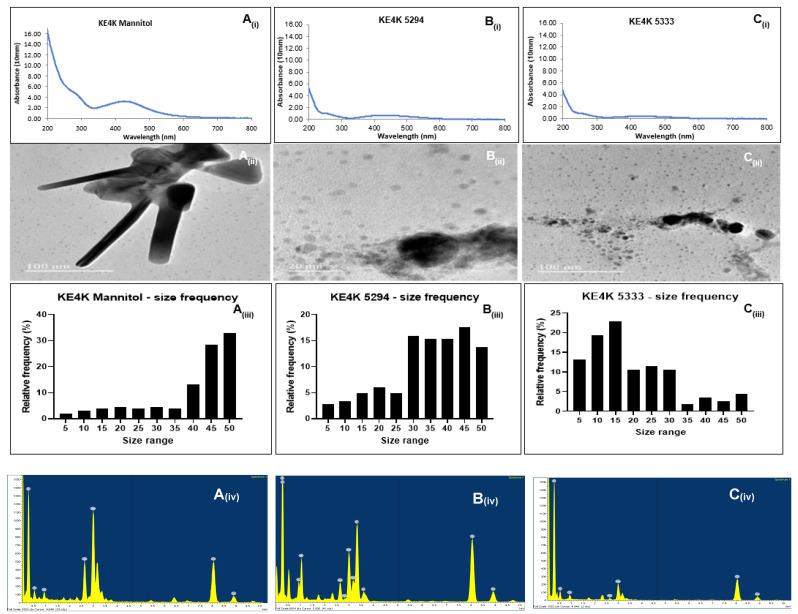
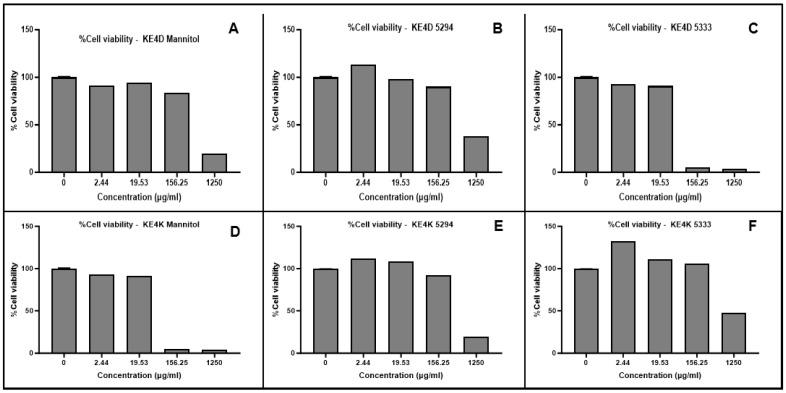
Untapped bioactive compounds from microbial endophytes offer a promising solution to counter antimicrobial and chemotherapeutic drug resistance when complexed as silver nanoparticles (AgNPs). AgNPs were biosynthesized using cell-free supernatants from endophytic sp. KE4D and KE4K isolated from the Kenyan medicinal plant , following fermentation in three different media. Bacterial extracts were analyzed using gas chromatography-mass spectrometry. AgNPs were characterized using Fourier-transform infrared spectroscopy and high-resolution transmission electron microscopy. Antimicrobial activity was assessed using agar well diffusion assays, and quorum sensing inhibition (QSI) was investigated using . Anti-cancer potential was evaluated against breast (MCF-7) and prostate cancer (DU-145) cell lines using MTT assays. AgNPs were 5-55 nm in size, with KE4D AgNPs being spherical and KE4K AgNPs exhibiting various shapes. Cyclopropane acetic acids and fatty acids were identified as possible capping agents. Medium-dependent antimicrobial activity was observed, with medium Mannitol and medium 5294 AgNPs displaying stronger activity, particularly against Gram-negative indicators. KE4D medium 5294 AgNPs demonstrated 85.12% violacein inhibition at 140 µg/mL and better QSI activity, whilst KE4K AgNPs were better antimicrobials. The AgNPs IC values were <3.5 µg/mL for MCF-7 and <2.5 µg/mL for DU-145 cells. The bioactivity of biosynthesized AgNPs is influenced by the bacterial isolate and fermentation medium, suggesting that AgNP synthesis can be tailored for specific bioactivity.
当与银纳米颗粒(AgNPs)复合时,来自微生物内生菌的未开发生物活性化合物为对抗抗菌和化疗药物耐药性提供了一个有前景的解决方案。使用从肯尼亚药用植物中分离出的内生菌sp. KE4D和KE4K的无细胞上清液,在三种不同培养基中发酵后生物合成了AgNPs。使用气相色谱 - 质谱法分析细菌提取物。使用傅里叶变换红外光谱和高分辨率透射电子显微镜对AgNPs进行表征。使用琼脂孔扩散试验评估抗菌活性,并使用[具体方法]研究群体感应抑制(QSI)。使用MTT试验评估对乳腺癌(MCF - 7)和前列腺癌(DU - 145)细胞系的抗癌潜力。AgNPs尺寸为5 - 55nm,KE4D AgNPs呈球形,KE4K AgNPs呈现各种形状。环丙烷乙酸和脂肪酸被确定为可能的封端剂。观察到培养基依赖性抗菌活性,甘露醇培养基和5294培养基的AgNPs表现出更强的活性,特别是对革兰氏阴性指示菌。KE4D培养基5294的AgNPs在140μg/mL时表现出85.12%的紫菌素抑制率和更好的QSI活性,而KE4K AgNPs是更好的抗菌剂。对于MCF - 7细胞,AgNPs的IC值<3.5μg/mL,对于DU - 145细胞<2.5μg/mL。生物合成的AgNPs的生物活性受细菌分离物和发酵培养基的影响,这表明可以针对特定生物活性定制AgNP的合成。




 Zotero 插件