
锂通过与磷脂结合来微调脂质膜。
Lithium fine tunes lipid membranes through phospholipid binding.
作者信息
Bunel Louis, Adrien Vladimir, Coleman Jeff, Heo Paul, Pincet Frédéric
机构信息
Laboratoire de Physique de l'École Normale Supérieure, ENS, Université PSL, CNRS, Sorbonne Université, Université Paris Cité, 75005, Paris, France.
AP-HP, Department of Psychiatry, Avicenne Hospital, Paris Nord Sorbonne Université, Bobigny, France.
出版信息
Sci Rep. 2025 Apr 17;15(1):13366. doi: 10.1038/s41598-025-97828-0.
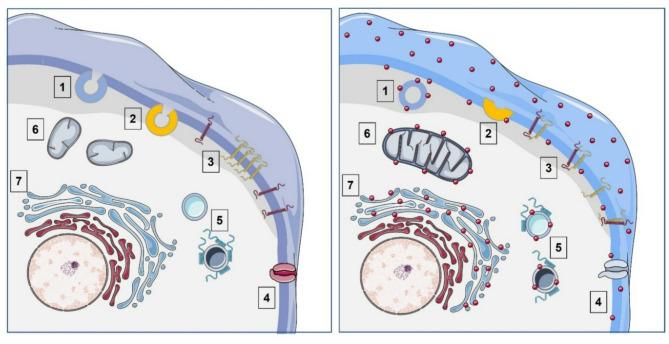
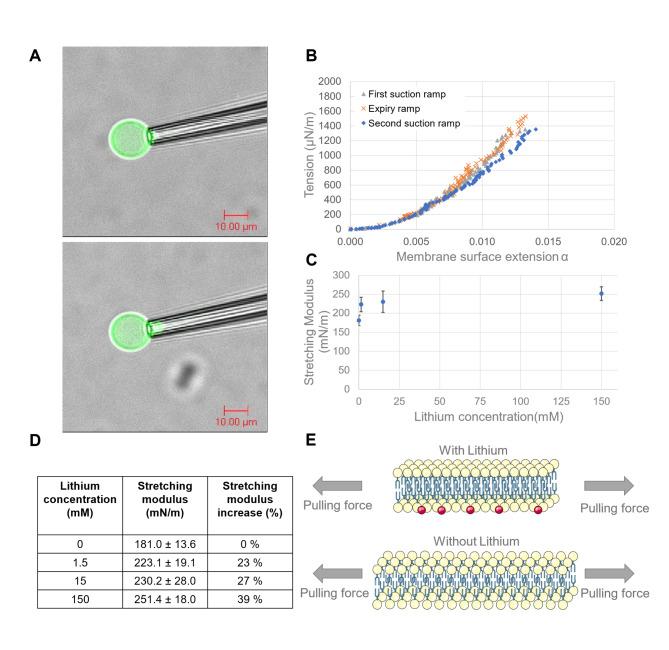
Lithium is commonly prescribed for bipolar disorder due to its proven efficacy on patients. Despite this effectiveness, the molecular mechanisms underlying its action remain poorly understood, as it appears to influence numerous unrelated pathways. We propose that these diverse effects may stem from a specific physicochemical event: the binding of lithium cations to phospholipid headgroups. In model membrane systems enabling direct observation of the lithium effects on lipid bilayers, we reveal that lithium binding stiffens the membrane, subsequently altering membrane protein activities. This mechanical impact of lithium links existing rationales, drawing a way to decipher the complex lithium effect in bipolar disorder (BD). To illustrate this global effect of lithium, we use the example of intracellular trafficking, a ubiquitous mechanism involving membrane reorganization in all organelles.
由于锂对双相情感障碍患者已证实的疗效,它通常被用于双相情感障碍的治疗。尽管有这种疗效,但其作用的分子机制仍知之甚少,因为它似乎会影响众多不相关的途径。我们认为,这些不同的效应可能源于一个特定的物理化学事件:锂阳离子与磷脂头部基团的结合。在能够直接观察锂对脂质双层影响的模型膜系统中,我们发现锂的结合会使膜变硬,随后改变膜蛋白的活性。锂的这种机械影响将现有的理论联系起来,为解读双相情感障碍(BD)中复杂的锂效应提供了一种方法。为了说明锂的这种整体效应,我们以细胞内运输为例,这是一种在所有细胞器中都涉及膜重组的普遍机制。


 Zotero 插件