
脂筏:代谢性、神经退行性、肿瘤性和心血管疾病的新型治疗靶点。
Lipid rafts: novel therapeutic targets for metabolic, neurodegenerative, oncological, and cardiovascular diseases.
作者信息
Warda Mohamad, Tekin Samet, Gamal Mahmoud, Khafaga Nagwa, Çelebi Fikret, Tarantino Giovanni
机构信息
Department of Physiology, Faculty of Veterinary Medicine, Atatürk University, Erzurum, Turkey.
Department of Biochemistry, Faculty of Veterinary Medicine, Cairo University, Giza, Egypt.
出版信息
Lipids Health Dis. 2025 Apr 17;24(1):147. doi: 10.1186/s12944-025-02563-0.
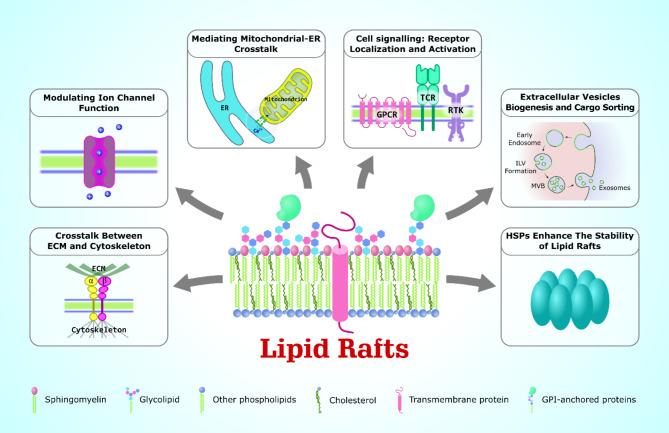
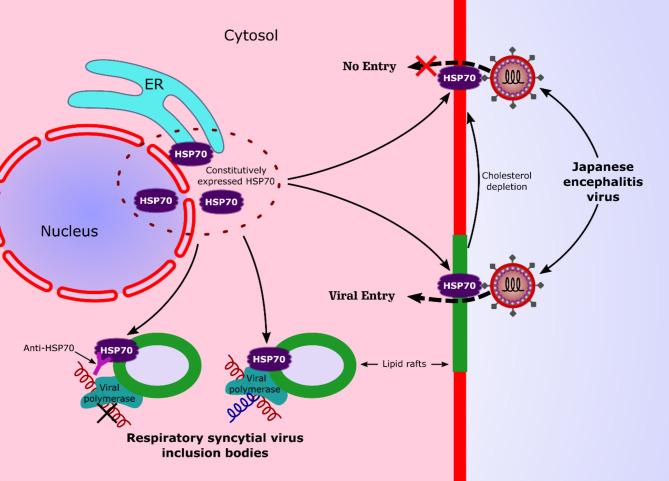
Lipid rafts are specialized microdomains within cellular membranes enriched with cholesterol and sphingolipids that play key roles in cellular organization, signaling, and homeostasis. This review highlights their involvement in protein clustering, energy metabolism, oxidative stress responses, inflammation, autophagy, and apoptosis. These findings clarify their influence on signaling, trafficking, and adhesion while interacting with the extracellular matrix, cytoskeleton, and ion channels, making them pivotal in the progression of various diseases. This review further addresses their contributions to immune responses, including autoimmune diseases, chronic inflammation, and cytokine storms. Additionally, their role as entry points for pathogens has been demonstrated, with raft-associated receptors being exploited by viruses and bacteria to increase infectivity and evade immune defenses. Disruptions in lipid raft dynamics are linked to oxidative stress and cellular signaling defects, which contribute to metabolic, neurodegenerative, and cardiovascular diseases. This review underscores their potential as therapeutic targets, discussing innovations such as engineered lipid raft transplantation. Advances in analytical techniques such as mass spectrometry have expanded our understanding of lipid raft composition and dynamics, opening new directions for research. By consolidating the current insights, we highlight the therapeutic potential of lipid rafts and highlight the need for further exploration of their molecular mechanisms.
脂筏是细胞膜内富含胆固醇和鞘脂的特殊微结构域,在细胞组织、信号传导和内环境稳定中发挥关键作用。本综述重点介绍了它们在蛋白质聚集、能量代谢、氧化应激反应、炎症、自噬和细胞凋亡中的作用。这些发现阐明了它们在与细胞外基质、细胞骨架和离子通道相互作用时对信号传导、运输和黏附的影响,使其在各种疾病的进展中起着关键作用。本综述进一步探讨了它们对免疫反应的贡献,包括自身免疫性疾病、慢性炎症和细胞因子风暴。此外,它们作为病原体进入点的作用已得到证实,病毒和细菌利用与脂筏相关的受体来增加感染性并逃避免疫防御。脂筏动态的破坏与氧化应激和细胞信号缺陷有关,这会导致代谢性、神经退行性和心血管疾病。本综述强调了它们作为治疗靶点的潜力,讨论了如工程化脂筏移植等创新方法。质谱等分析技术的进展拓宽了我们对脂筏组成和动态的理解,为研究开辟了新方向。通过整合当前的见解,我们强调了脂筏的治疗潜力,并强调需要进一步探索其分子机制。


 Zotero 插件