
铜死亡与铜相关抗肿瘤治疗的研究进展
Research progress on cuproptosis and copper related anti-tumor therapy.
作者信息
Li Yichen, Han Lifei, Hu Haolin
机构信息
School of Medicine, Southeast University, No. 87, Dingjiaqiao, Hunan Road, Gulou District, Nanjing, 210009, China.
Breast Disease Diagnosis and Treatment Center, Zhongda Hospital Affiliated to Southeast University, Nanjing, 210009, China.
出版信息
Discov Oncol. 2025 Apr 21;16(1):584. doi: 10.1007/s12672-025-02335-3.
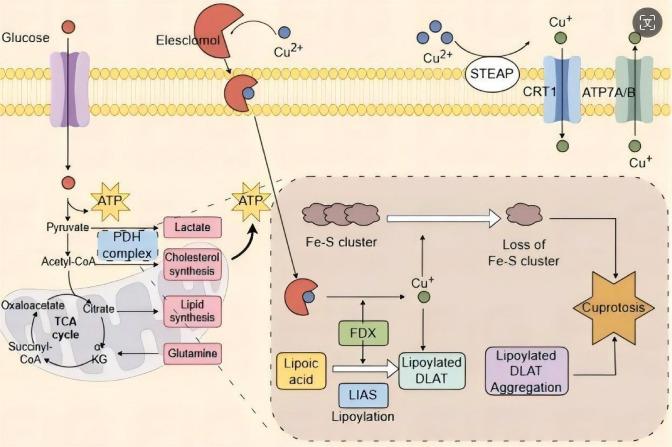
Copper is a trace element which is essential for biological organisms, and its homeostatic balance is important for living organisms to maintain the normal function. When the copper homeostasis is disordered, the cellular function and structure will be disrupted. Excess copper cause oxidative stress and DNA damage in cells, thereby inducing regulated cell death such as apoptosis and necroptosis. Excess copper in mitochondria can bind to lipoylated proteins in the tricarboxylic acid (TCA) cycle and cause them to aggregate, resulting in proteotoxic stress and eliciting a novel cell death modality: cuproptosis. Cancer cells have a greater demand for copper compared to normal tissue, and high levels of copper ions are closely associated with tumour proliferation and metastasis. The anti-tumor mechanisms of copper include the production of oxidative stress, inhibition of the ubiquitin-proteasome system, suppression of angiogenesis, and induction of copper-dependent cell death. Targeting copper is one of the current directions in oncology research, including the use of copper ion carriers to increase intracellular copper levels to induce oxidative stress and cuproptosis, as well as the use of copper ion chelators to reduce copper bioavailability. However, copper complexes have certain toxicity, so their biosafety needs to be improved. Emerging nanotechnology is expected to solve this problem by utilizing copper-based nanomaterials (Cu-based NMs) to deliver copper ions and a variety of drugs with different functions, thereby improving the anti-tumor efficacy and reducing the side effects. Therefore, a thorough understanding of copper metabolic processes and the mechanism of cuproptosis will greatly benefit anti-tumor therapy. This review summarizes the processes of copper metabolism and the mechanism of cuproptosis. In addition, we discuss the current anti-tumor paradigms related to copper, we also discuss current nanotherapeutic approaches to copper mortality and provide prospective insights into the future copper-mediated cancer therapy.
铜是生物有机体必需的微量元素,其体内平衡对于生物体维持正常功能至关重要。当铜稳态失调时,细胞功能和结构将被破坏。过量的铜会导致细胞内氧化应激和DNA损伤,从而诱导如细胞凋亡和坏死性凋亡等程序性细胞死亡。线粒体中过量的铜可与三羧酸(TCA)循环中的脂酰化蛋白结合并使其聚集,导致蛋白毒性应激并引发一种新的细胞死亡方式:铜死亡。与正常组织相比,癌细胞对铜的需求量更大,高水平的铜离子与肿瘤增殖和转移密切相关。铜的抗肿瘤机制包括产生氧化应激、抑制泛素-蛋白酶体系统、抑制血管生成以及诱导铜依赖性细胞死亡。靶向铜是当前肿瘤学研究的方向之一,包括使用铜离子载体提高细胞内铜水平以诱导氧化应激和铜死亡,以及使用铜离子螯合剂降低铜的生物利用度。然而,铜配合物具有一定的毒性,因此需要提高其生物安全性。新兴的纳米技术有望通过利用铜基纳米材料(Cu基NMs)递送铜离子和多种具有不同功能的药物来解决这一问题,从而提高抗肿瘤疗效并降低副作用。因此,深入了解铜代谢过程和铜死亡机制将极大地有益于抗肿瘤治疗。本综述总结了铜代谢过程和铜死亡机制。此外,我们讨论了当前与铜相关的抗肿瘤模式,还讨论了当前针对铜死亡的纳米治疗方法,并对未来铜介导的癌症治疗提供前瞻性见解。


 Zotero 插件