
一项基于美国食品药品监督管理局不良事件报告系统(FAERS)的奈他地尔真实世界药物警戒研究。
A real-world pharmacovigilance study of netarsudil based on the FDA adverse event reporting system (FAERS).
作者信息
Xiong Xiaomei, Zhang Xiuwen, Tang Fengmin, Huang Taomin
机构信息
Department of Pharmacy, Eye & ENT Hospital, Fudan University, No.83 Fenyang Rd, Shanghai, 200031, China.
出版信息
BMC Pharmacol Toxicol. 2025 Apr 21;26(1):88. doi: 10.1186/s40360-025-00927-x.
BACKGROUND
The safety information of netarsudil primarily comes from clinical trials experience. This study aimed to explore the ocular and systemic safety of netarsudil through data mining the FDA Adverse Event Reporting System (FAERS) database.
METHODS
Adverse event (AE) reports submitted to FAERS between January 2018 and September 2024 were extracted. The reporting odd ratio was used to identify netarsudil-related AE signals. Subgroup analysis, time to onset (TTO) analysis and sensitivity analysis were conducted to comprehensively assess the safety profile of netarsudil.
RESULTS
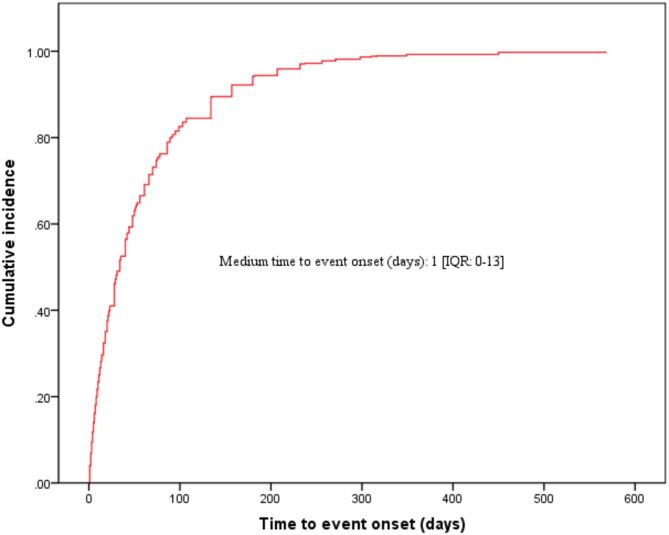
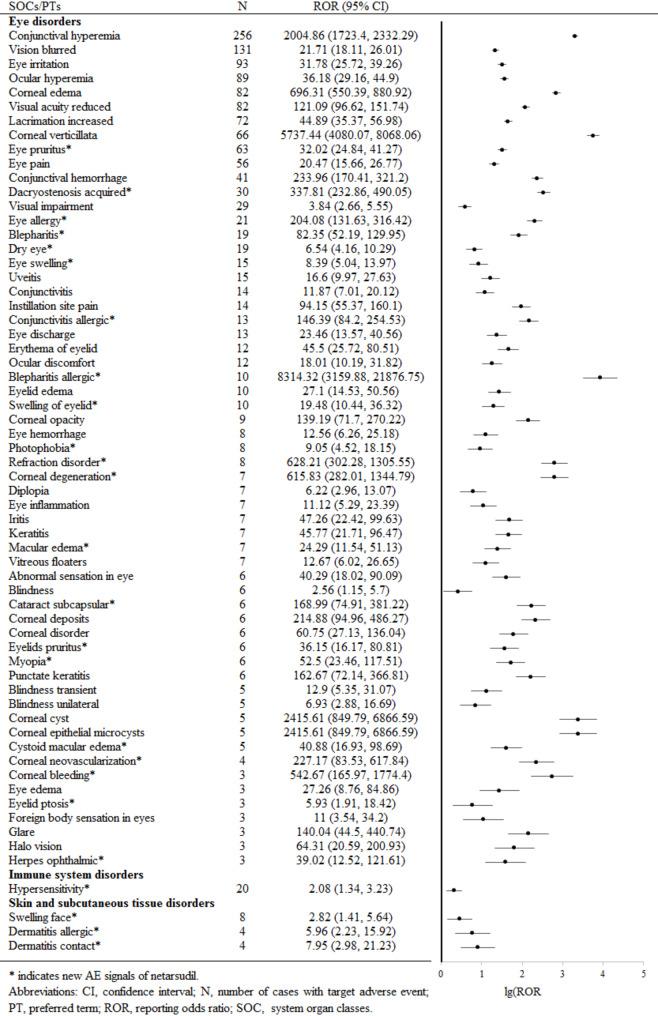
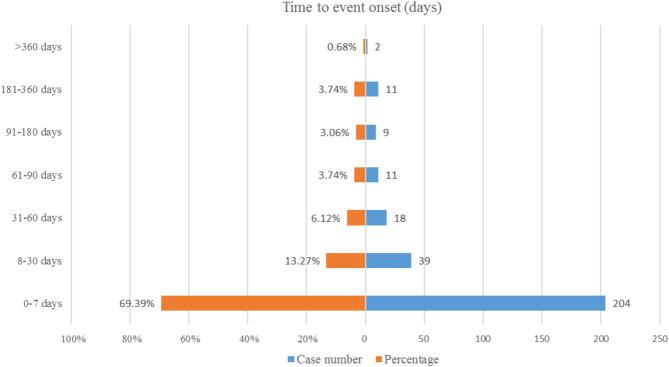
A total of 63 AE signals were identified. Thirty-eight were ocular AEs listed in netarsudil's label, with conjunctival hyperemia, vision blurred and eye irritation ranking the top three in reporting frequency. Twenty-one were new ocular AE signals, including allergic blepharitis, eye pruritus, dacryostenosis, myopic shift, corneal hemorrhage, etc. The rest four were unexpected systemic AE signals, including hypersensitivity, swelling face, dermatitis allergic and dermatitis contact. Subgroup analysis showed that patients ≥ 65 years were more likely to develop inflammation-related AEs, whereas the other adult patients were more prone to experience cataract subcapsular, dry eye, refraction disorder and ocular discomfort. The median TTO of netarsudil-related AEs was 1 day (IQR: 0-13 days), with the majority of AEs (82.65%) occurring within the first month of netarsudil administration. Weibull distribution analysis indicated an early failure type, indicating the incidence of AEs decreased over time.
CONCLUSION
This pharmacovigilance study uncovered new ocular and systemic AE signals associated with netarsudil, and found netarsudil-related AEs were more likely to arise shortly after drug administration, offering valuable insights for clinical monitoring, risk identification and future research.
背景
奈他地尔的安全信息主要来源于临床试验经验。本研究旨在通过挖掘美国食品药品监督管理局不良事件报告系统(FAERS)数据库的数据,探讨奈他地尔的眼部和全身安全性。
方法
提取2018年1月至2024年9月期间提交至FAERS的不良事件(AE)报告。采用报告比值比来识别与奈他地尔相关的AE信号。进行亚组分析、发病时间(TTO)分析和敏感性分析,以全面评估奈他地尔的安全性概况。
结果
共识别出63个AE信号。38个为奈他地尔标签中列出的眼部AE,结膜充血、视力模糊和眼刺激在报告频率中排名前三。21个为新的眼部AE信号,包括过敏性睑缘炎、眼瘙痒、泪道狭窄、近视偏移、角膜出血等。其余4个为意外的全身AE信号,包括超敏反应、面部肿胀、过敏性皮炎和接触性皮炎。亚组分析显示,≥65岁的患者更易发生炎症相关AE,而其他成年患者更易出现晶状体后囊下白内障、干眼、屈光不正和眼部不适。奈他地尔相关AE的中位TTO为1天(IQR:0-13天),大多数AE(82.65%)发生在奈他地尔给药的第一个月内。威布尔分布分析表明为早期失效类型,表明AE的发生率随时间下降。
结论
本药物警戒研究发现了与奈他地尔相关的新的眼部和全身AE信号,并发现奈他地尔相关AE在给药后不久更易出现,为临床监测、风险识别和未来研究提供了有价值的见解。

 Zotero 插件