
电针通过保护神经血管单元减轻脑小血管病中的神经损伤。
Electroacupuncture Attenuates Nerve Injury in Cerebral Small Vessel Disease by Protecting the Neurovascular Units.
作者信息
Li Shujie, Zhao Rui, Han Yongsheng
机构信息
Institute of Neurology, Anhui University of Chinese Medicine, Hefei, China.
Wannan Medical College, Wuhu, China.
出版信息
Neurochem Res. 2025 Apr 22;50(3):150. doi: 10.1007/s11064-025-04395-x.
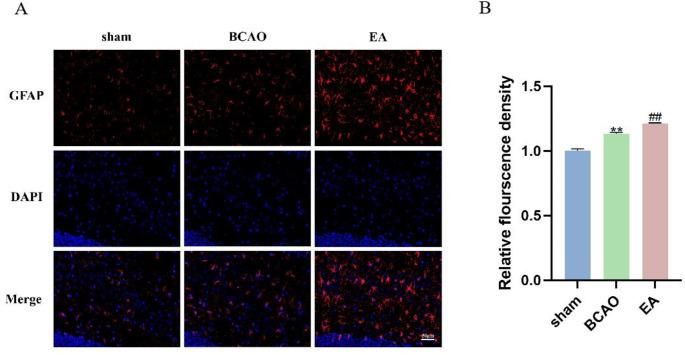
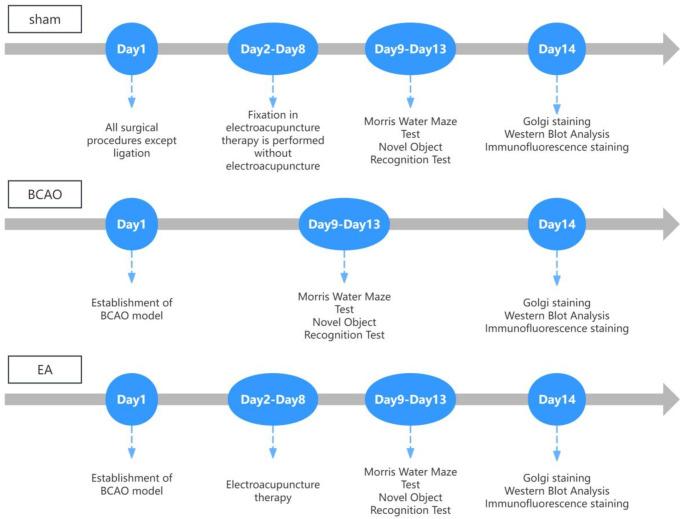
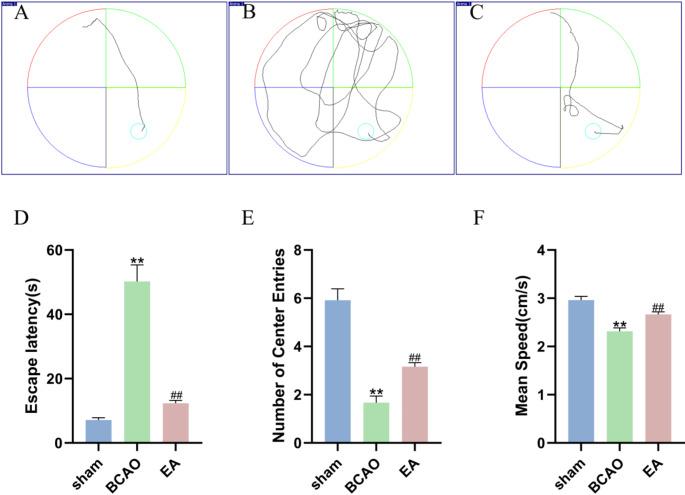
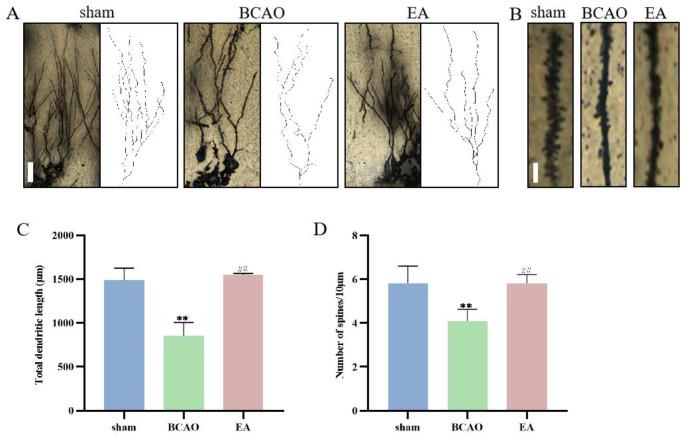
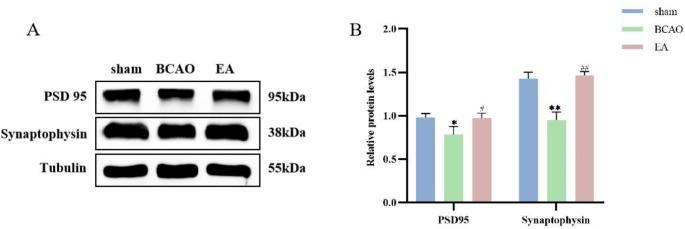
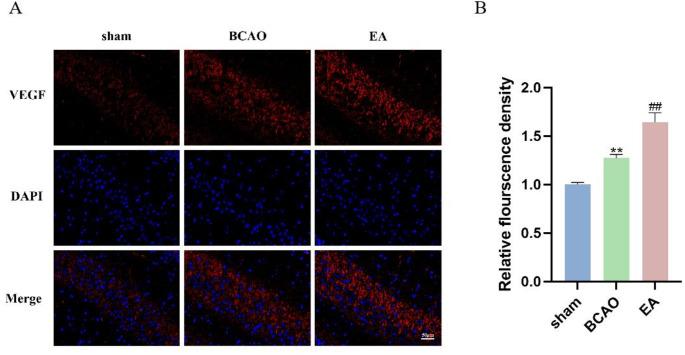
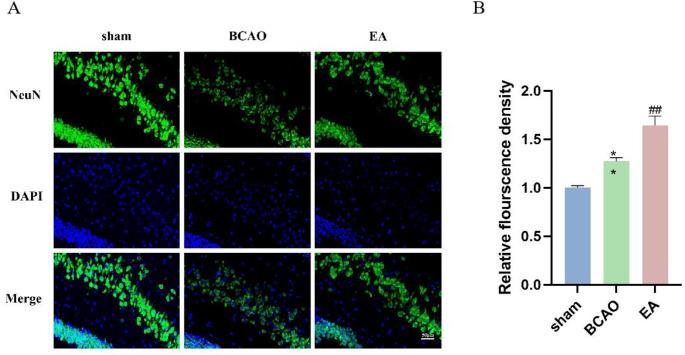
Studies have found that electroacupuncture (EA) can improve the neurocognitive function of cerebral small vessel disease (CSVD), restore cerebral blood flow, and protect neurovascular units. The occurrence and development of cerebral microvascular disease is highly related to neurovascular unit injury. However, it is not clear whether EA plays a therapeutic role by restoring neurovascular unit injury. To explore the possible therapeutic mechanism of EA by analyzing its effect on CSVD neurovascular units in rats with CSVD. Adult male Sprague-Dawley rats (n = 36) were used for the experiment. The rat model of bilateral carotid artery occlusion (BCAO) was established by bilateral common carotid artery ligation. The treatment group was treated with 2/100 Hz and 2-4 V continuous wave EA every day for 7 days. The water maze test and new object recognition test were used to evaluate the memory and cognition of rats. Golgi staining was performed to evaluate the synaptic plasticity. Western blotting was used to evaluate the expression of synaptic-associated proteins PSD95 and synaptophysin and neurovascular unit-associated proteins VEGF, NeuN, GFAP, and claudin5. The expression of neurovascular unit associated proteins VEGF, NeuN and GFAP was further evaluated by immunofluorescence staining. EA intervention significantly reduced cognitive memory damage, restored neuronal synaptic plasticity, and reduced neurovascular unit damage. EA significantly shortened the latency in the water maze test (p < 0.01), increased the number of platform crossings (p < 0.01) and the mean speed (p < 0.01), and increased new object recognition index (p < 0.01). EA significantly increased the total length of neuronal dendrites (p < 0.01) and the dendrite spinous density (p < 0.01). EA increased the levels of PSD95, Synaptophysin, VEGF, NeuN, GFAP and Claudin5 in the EA + BCAO group, compared with the BCAO group (p < 0.01). EA could improve the neurological function in a rat model of cerebral small vessel disease, and its mechanism may be related to the protective effect of electroacupuncture on neurovascular units.
研究发现,电针(EA)可改善脑小血管病(CSVD)的神经认知功能,恢复脑血流,并保护神经血管单元。脑微血管病的发生和发展与神经血管单元损伤高度相关。然而,尚不清楚电针是否通过恢复神经血管单元损伤发挥治疗作用。为通过分析电针对CSVD大鼠CSVD神经血管单元的影响,探讨电针可能的治疗机制。选用成年雄性Sprague-Dawley大鼠(n = 36)进行实验。通过双侧颈总动脉结扎建立双侧颈动脉闭塞(BCAO)大鼠模型。治疗组每天接受2/100Hz、2 - 4V连续波电针治疗,共7天。采用水迷宫试验和新物体识别试验评估大鼠的记忆和认知。进行高尔基染色以评估突触可塑性。采用蛋白质免疫印迹法评估突触相关蛋白PSD95和突触素以及神经血管单元相关蛋白VEGF、NeuN、GFAP和claudin5的表达。通过免疫荧光染色进一步评估神经血管单元相关蛋白VEGF、NeuN和GFAP的表达。电针干预显著减轻认知记忆损伤,恢复神经元突触可塑性,并减少神经血管单元损伤。电针显著缩短水迷宫试验中的潜伏期(p < 0.01),增加穿越平台次数(p < 0.01)和平均速度(p < 0.01),并增加新物体识别指数(p < 0.01)。电针显著增加神经元树突的总长度(p < 0.01)和树突棘密度(p < 0.01)。与BCAO组相比,电针增加了EA + BCAO组中PSD95、突触素、VEGF、NeuN、GFAP和Claudin5的水平(p < 0.01)。电针可改善脑小血管病大鼠模型的神经功能,其机制可能与电针对神经血管单元的保护作用有关。


 Zotero 插件