
糖尿病性神经病理性疼痛中的脊髓神经元-胶质细胞相互作用及离子通道失调
Spinal neuron-glial crosstalk and ion channel dysregulation in diabetic neuropathic pain.
作者信息
Wu Jie, Hu Haijun, Li Xi
机构信息
Department of Anesthesiology, The 2nd Affiliated Hospital, Jiangxi Medical College, Nanchang University, Nanchang, Jiangxi, China.
Key Laboratory of Anesthesiology of Jiangxi Province, Nanchang, Jiangxi, China.
出版信息
Front Immunol. 2025 Apr 8;16:1480534. doi: 10.3389/fimmu.2025.1480534. eCollection 2025.
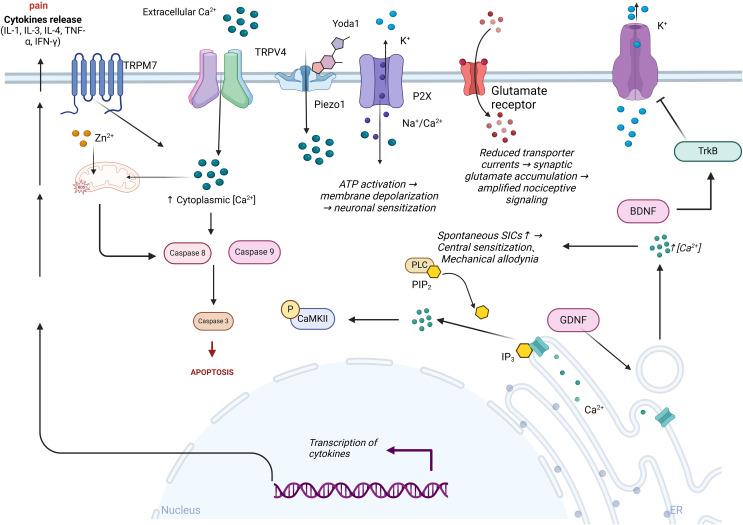
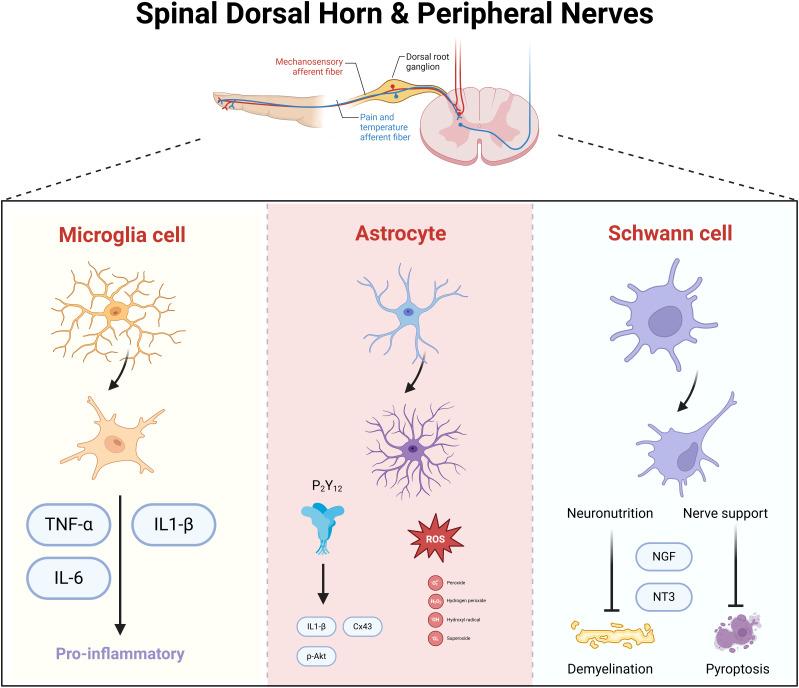
Diabetic neuropathic pain (DNP) is one of the most prevalent complications of diabetes, characterized by a high global prevalence and a substantial affected population with limited effective therapeutic options. Although DNP is closely associated with hyperglycemia, an increasing body of research suggests that elevated blood glucose levels are not the sole inducers of DNP. The pathogenesis of DNP is intricate, involving the release of inflammatory mediators, alterations in synaptic plasticity, demyelination of nerve fibers, and ectopic impulse generation, yet the precise mechanisms remain to be elucidated. The spinal dorsal horn coordinates dynamic interactions between peripheral and central pain pathways, wherein dorsal horn neurons, microglia, and astrocytes synergize with Schwann cell-derived signals to process nociceptive information flow. Abnormally activated neurons can alter signal transduction by modifying the local microenvironment, compromising myelin integrity, and diminishing trophic support, leading to neuronal sensitization and an amplifying effect on peripheral pain signals, which in turn triggers neuropathic pain. Ion channels play a pivotal role in signal conduction, with the modulation of sodium, potassium, and calcium channels being particularly crucial for the regulation of pain signals. In light of the rising incidence of diabetes and the current scarcity of effective DNP treatments, a thorough investigation into the interactions between neurons and glial cells, especially the mechanisms of ion channel function in DNP, is imperative for identifying potential drug targets, developing novel therapeutic strategies, and thereby enhancing the prospects for DNP management.
糖尿病性神经病理性疼痛(DNP)是糖尿病最常见的并发症之一,其特点是全球患病率高,受影响人群众多,而有效的治疗选择有限。尽管DNP与高血糖密切相关,但越来越多的研究表明,血糖水平升高并非DNP的唯一诱因。DNP的发病机制错综复杂,涉及炎症介质的释放、突触可塑性的改变、神经纤维的脱髓鞘以及异位冲动的产生,但其确切机制仍有待阐明。脊髓背角协调外周和中枢疼痛通路之间的动态相互作用,其中背角神经元、小胶质细胞和星形胶质细胞与雪旺细胞衍生的信号协同作用,以处理伤害性信息流。异常激活的神经元可通过改变局部微环境、损害髓鞘完整性和减少营养支持来改变信号转导,导致神经元致敏并对外周疼痛信号产生放大作用,进而引发神经病理性疼痛。离子通道在信号传导中起关键作用,其中钠、钾和钙通道的调节对疼痛信号的调节尤为重要。鉴于糖尿病发病率不断上升以及目前DNP有效治疗方法的匮乏,深入研究神经元与神经胶质细胞之间的相互作用,尤其是DNP中离子通道功能的机制,对于确定潜在的药物靶点、开发新的治疗策略以及从而改善DNP的治疗前景至关重要。

 Zotero 插件