
转运RNA衍生的小RNA在肿瘤转移中的生物学作用及分子机制
The biological role and molecular mechanism of transfer RNA-derived small RNAs in tumor metastasis.
作者信息
Dong Haotian, Ye Chengyuan, Ye Xiaohan, Yan Jianing, Ye Guoliang, Shao Yongfu
机构信息
Department of Gastroenterology, the First Affiliated Hospital of Ningbo University, Ningbo, China.
Health Science Center, Ningbo University, Ningbo, China.
出版信息
Front Oncol. 2025 Apr 8;15:1560943. doi: 10.3389/fonc.2025.1560943. eCollection 2025.
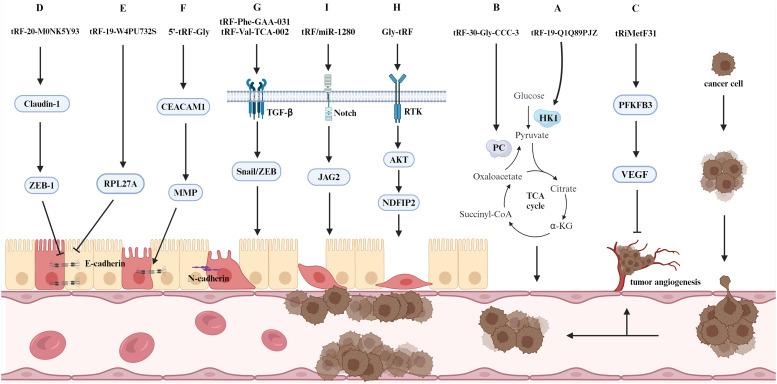
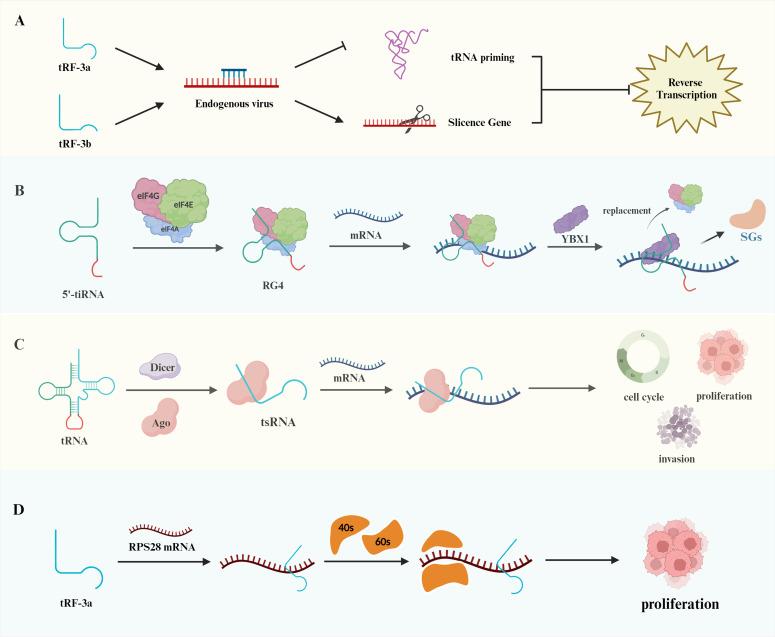
Tumor metastasis is a significant contributor to increased cancer mortality. Transfer RNA-derived small RNAs (tsRNAs), a class of endogenous non-coding RNA molecules, play crucial functional roles in various physiological processes, including the regulation of transcription and reverse transcription, the modulation of translation processes, the modification of epigenetic inheritance, the regulation of the cell cycle, etc. Dysregulated tsRNAs are closely related to the occurrence and progression of human malignancies. Accumulating evidence indicates that the abnormal expression of tsRNAs is associated with tumor metastasis through a variety of mechanisms. Hence, we summarize the fundamental structure and biological functions of tsRNAs, with a focus on how tsRNAs influence the tumor metastasis process through downstream targets or the regulation of interactions between upstream and downstream molecules, thereby providing a novel perspective for targeted therapy for tumor metastasis.
肿瘤转移是导致癌症死亡率上升的一个重要因素。转运RNA衍生的小RNA(tsRNAs)是一类内源性非编码RNA分子,在各种生理过程中发挥着关键的功能作用,包括转录和逆转录的调控、翻译过程的调节、表观遗传遗传的修饰、细胞周期的调控等。tsRNAs失调与人类恶性肿瘤的发生和发展密切相关。越来越多的证据表明,tsRNAs的异常表达通过多种机制与肿瘤转移相关。因此,我们总结了tsRNAs的基本结构和生物学功能,重点关注tsRNAs如何通过下游靶点或调节上下游分子之间的相互作用来影响肿瘤转移过程,从而为肿瘤转移的靶向治疗提供新的视角。


 Zotero 插件