
COVID-19患者的细胞因子谱动态变化:疾病严重程度和预后的纵向分析
Cytokine profiles dynamics in COVID-19 patients: a longitudinal analysis of disease severity and outcomes.
作者信息
Ghaffarpour Sara, Ghazanfari Tooba, Ardestani Sussan Kaboudanian, Naghizadeh Mohammad Mehdi, Vaez Mahdavi Mohammad Reza, Salehi Mohammadreza, Majd Ali Mohammad Mohseni, Rashidi Azadeh, Chenary Maryam Rajabnia, Mostafazadeh Amrollah, Rezaei Abbas, Khodadadi Ali, Iranparast Sara, Khazaei Hossein Ali
机构信息
Immunoregulation Research Center, Shahed University, Tehran, Iran.
Department of Immunology, Shahed University, Tehran, Iran.
出版信息
Sci Rep. 2025 Apr 23;15(1):14209. doi: 10.1038/s41598-025-98505-y.
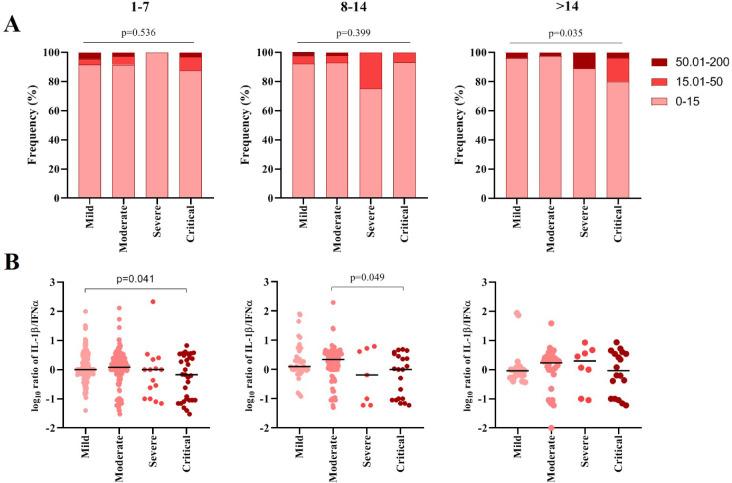
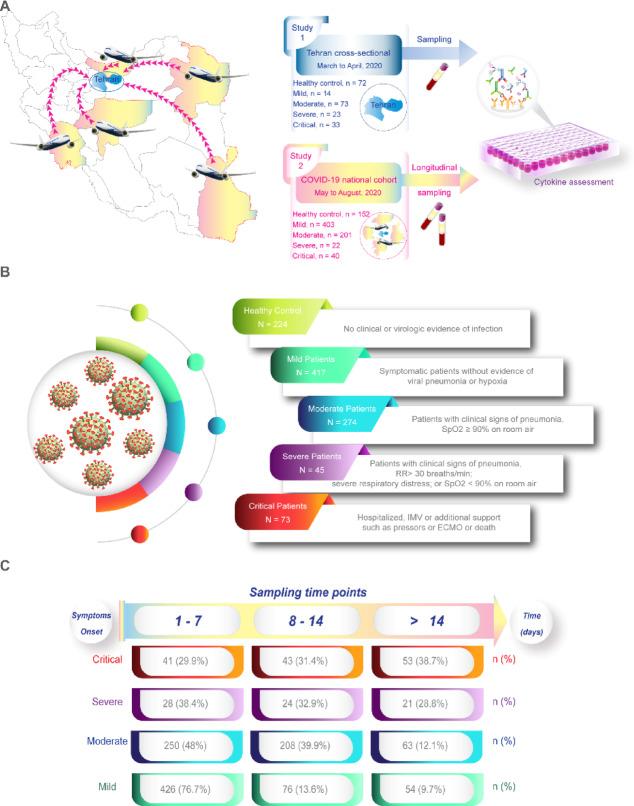
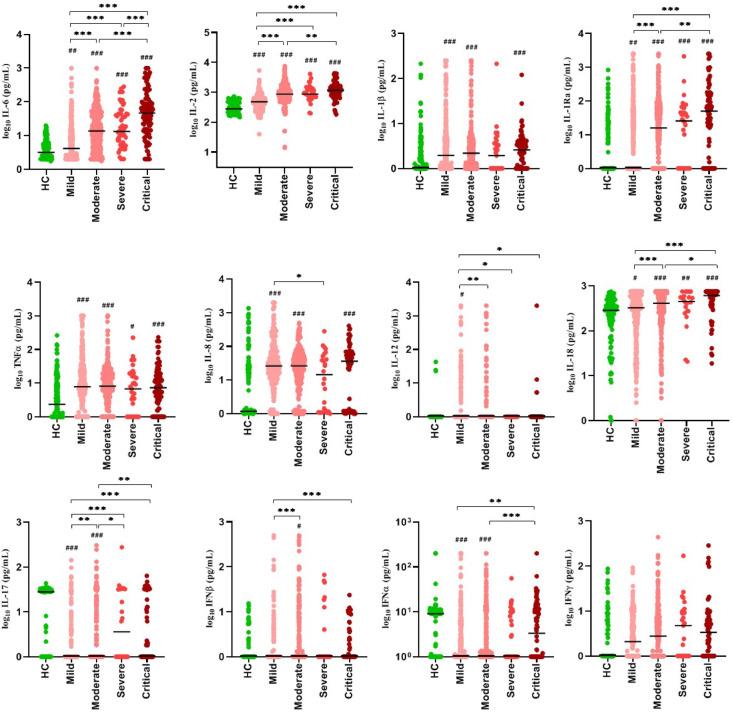
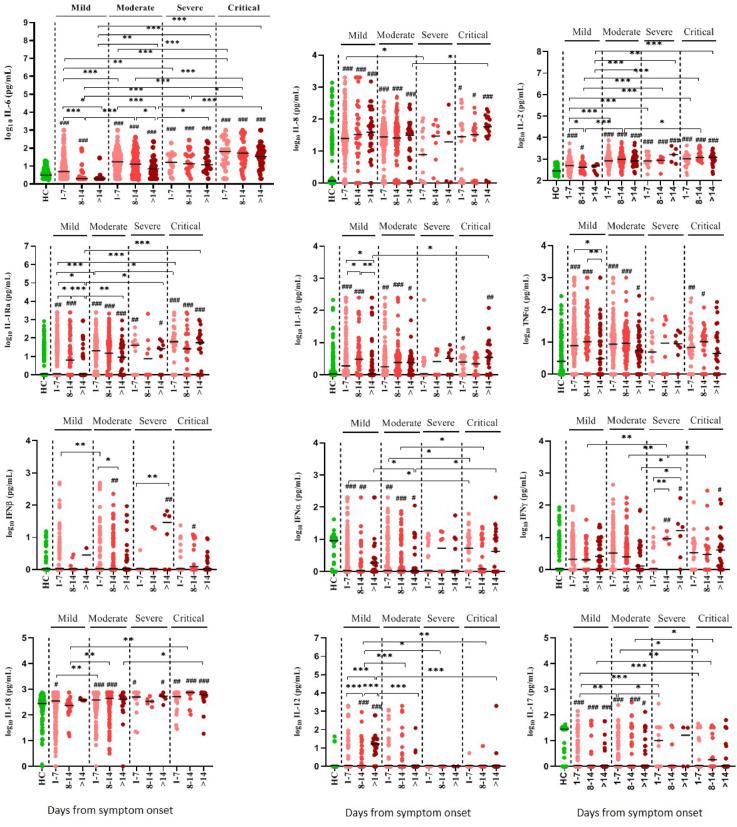
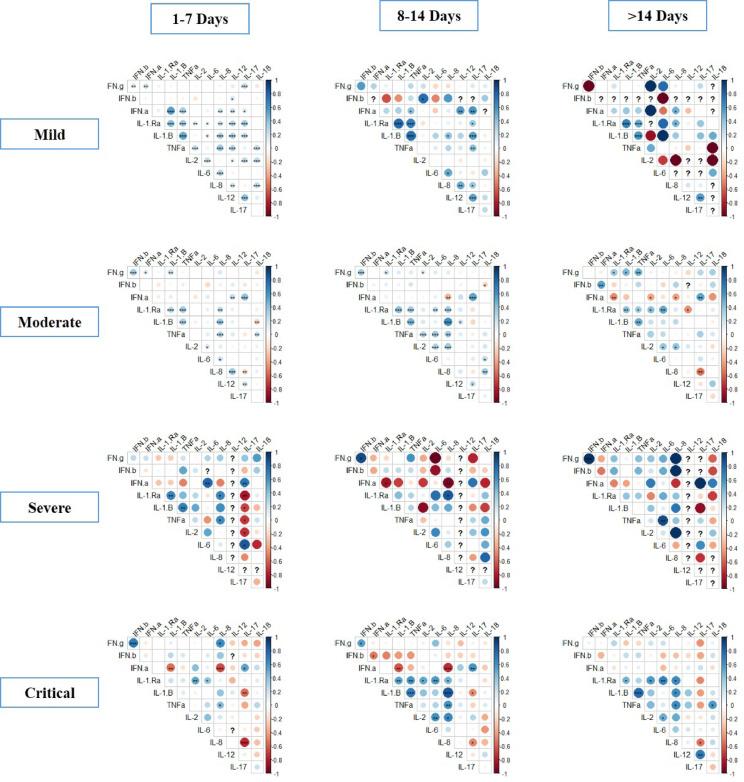
The outcome of the immune response depends on the content and magnitude of inflammatory mediators, the right time to start, and the duration of inflammatory responses. Patients with coronavirus disease 2019 (COVID-19) represent diverse disease severity. Understanding differences in immune responses in individuals with different disease severity levels can help elucidate disease mechanisms. Here, we serially analyzed the cytokine profiles of 809 patients with mild to critical COVID-19. The cytokine profile revealed an overall increase in IL-1β, IL-1Ra, TNF-α, IL-6, IL-2, IL-8, and IL-18 and impaired production of IFN-α and -β. Only an early rise in IL-1Ra, IL-6, and IL-2 levels was linked to worse disease outcomes. On the other hand, long-term rises in IL-1β, IL-1Ra, TNF-α, IL-6, IL-2, IL-8, and IL-18 levels were linked to worse disease outcomes. Principal component analysis identified a component, including IL-1β, TNF-α, IFN-α, and IL-12, that was associated with disease severity. Spearman analysis revealed that the correlation of IL-1β and IFN-α was entirely different between mild and critical patients. Therefore, the ratio of IL-1β to IFN-α seemed to be a suitable criterion for distinguishing critical patients from mild ones. The higher levels of the IL-1β to IFN-α ratio correlated with improved outcomes. These data point to an imbalance of IL-1β/IFNα, contributing to hyperinflammation in COVID-19.
免疫反应的结果取决于炎症介质的含量和强度、开始的正确时间以及炎症反应的持续时间。2019冠状病毒病(COVID-19)患者表现出不同的疾病严重程度。了解不同疾病严重程度个体的免疫反应差异有助于阐明疾病机制。在此,我们对809例轻度至重症COVID-19患者的细胞因子谱进行了系列分析。细胞因子谱显示白细胞介素-1β(IL-1β)、白细胞介素-1受体拮抗剂(IL-1Ra)、肿瘤坏死因子-α(TNF-α)、白细胞介素-6(IL-6)、白细胞介素-2(IL-2)、白细胞介素-8(IL-8)和白细胞介素-18总体升高,而干扰素-α(IFN-α)和干扰素-β(IFN-β)的产生受损。只有IL-1Ra、IL-6和IL-2水平的早期升高与更差的疾病结局相关。另一方面,IL-1β、IL-1Ra、TNF-α、IL-6、IL-2、IL-8和IL-18水平的长期升高与更差的疾病结局相关。主成分分析确定了一个包括IL-1β、TNF-α、IFN-α和IL-12的成分,该成分与疾病严重程度相关。Spearman分析显示,轻度和重症患者中IL-1β与IFN-α的相关性完全不同。因此,IL-1β与IFN-α的比值似乎是区分重症患者和轻症患者的合适标准。IL-1β与IFN-α比值越高,结局越好。这些数据表明IL-1β/IFNα失衡,导致COVID-19中的过度炎症。

 Zotero 插件