
五种智力障碍综合征个体的端粒较短且端粒损耗更快:一项系统评价和荟萃分析
Shorter Telomeres and Faster Telomere Attrition in Individuals With Five Syndromic Forms of Intellectual Disability: A Systematic Review and Meta-Analysis.
作者信息
Hanley Sarah M, Schutte Nicola S, Bellamy Jessica, Denham Joshua
机构信息
School of Psychology, University of New England, Armidale, New South Wales, Australia.
School of Medical, Indigenous and Health Sciences, Faculty of Science, Medicine and Health, University of Wollongong, Wollongong, New South Wales, Australia.
出版信息
J Intellect Disabil Res. 2025 Aug;69(8):641-654. doi: 10.1111/jir.13244. Epub 2025 Apr 24.
BACKGROUND
People with intellectual disability suffer complex challenges due to adaptive functioning limitations, high rates of chronic diseases and shortened lifespans compared with the general population. Telomere shortening is a hallmark of ageing, and short telomeres are linked to neurological disorders. The main objective of this systematic review and meta-analysis was to identify any differences in telomere length and the rate of telomere attrition in leukocytes and fibroblasts from people with intellectual disability and controls.
METHODS
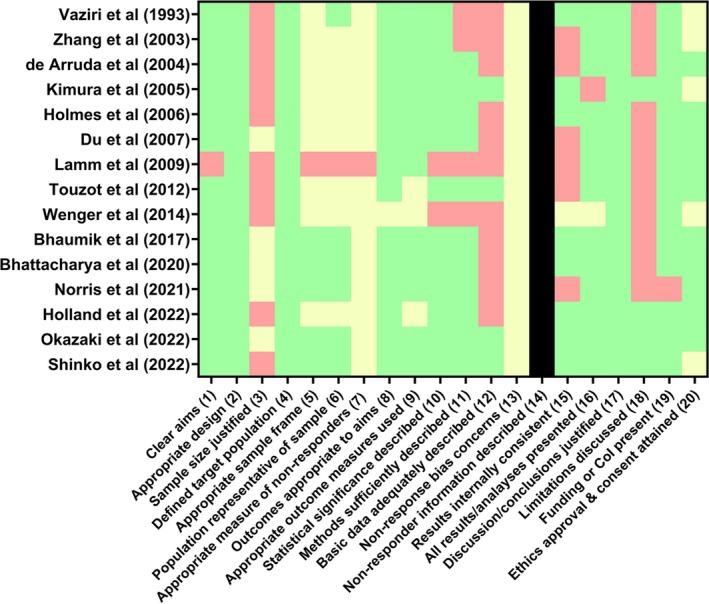
PubMed, Scopus and ScienceDirect were searched. Articles that compared telomere length in individuals with intellectual disability to apparently healthy age-matched controls were included. Risk of bias was assessed using the AXIS tool and data were analysed using CMA.
RESULTS
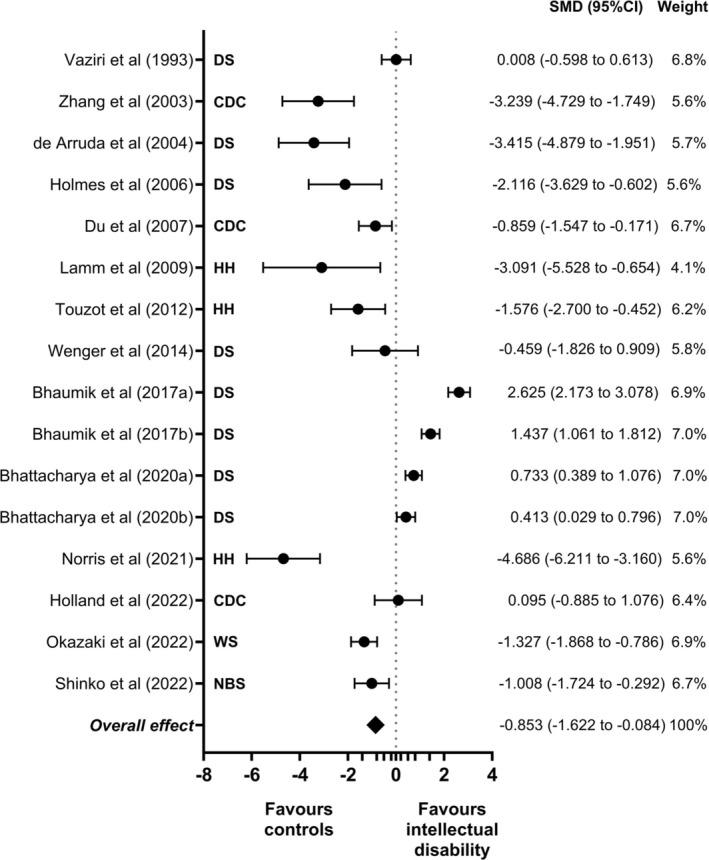
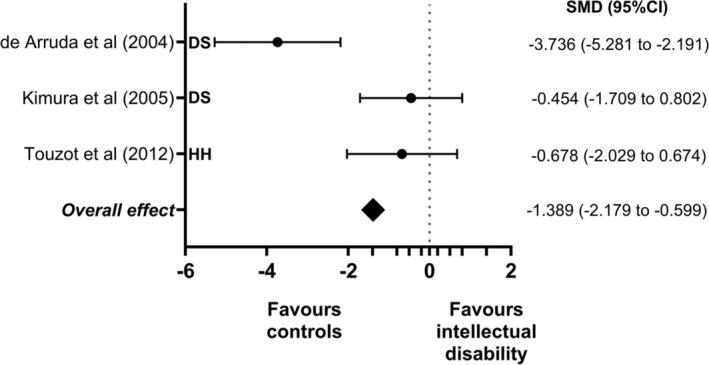
Fifteen studies comprised of 17 comparisons provided data and were included in meta-analyses. Compared with healthy controls (N = 481), people with intellectual disability (N = 366) from a known genetic syndrome (Cri du chat, Down, Hoyeraal-Hreidarsson, Williams or Nicolaides-Baraitser) possessed shorter leukocyte telomeres (SMD: -0.853 [95% CI: -1.622 to -0.084], p = 0.03). Similarly, relative to controls (N = 16), people with syndromic intellectual disability (N = 21) possessed shorter fibroblast telomeres (-1.389 [-2.179 to -0.599], p = 0.001). Furthermore, people with syndromic forms of intellectual disability also demonstrated a faster rate (2.09-fold) of telomere shortening.
CONCLUSIONS
Consistent with epidemiological findings on mortality and morbidity risk, people with syndromic intellectual disability appear to undergo a faster rate of biological ageing compared to the general population. These findings emphasise the need for healthy ageing lifestyle (i.e., exercise and stress management) and therapeutic interventions for people with syndromic intellectual disability.
背景
与普通人群相比,智力残疾者由于适应性功能受限、慢性病发病率高以及寿命缩短而面临复杂的挑战。端粒缩短是衰老的一个标志,短端粒与神经疾病有关。本系统评价和荟萃分析的主要目的是确定智力残疾者与对照组白细胞和成纤维细胞中端粒长度和端粒损耗率的差异。
方法
检索了PubMed、Scopus和ScienceDirect数据库。纳入了将智力残疾个体的端粒长度与年龄匹配的明显健康对照组进行比较的文章。使用AXIS工具评估偏倚风险,并使用CMA分析数据。
结果
15项研究(包括17组比较)提供了数据并纳入荟萃分析。与健康对照组(N = 481)相比,患有已知遗传综合征(猫叫综合征、唐氏综合征、霍耶拉尔-赫雷达尔松综合征、威廉姆斯综合征或尼古拉德斯-巴拉伊特瑟综合征)的智力残疾者(N = 366)白细胞端粒较短(标准化均数差:-0.853 [95%置信区间:-1.622至-0.084],p = 0.03)。同样,相对于对照组(N = 16),患有综合征性智力残疾的个体(N = 21)成纤维细胞端粒较短(-1.389 [-2.179至-0.599],p = 0.001)。此外,患有综合征性智力残疾的个体端粒缩短速度也更快(2.09倍)。
结论
与关于死亡和发病风险的流行病学研究结果一致,患有综合征性智力残疾的个体似乎比普通人群经历更快的生物衰老速度。这些发现强调了针对患有综合征性智力残疾的个体采取健康衰老生活方式(即运动和压力管理)及治疗干预措施的必要性。

 Zotero 插件