
1990年至2021年204个国家和地区软组织肉瘤的全球负担:来自《2021年全球疾病负担研究》的数据
Global burden of soft tissue sarcomas in 204 countries and territories from 1990 to 2021: data from the global burden of disease study 2021.
作者信息
Zhou Junfeng, Xu Shugeng, Long Yong, He Rui, Cai Jiajia, Ding Ning, Su Yingjie
机构信息
Endoscopic medical center, The Affiliated Cancer Hospital of Xiangya School of Medicine, Central South University/Hunan Cancer Hospital, Changsha, 410000, Hunan, China.
Department of Emergency Medicine, The Affiliated Changsha Central Hospital, Hengyang Medical School, University of South China, NO.161 Shaoshan South Road, Changsha, 410004, Hunan, China.
出版信息
BMC Public Health. 2025 Apr 24;25(1):1519. doi: 10.1186/s12889-025-22782-5.
BACKGROUND
There is a lack of epidemiological surveys on soft tissue sarcoma (STS) worldwide. This study aims to assess the global disease burden of soft tissue sarcoma in 204 countries and regions.
METHODS
We analyzed the incidence, mortality, and disability-adjusted life years (DALYs) of STS based on the data provided by the Global Burden of Disease (GBD) 2021 study, and assessed the trends in disease burden across different regions, sexes, and age groups. At the same time, we used the Bayesian Age-Period-Cohort (BAPC) model to predict the development trend of the global disease burden of STS.
RESULTS
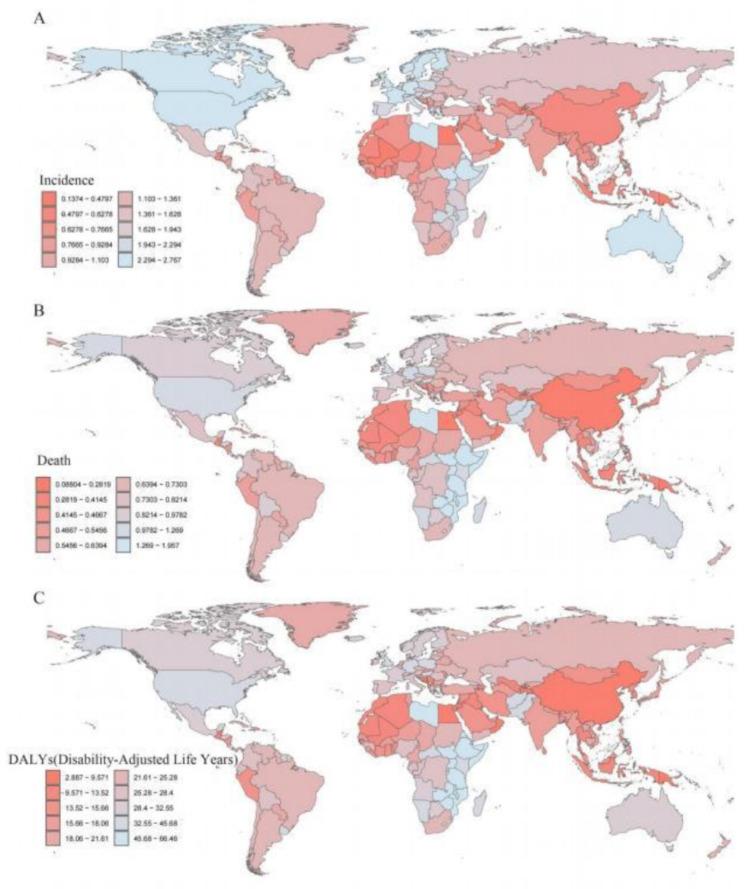
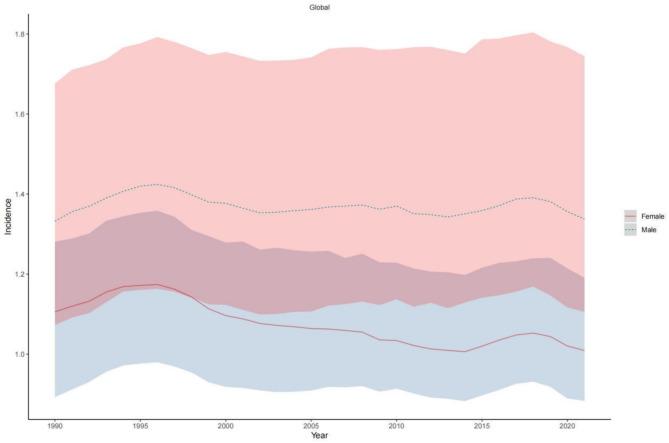
Globally, over the past 30 years, the number of STS cases has increased from 54,630.92 in 1990 to 96,200.96 in 2021, while the age-standardized incidence rate has decreased by 0.05 per 100,000 people during this period. The age-standardized incidence rate and DALYs rate have respectively declined by 0.14 per 100,000 people and 6.86 years per 100,000 people. In 21 GBD regions, there is a significant positive correlation between Socio-Demographic Index(SDI) and incidence rate (R = 0.4730, P < 0.0001). It is projected that the number of STS cases will peak in 2033, reaching 95,591.93 people.
CONCLUSION
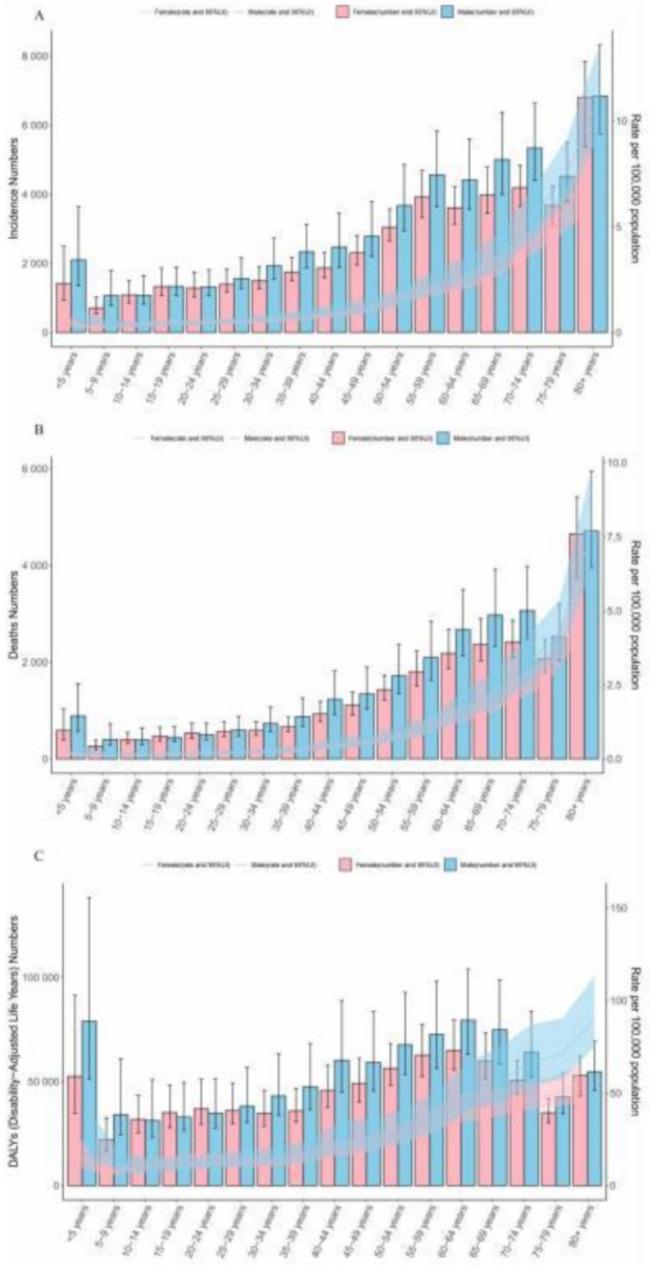
The disease burden of STS has been decreasing, especially regarding mortality and DALYs rates. It's more prevalent in developed regions, males, and older. Focused medical prevention and health measures for these groups can help reduce the global disease burden.
背景
全球范围内缺乏关于软组织肉瘤(STS)的流行病学调查。本研究旨在评估204个国家和地区软组织肉瘤的全球疾病负担。
方法
我们基于《2021年全球疾病负担(GBD)》研究提供的数据,分析了软组织肉瘤的发病率、死亡率和伤残调整生命年(DALYs),并评估了不同地区、性别和年龄组的疾病负担趋势。同时,我们使用贝叶斯年龄-时期-队列(BAPC)模型预测全球软组织肉瘤疾病负担的发展趋势。
结果
在全球范围内,过去30年中,软组织肉瘤病例数从1990年的54,630.92例增加到2021年的96,200.96例,而在此期间年龄标准化发病率每10万人下降了0.05例。年龄标准化发病率和伤残调整生命年率分别下降了每10万人0.14例和每10万人6.86年。在21个全球疾病负担(GBD)区域中,社会人口指数(SDI)与发病率之间存在显著正相关(R = 0.4730,P < 0.0001)。预计软组织肉瘤病例数将在2033年达到峰值,为95,591.93人。
结论
软组织肉瘤的疾病负担一直在下降,尤其是在死亡率和伤残调整生命年率方面。在发达地区、男性和老年人中更为普遍。针对这些群体的重点医疗预防和健康措施有助于减轻全球疾病负担。



 Zotero 插件