
使用深度学习方法改进蛋白质-蛋白质相互作用的计算机模拟识别
Improved in Silico Identification of Protein-Protein Interactions Using Deep Learning Approach.
作者信息
Khan Irfan, Arif Muhammad, Ghulam Ali, Albaradei Somayah, Thafar Maha A, Worachartcheewan Apilak
机构信息
Department of Computer Science, Abdul Wali Khan University Mardan, KPK, Mardan, Pakistan.
College of Science and Engineering, Hamad Bin Khalifa University, Doha, Qatar.
出版信息
IET Syst Biol. 2025 Jan-Dec;19(1):e70008. doi: 10.1049/syb2.70008.
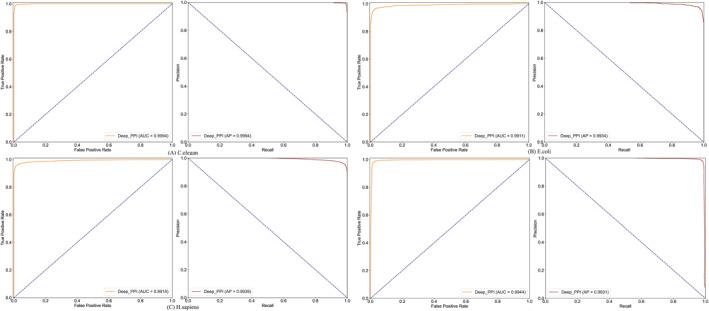
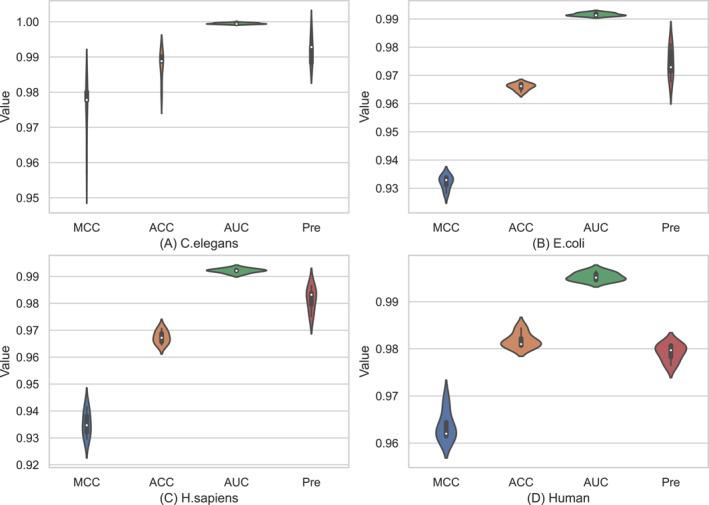
Protein-protein interactions (PPIs) perform significant functions in many biological activities likewise gene regulation, metabolic pathways and signal transduction. The deregulation of PPIs may cause deadly diseases, such as cancer, autoimmune, pernicious anaemia etc. Detecting PPIs can aid in elucidating the cellular process's underlying molecular mechanisms and contribute to facilitating the discovery of new proteins for the development of novel drugs. Although high-throughput wet-lab technologies have been matured to identify large scale PPI identification; however, the traditional experimental methods are costly and slow and resource intensive. To support experimental techniques, numerous computational approaches have been emerged for identifying PPIs solely from protein sequences. However, the performance of available PPI tools are unsatisfactory and gaps remain for further improvement. In this study, a novel deep learning-based model, Deep_PPI, was developed for predicting multiple species PPIs. To extract the biological features, the authors used 21D vector representing 20 kinds' native and one special amino acid residue and implemented the Keras binary profile encoding technique to formulate each residue in proteins. The binary profile use the PaddVal strategy to equalise the length of positive and negative PPIs. After extracting the features, the authors fed them into one dimension convolutional neural network to build the final prediction model. The proposed Deep_PPI model, which consider the protein pairs into two convolutional heads. Finally, the authors concatenated the two outputs were concatenated from two branches concatenated by fully connected layer. The efficiency of the proposed predictor was demonstrated both on the cross validation and tested on various species datasets, for example, that is (Human, C. elegans, E. coli, and H. sapiens). The proposed model surpassed both the machine-learning models and existing state-of-the-art PPI methods. The proposed Deep_PPI will serve as valuable tool in the discovery of large-scale PPIs in particular and provide insights for drugs development in general.
蛋白质-蛋白质相互作用(PPIs)在许多生物活动中发挥着重要作用,如基因调控、代谢途径和信号转导。PPIs的失调可能导致致命疾病,如癌症、自身免疫性疾病、恶性贫血等。检测PPIs有助于阐明细胞过程的潜在分子机制,并有助于发现新的蛋白质以开发新型药物。尽管高通量湿实验室技术已经成熟,可以用于大规模PPI鉴定;然而,传统的实验方法成本高、速度慢且资源密集。为了支持实验技术,已经出现了许多仅从蛋白质序列中识别PPIs的计算方法。然而,现有PPI工具的性能并不理想,仍有进一步改进的空间。在本研究中,开发了一种基于深度学习的新型模型Deep_PPI,用于预测多种物种的PPIs。为了提取生物学特征,作者使用了代表20种天然氨基酸和一种特殊氨基酸残基的21D向量,并实施了Keras二进制轮廓编码技术来构建蛋白质中的每个残基。二进制轮廓使用PaddVal策略来平衡正、负PPIs的长度。提取特征后,作者将其输入到一维卷积神经网络中以构建最终的预测模型。所提出的Deep_PPI模型将蛋白质对分为两个卷积头。最后,作者将两个分支通过全连接层连接后的两个输出进行连接。所提出的预测器的效率在交叉验证中得到了证明,并在各种物种数据集上进行了测试,例如(人类、秀丽隐杆线虫、大肠杆菌和智人)。所提出的模型超越了机器学习模型和现有的最先进的PPI方法。所提出的Deep_PPI将特别成为发现大规模PPIs的有价值工具,并为一般药物开发提供见解。




 Zotero 插件