
利用类器官模型更好地理解全氟和多氟烷基物质对人类健康的风险
Towards a Better Understanding of the Human Health Risk of Per- and Polyfluoroalkyl Substances Using Organoid Models.
作者信息
Xu Haoan, Kang Jiahui, Gao Xue, Lan Yingying, Li Minghui
机构信息
School of Life Sciences and Technology, Tongji University, Shanghai 200120, China.
Key Lab of Visual Damage and Regeneration & Restoration of Chongqing, Southwest Hospital, Third Military Medical University (Army Medical University), Chongqing 400038, China.
出版信息
Bioengineering (Basel). 2025 Apr 7;12(4):393. doi: 10.3390/bioengineering12040393.
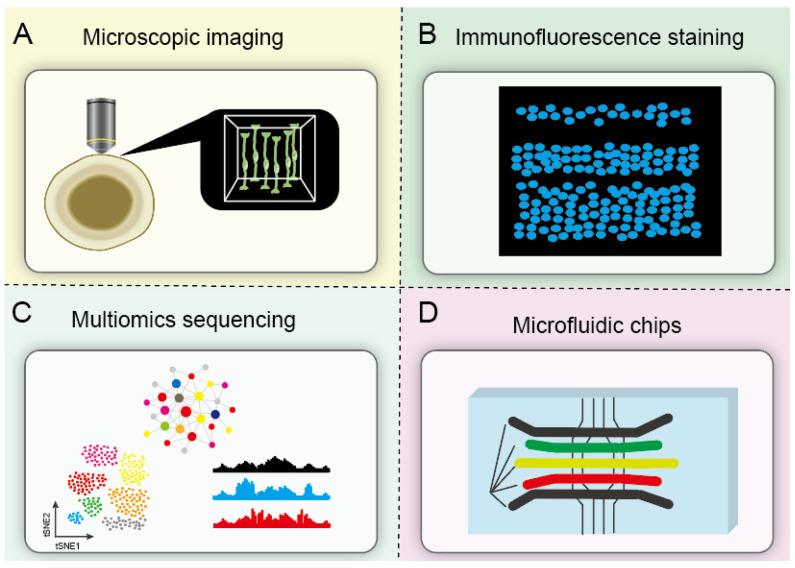
The ubiquitous presence of per- and polyfluoroalkyl substances (PFAS) in the environment has garnered global public concern. Epidemiological studies have proved that exposure to PFAS is associated with human health risks. Although evidence demonstrated the toxic mechanisms of PFAS based on animal models and traditional cell cultures, their limitations in inter-species differences and lack of human-relevant microenvironments hinder the understanding of health risks from PFAS exposure. There is an increasing necessity to explore alternative methodologies that can effectively evaluate human health risks. Human organoids derived from stem cells accurately mimic the sophisticated and multicellular structures of native human organs, providing promising models for toxicology research. Advanced organoids combined with innovative technologies are expected to improve understanding of the breadth and depth of PFAS toxicity.
全氟和多氟烷基物质(PFAS)在环境中的普遍存在已引起全球公众关注。流行病学研究证明,接触PFAS与人类健康风险相关。尽管有证据基于动物模型和传统细胞培养证明了PFAS的毒性机制,但其在种间差异方面的局限性以及缺乏与人类相关的微环境阻碍了对PFAS暴露所致健康风险的理解。探索能够有效评估人类健康风险的替代方法变得越来越必要。源自干细胞的类器官能精确模拟天然人体器官复杂的多细胞结构,为毒理学研究提供了有前景的模型。先进的类器官与创新技术相结合,有望增进对PFAS毒性广度和深度的理解。

 Zotero 插件