
结核分枝杆菌的分子分型:当前方法、数据库、软件及分析工具综述
Molecular typing of Mycobacterium tuberculosis: a review of current methods, databases, softwares, and analytical tools.
作者信息
Couvin David, Allaguy Anne-Sophie, Ez-Zari Ayoub, Jagielski Tomasz, Rastogi Nalin
机构信息
WHO Supranational TB Reference Laboratory-TB and Mycobacteria Unit, Institut Pasteur de la Guadeloupe, F-97139, Les Abymes, Guadeloupe, France.
Laboratoire de Mathématiques Informatique et Applications (LAMIA), Université des Antilles, F-97154, Pointe-à-Pitre, Guadeloupe, France.
出版信息
FEMS Microbiol Rev. 2025 Jan 14;49. doi: 10.1093/femsre/fuaf017.
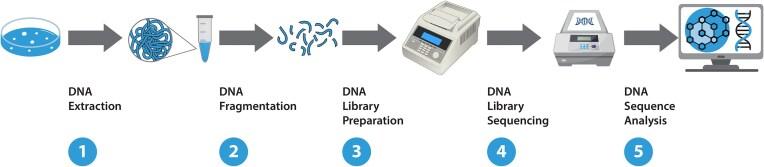
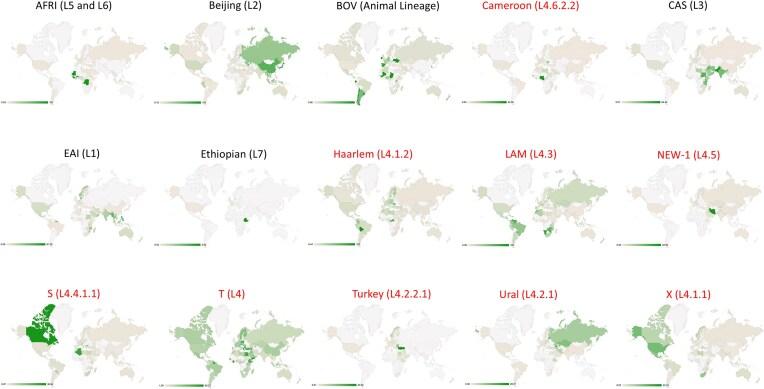
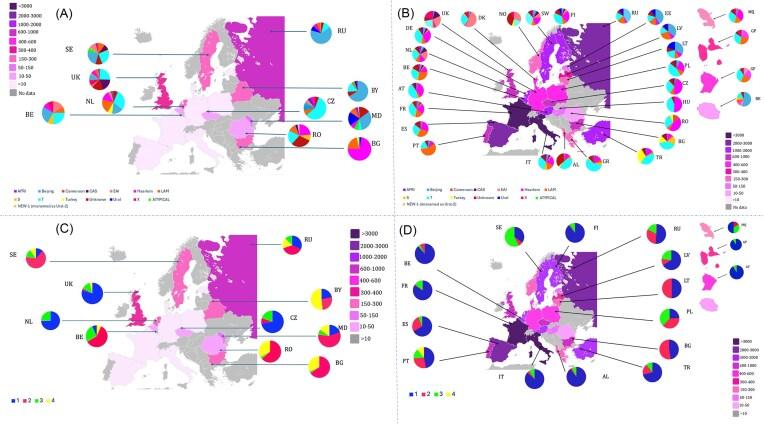
Studies on the epidemiology and clinical relevance of Mycobacterium tuberculosis complex (MTBC) have immensely benefited from molecular typing methods, associated software applications, and bioinformatics tools. Over the last two decades, the Pasteur Institute of Guadeloupe has developed a range of bioinformatic resources, including databases and software, to advance understanding of TB epidemiology. Traditional methods, such as IS6110-RFLP, MIRU-VNTR typing, and spoligotyping, have been instrumental but are increasingly supplanted by more precise and high-throughput techniques. These typing methods offer relatively good discrimination and reproducibility, making them popular choices for epidemiological studies. However, the advent of whole-genome sequencing (WGS) has revolutionized Mycobacterium tuberculosis complex (MTBC) typing, providing unparalleled resolution and data analysis depth. WGS enables the identification of single nucleotide polymorphisms and other genetic variations, facilitating robust phylogenetic reconstructions, and detailed outbreak investigations. This review summarizes current molecular typing methods, as well as databases and software tools used for MTBC data analysis. A comprehensive comparison of available tools and databases is provided to guide future research on the epidemiology of TB and pathogen-associated variables (drug resistance or virulence) and public health initiatives.
对结核分枝杆菌复合群(MTBC)的流行病学及临床相关性研究极大地受益于分子分型方法、相关软件应用程序和生物信息学工具。在过去二十年中,瓜德罗普岛巴斯德研究所开发了一系列生物信息资源,包括数据库和软件,以促进对结核病流行病学的了解。传统方法,如IS6110-RFLP、MIRU-VNTR分型和间隔寡核苷酸分型(spoligotyping),发挥了重要作用,但正越来越多地被更精确和高通量的技术所取代。这些分型方法具有相对较好的鉴别能力和可重复性,使其成为流行病学研究的常用选择。然而,全基因组测序(WGS)的出现彻底改变了结核分枝杆菌复合群(MTBC)的分型,提供了无与伦比的分辨率和数据分析深度。WGS能够识别单核苷酸多态性和其他基因变异,有助于进行可靠的系统发育重建和详细的疫情调查。本综述总结了当前的分子分型方法,以及用于MTBC数据分析的数据库和软件工具。对现有工具和数据库进行了全面比较,以指导未来关于结核病流行病学以及病原体相关变量(耐药性或毒力)的研究和公共卫生举措。



 Zotero 插件