
糖尿病相关认知功能障碍的危险因素、病理变化及潜在治疗方法
Risk Factors, Pathological Changes, and Potential Treatment of Diabetes-Associated Cognitive Dysfunction.
作者信息
Meng Xiaoyu, Du Haiyang, Li Danpei, Guo Yaming, Luo Peiqiong, Pan Limeng, Kan Ranran, Yu Peng, Xiang Yuxi, Mao Beibei, He Yi, Wang Siyi, Li Wenjun, Yang Yan, Yu Xuefeng
机构信息
Division of Endocrinology, Department of Internal Medicine, Tongji Hospital, Tongji Medical College, Huazhong University of Science and Technology, Wuhan, China.
Hubei Clinical Medical Research Center for Endocrinology and Metabolic Diseases, Wuhan, China.
出版信息
J Diabetes. 2025 Apr;17(4):e70089. doi: 10.1111/1753-0407.70089.
BACKGROUND
Diabetes is a prevalent public health issue worldwide, and the cognitive dysfunction and subsequent dementia caused by it seriously affect the quality of life of patients.
METHODS
Recent studies were reviewed to provide a comprehensive summary of the risk factors, pathogenesis, pathological changes and potential drug treatments for diabetes-related cognitive dysfunction (DACD).
RESULTS
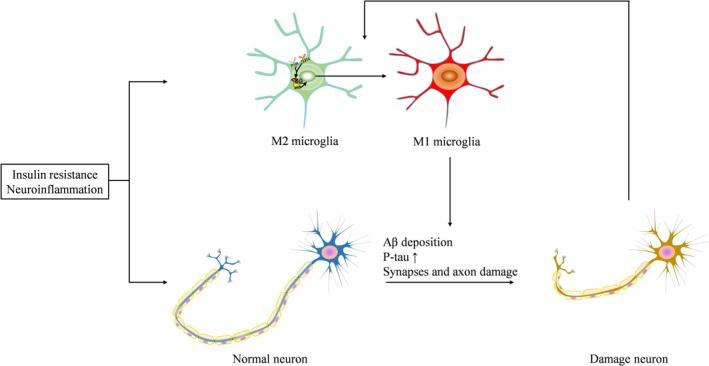
Several risk factors contribute to DACD, including hyperglycemia, hypoglycemia, blood sugar fluctuations, hyperinsulinemia, aging, and others. Among them, modifiable risk factors for DACD include blood glucose control, physical activity, diet, smoking, and hypertension management, while non-modifiable risk factors include age, genetic predisposition, sex, and duration of diabetes. At the present, the pathogenesis of DACD mainly includes insulin resistance, neuroinflammation, vascular disorders, oxidative stress, and neurotransmitter disorders.
CONCLUSIONS
In this review, we provide a comprehensive summary of the risk factors, pathogenesis, pathological changes and potential drug treatments for DACD, providing information from multiple perspectives for its prevention and management.
背景
糖尿病是全球普遍存在的公共卫生问题,由其引发的认知功能障碍及随后的痴呆严重影响患者生活质量。
方法
对近期研究进行综述,以全面总结糖尿病相关认知功能障碍(DACD)的危险因素、发病机制、病理变化及潜在药物治疗方法。
结果
多种危险因素导致DACD,包括高血糖、低血糖、血糖波动、高胰岛素血症、衰老等。其中,DACD的可改变危险因素包括血糖控制、体育活动、饮食、吸烟及高血压管理,而不可改变的危险因素包括年龄、遗传易感性、性别及糖尿病病程。目前,DACD的发病机制主要包括胰岛素抵抗、神经炎症、血管紊乱、氧化应激及神经递质紊乱。
结论
在本综述中,我们全面总结了DACD的危险因素、发病机制、病理变化及潜在药物治疗方法,从多个角度为其预防和管理提供信息。

 Zotero 插件