
年龄重编程:延长寿命的创新与伦理考量(综述)
Age reprogramming: Innovations and ethical considerations for prolonged longevity (Review).
作者信息
Saliev Timur, Singh Prim B
机构信息
Institute of Basic and Applied Medical Research, S.D. Asfendiyarov Kazakh National Medical University, Almaty 050000, Republic of Kazakhstan.
School of Medicine, Nazarbayev University, Astana 010000, Republic of Kazakhstan.
出版信息
Biomed Rep. 2025 Apr 10;22(6):96. doi: 10.3892/br.2025.1974. eCollection 2025 Jun.
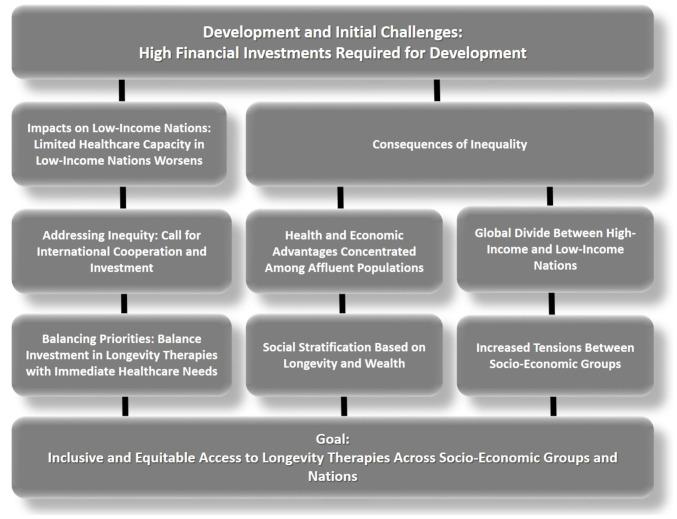
Age reprogramming and cellular rejuvenation therapies are revolutionizing the approach to aging and age-related diseases. These ground-breaking interventions target fundamental biological processes, including genomic instability, telomere attrition, and mitochondrial dysfunction, to restore cellular function and delay the onset of degenerative conditions. Emerging strategies such as epigenetic reprogramming, gene editing, stem cell therapy, and senolytic drugs show immense promise in extending health spans and potentially reversing aspects of aging. Despite marked progress in preclinical studies and early-stage clinical trials, translating these therapies into practical healthcare solutions presents significant challenges. Key issues include ensuring safety, optimizing delivery mechanisms, overcoming regulatory barriers, and addressing high costs. Moreover, ethical and economic considerations, such as equitable access and societal impacts, must be carefully addressed to prevent widening health disparities. The present review examines the current state of cellular rejuvenation research, highlighting both scientific advancements and the complex challenges associated with these therapies. With interdisciplinary collaboration, robust ethical frameworks, and scalable technological innovations, these therapies have the potential to transform healthcare. By shifting the focus from disease management to proactive health preservation, they offer a future where aging becomes a manageable and equitable process.
年龄重编程和细胞年轻化疗法正在彻底改变人们应对衰老及与年龄相关疾病的方式。这些开创性的干预措施针对包括基因组不稳定、端粒损耗和线粒体功能障碍在内的基本生物学过程,以恢复细胞功能并延缓退行性疾病的发作。表观遗传重编程、基因编辑、干细胞疗法和衰老细胞溶解药物等新兴策略在延长健康寿命以及潜在地逆转衰老方面显示出巨大的前景。尽管在临床前研究和早期临床试验中取得了显著进展,但将这些疗法转化为实际的医疗保健解决方案仍面临重大挑战。关键问题包括确保安全性、优化给药机制、克服监管障碍以及解决高成本问题。此外,必须认真考虑伦理和经济因素,如公平获取和社会影响,以防止健康差距扩大。本综述考察了细胞年轻化研究的现状,突出了这些疗法的科学进展以及与之相关的复杂挑战。通过跨学科合作、强有力的伦理框架和可扩展的技术创新,这些疗法有潜力变革医疗保健。通过将重点从疾病管理转向积极的健康维护,它们提供了一个衰老成为可控且公平过程的未来。

 Zotero 插件