
利用抗菌肽的力量:从作用机制到局部感染的递送优化
Harnessing the Power of Antimicrobial Peptides: From Mechanisms to Delivery Optimization for Topical Infections.
作者信息
Mukhopadhyay Songhita, Youssef Souha H, Song Yunmei, Nayak Usha Y, Garg Sanjay
机构信息
Centre for Pharmaceutical Innovation, Clinical and Health Sciences, University of South Australia, Adelaide, SA 5000, Australia.
Department of Pharmaceutics, Manipal College of Pharmaceutical Sciences, Manipal Academy of Higher Education, Manipal 576104, Karnataka, India.
出版信息
Antibiotics (Basel). 2025 Apr 4;14(4):379. doi: 10.3390/antibiotics14040379.
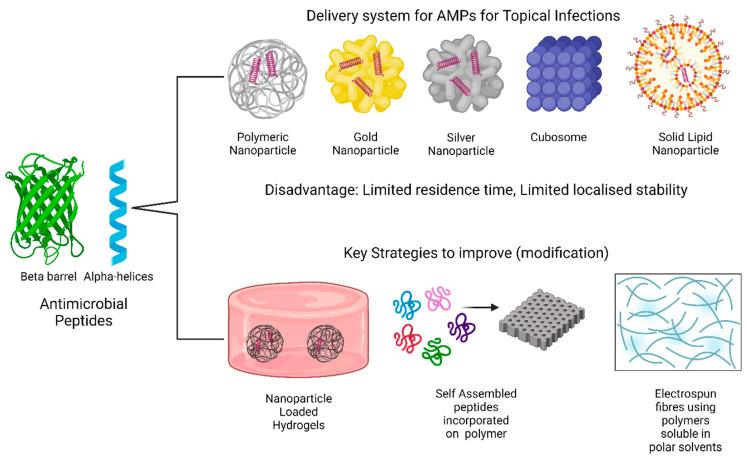
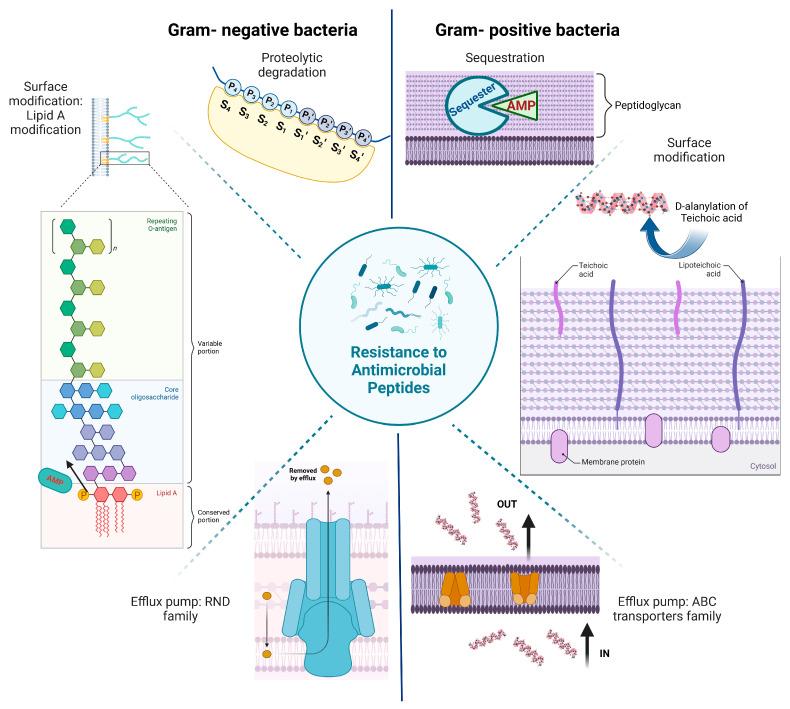
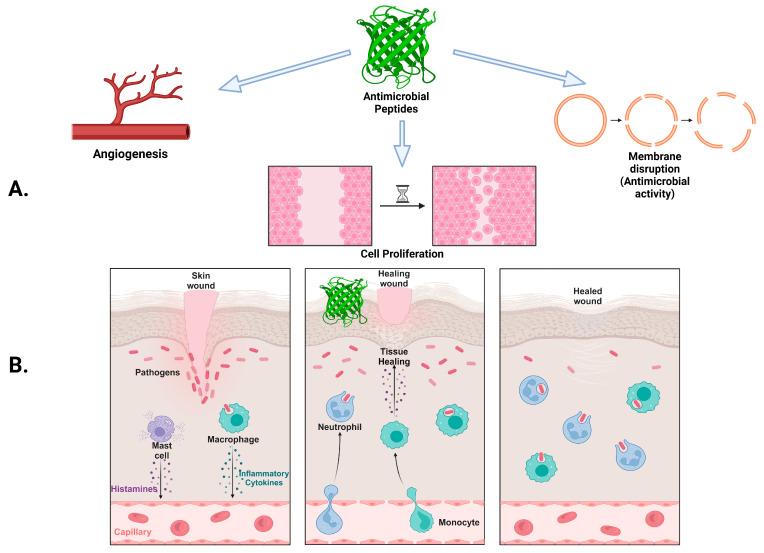
Antimicrobial peptides (AMPs) have emerged as promising agents for treating topical infections due to their enhanced biocompatibility and resistance to systemic degradation. AMPs possess host immunomodulatory effects and disintegrate bacterial cell membranes, a mechanism less prone to microbial resistance compared to conventional antibiotics, making AMPs potential candidates for antimicrobial delivery. The review discusses the challenges posed by antimicrobial resistance (AMR) and explores the mechanisms by which bacteria develop resistance to AMPs. The authors provide a detailed analysis of the mechanisms of action of AMPs, their limitations, and strategies to improve their efficacy. Conventional AMP delivery systems, including polymeric, synthetic, and lipid-based nanoparticles and cubosomes, face challenges of microbial resistance mechanisms via efflux pump systems, bacterial cell membrane modifications, and protease enzyme release. This review explores strategies to optimize these delivery systems. Furthermore, market statistics and the growing interest in peptide antibiotics have been explored in this review. The authors provide future research directions, such as exploring gene-targeting approaches to combat emerging bacterial resistance against AMPs, and emphasize considering the conformational stability of peptides, the skin microbiome's nature at the infection site, and proteolytic stability for developing efficient AMP delivery systems for topical infections.
抗菌肽(AMPs)因其增强的生物相容性和对全身降解的抗性,已成为治疗局部感染的有前景的药物。抗菌肽具有宿主免疫调节作用,并能破坏细菌细胞膜,与传统抗生素相比,这种机制不易产生微生物耐药性,使抗菌肽成为抗菌给药的潜在候选药物。本文综述讨论了抗菌耐药性(AMR)带来的挑战,并探讨了细菌对抗菌肽产生耐药性的机制。作者详细分析了抗菌肽的作用机制、局限性以及提高其疗效的策略。传统的抗菌肽递送系统,包括基于聚合物、合成材料和脂质的纳米颗粒以及立方液晶,面临着通过外排泵系统、细菌细胞膜修饰和蛋白酶释放等微生物耐药机制的挑战。本文综述探讨了优化这些递送系统的策略。此外,本文还探讨了市场统计数据以及对肽类抗生素日益增长的兴趣。作者提供了未来的研究方向,如探索基因靶向方法以对抗新出现的细菌对抗菌肽的耐药性,并强调在开发用于局部感染的高效抗菌肽递送系统时,要考虑肽的构象稳定性、感染部位皮肤微生物群的性质以及蛋白水解稳定性。


 Zotero 插件