
利用斑马鱼探索纳米颗粒的氧化应激机制():毒理学与药物学见解
Exploring Oxidative Stress Mechanisms of Nanoparticles Using Zebrafish (): Toxicological and Pharmaceutical Insights.
作者信息
Batir-Marin Denisa, Boev Monica, Cioanca Oana, Lungu Ionut-Iulian, Marin George-Alexandru, Burlec Ana Flavia, Mitran Andreea-Maria, Mircea Cornelia, Hancianu Monica
机构信息
Department of Pharmaceutical Sciences, Faculty of Medicine and Pharmacy, "Dunărea de Jos" University, 800008 Galati, Romania.
Faculty of Pharmacy, "Grigore T. Popa" University of Medicine and Pharmacy, 16 University Street, 700115 Iasi, Romania.
出版信息
Antioxidants (Basel). 2025 Apr 18;14(4):489. doi: 10.3390/antiox14040489.
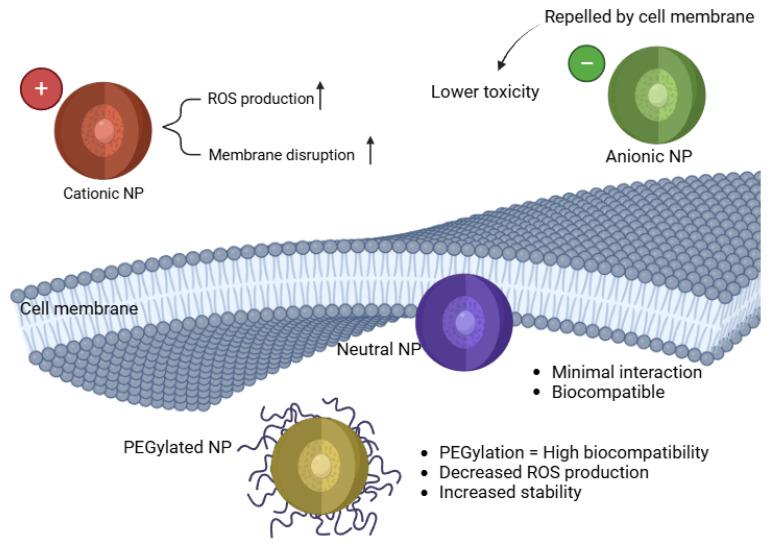
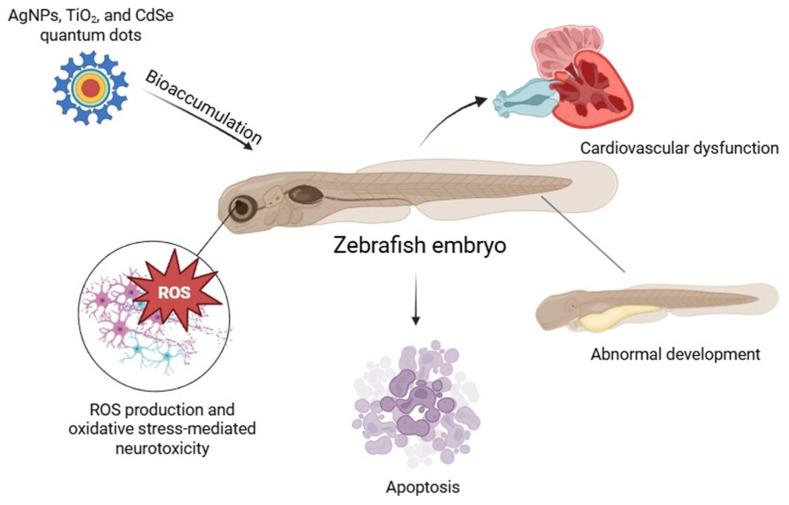
Nanoparticles (NPs) have revolutionized biomedical and pharmaceutical applications due to their unique physicochemical properties. However, their widespread use has raised concerns regarding their potential toxicity, particularly mediated by oxidative stress mechanisms. This redox imbalance, primarily driven by the overproduction of reactive oxygen species (ROS), plays a central role in NP-induced toxicity, leading to cellular dysfunction, inflammation, apoptosis, and genotoxicity. Zebrafish () have emerged as a powerful in vivo model for nanotoxicology, offering advantages such as genetic similarity to humans, rapid development, and optical transparency, allowing real-time monitoring of oxidative damage. This review synthesizes current findings on NP-induced oxidative stress in zebrafish, highlighting key toxicity mechanisms and case studies involving metallic (gold, silver, copper), metal oxide (zinc oxide, titanium dioxide, iron oxide), polymeric, and lipid-based NPs. The influence of NP physicochemical properties, such as size, surface charge, and functionalization, on oxidative stress responses is explored. Additionally, experimental approaches used to assess ROS generation, antioxidant enzyme activity, and oxidative damage biomarkers in zebrafish models are examined. In addition to toxicity concerns, pharmaceutical applications of antioxidant-modified NPs are evaluated, particularly their potential in drug delivery, neuroprotection, and disease therapeutics. Notably, studies show that curcumin- and quercetin-loaded nanoparticles enhance antioxidant defense and reduce neurotoxicity in zebrafish models, demonstrating their promise in neuroprotective therapies. Furthermore, cerium oxide nanoparticles, which mimic catalase and SOD enzymatic activity, have shown significant efficacy in reducing ROS and protecting against oxidative damage. Challenges in zebrafish-based nanotoxicology, the need for standardized methodologies, and future directions for optimizing NP design to minimize oxidative stress-related risks are also discussed. By integrating insights from toxicity mechanisms, case studies, and pharmaceutical strategies, this review supports the development of safer and more effective nanoparticle-based therapies while addressing the challenges of oxidative stress-related toxicity.
纳米颗粒(NPs)因其独特的物理化学性质,给生物医学和制药应用带来了变革。然而,它们的广泛使用引发了人们对其潜在毒性的担忧,尤其是由氧化应激机制介导的毒性。这种氧化还原失衡主要由活性氧(ROS)的过量产生驱动,在NP诱导的毒性中起核心作用,导致细胞功能障碍、炎症、细胞凋亡和基因毒性。斑马鱼已成为纳米毒理学中一种强大的体内模型,具有与人类基因相似、发育迅速和光学透明等优势,能够实时监测氧化损伤。本综述综合了目前关于斑马鱼中NP诱导氧化应激的研究结果,突出了关键的毒性机制以及涉及金属(金、银、铜)、金属氧化物(氧化锌、二氧化钛、氧化铁)、聚合物和脂质基NP的案例研究。探讨了NP物理化学性质(如尺寸、表面电荷和功能化)对氧化应激反应的影响。此外,还研究了用于评估斑马鱼模型中ROS生成、抗氧化酶活性和氧化损伤生物标志物的实验方法。除了毒性问题,还评估了抗氧化剂修饰的NP的制药应用,特别是它们在药物递送、神经保护和疾病治疗方面的潜力。值得注意的是,研究表明,负载姜黄素和槲皮素的纳米颗粒可增强斑马鱼模型中的抗氧化防御并降低神经毒性,证明了它们在神经保护治疗中的前景。此外,模拟过氧化氢酶和超氧化物歧化酶酶活性的氧化铈纳米颗粒在减少ROS和防止氧化损伤方面已显示出显著效果。还讨论了基于斑马鱼的纳米毒理学面临的挑战、标准化方法的必要性以及优化NP设计以最小化氧化应激相关风险的未来方向。通过整合毒性机制、案例研究和制药策略的见解,本综述支持开发更安全、更有效的基于纳米颗粒的疗法,同时应对氧化应激相关毒性的挑战。
 Zotero 插件