
在一个药物研发项目中,开发一种高通量声学液滴喷射质谱分析法和一种基于固体支持膜(SSM)的电生理分析法,以研究SLC1 - A3、- A2和 - A1的药理学抑制作用。
The development of a high-throughput acoustic droplet ejection mass-spectrometry assay and a solid-supported membrane (SSM)-based electrophysiological assay to study the pharmacological inhibition of SLC1-A3, -A2 and -A1 in a drug discovery program.
作者信息
Zuschlag Yasmin, Pommereau Antje, Warkentin Jennifer, Licher Thomas, Bärenz Felix
机构信息
Sanofi, Integrated Drug Discovery, Frankfurt, Germany.
出版信息
Front Pharmacol. 2025 Apr 16;16:1544682. doi: 10.3389/fphar.2025.1544682. eCollection 2025.
INTRODUCTION
The solute carrier (SLC) family comprises a diverse group of membrane proteins essential for transporting a variety of substrates across cellular membranes. These transporters play crucial roles in cellular homeostasis, nutrient uptake, and neurotransmitter clearance. The SLC1 subfamily, specifically SLC1A3 (EAAT1), SLC1A2 (EAAT2), and SLC1A1 (EAAT3), are excitatory amino acid transporters that regulate glutamate concentrations in the synaptic cleft, making them important targets for neurological disorder therapeutics. Despite their significance, drug discovery efforts targeting these transporters have been hampered by limitations in available screening methodologies.
METHODS
We are utilizing advanced methodologies such as Acoustic Droplet Ejection Mass Spectrometry (ADE-MS) and Solid Supported Membrane (SSM)-based electrophysiology to develop assays for the SLC1 family members: SLC1A3 (EAAT1), SLC1A2 (EAAT2), and SLC1A1 (EAAT3).
RESULTS AND DISCUSSION
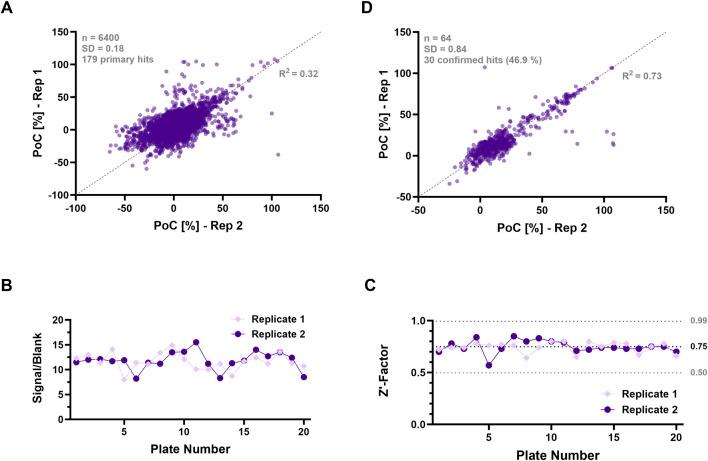
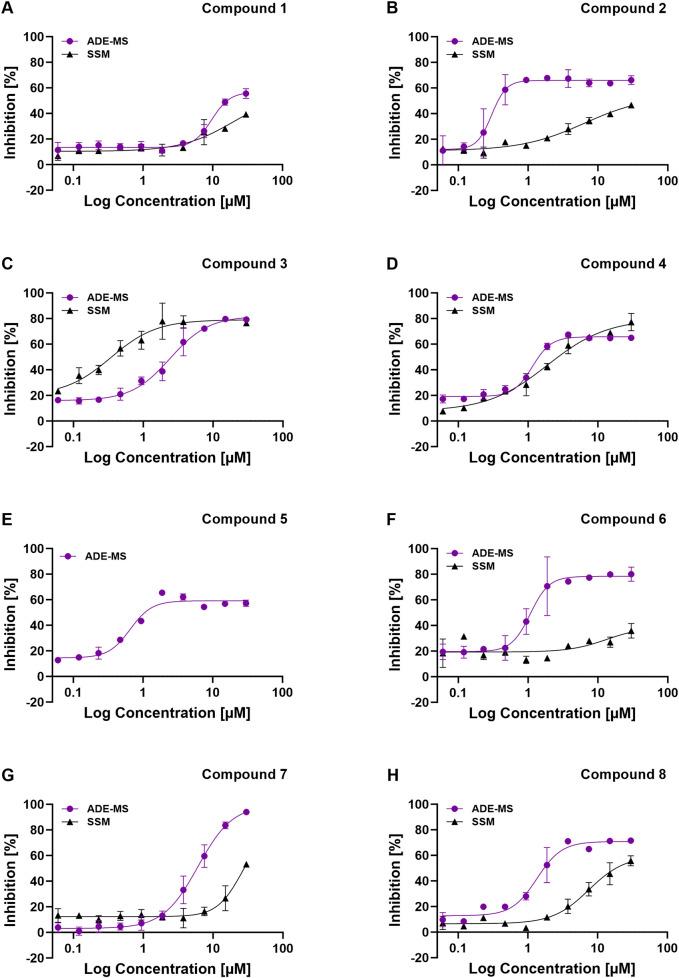
In this manuscript, we present the successful development of novel assays specifically designed for drug discovery applications targeting the SLC1 family members. Our Acoustic Droplet Ejection Mass Spectrometry (ADE-MS) platform demonstrated high sensitivity and reproducibility in detecting substrate transport activity across all three transporters. The complementary Solid Supported Membrane (SSM)-based electrophysiology assay provided real-time kinetic measurements of transporter function with minimal background interference. These assays exhibited Z' factors exceeding 0.7, indicating their robustness for high-throughput screening campaigns. Initial validation using known inhibitors confirmed the assays' ability to identify compounds with varying potencies and mechanisms of action against SLC1A3, SLC1A2, and SLC1A1.
CONCLUSION
We endeavor to establish robust assays that can facilitate future drug discovery campaigns.
引言
溶质载体(SLC)家族由多种膜蛋白组成,这些膜蛋白对于将各种底物转运穿过细胞膜至关重要。这些转运蛋白在细胞稳态、营养物质摄取和神经递质清除中发挥着关键作用。SLC1亚家族,特别是SLC1A3(EAAT1)、SLC1A2(EAAT2)和SLC1A1(EAAT3),是兴奋性氨基酸转运蛋白,可调节突触间隙中的谷氨酸浓度,使其成为神经疾病治疗的重要靶点。尽管它们具有重要意义,但针对这些转运蛋白的药物发现工作一直受到现有筛选方法局限性的阻碍。
方法
我们正在利用先进的方法,如声学液滴喷射质谱(ADE-MS)和基于固体支持膜(SSM)的电生理学,来开发针对SLC1家族成员SLC1A3(EAAT1)、SLC1A2(EAAT2)和SLC1A1(EAAT3)的检测方法。
结果与讨论
在本手稿中,我们展示了专门为针对SLC1家族成员的药物发现应用而成功开发的新型检测方法。我们的声学液滴喷射质谱(ADE-MS)平台在检测所有三种转运蛋白的底物转运活性方面表现出高灵敏度和可重复性。基于固体支持膜(SSM)的互补电生理学检测提供了转运蛋白功能的实时动力学测量,背景干扰最小。这些检测方法的Z'因子超过0.7,表明它们对于高通量筛选活动具有稳健性。使用已知抑制剂进行的初步验证证实了这些检测方法能够识别对SLC1A3、SLC1A2和SLC1A1具有不同效力和作用机制的化合物。
结论
我们致力于建立强大的检测方法,以促进未来的药物发现活动。


 Zotero 插件