
酮咯酸在第三磨牙手术中镇痛效果及不良反应的定量系统评价
A Quantitative Systematic Review on the Analgesic Efficacy and Adverse Effects of Ketorolac in Third Molar Surgery.
作者信息
Isiordia-Espinoza Mario Alberto, Aragon-Martinez Othoniel Hugo, Serafín-Higuera Nicolás Addiel, López-Verdín Sandra, Gómez-Sánchez Eduardo, Molina-Frechero Nelly, Bologna-Molina Ronell, Guzmán-Flores Juan Manuel, Mora-Falcón Itzel Joselyn
机构信息
División de Ciencias Biomédicas, Centro Universitario de los Altos, Universidad de Guadalajara, Tepatitlán de Morelos 47620, Mexico.
Departamento de Farmacología, Facultad de Medicina, Universidad Autónoma de San Luis Potosí, San Luis Potosí 78290, Mexico.
出版信息
Clin Pract. 2025 Apr 18;15(4):81. doi: 10.3390/clinpract15040081.
OBJECTIVES
This study aimed to determine the number needed to treat (NNT) of ketorolac in comparison to placebo after third molar surgery.
METHODS
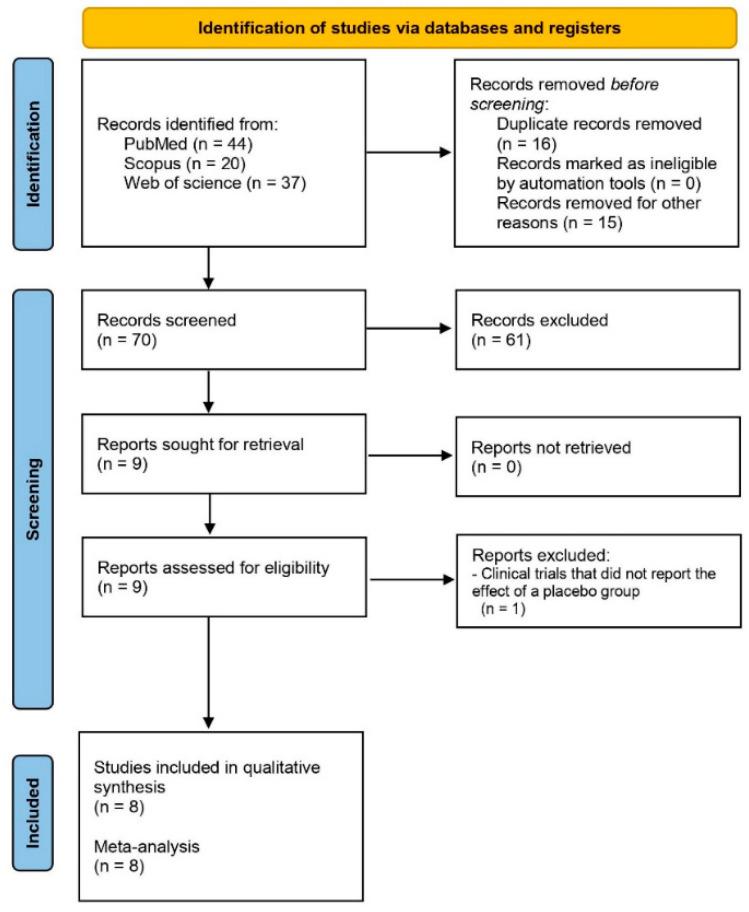
Studies located in PubMed, Scopus, and Web of Science were evaluated with the Cochrane Risk of Bias assessment tool. Data on the onset of analgesia, the number of patients requiring rescue medication, the global or general evaluation of the study medication, and adverse effects were extracted. Data analysis was performed using Review Manager 5.3 software for Windows.
RESULTS
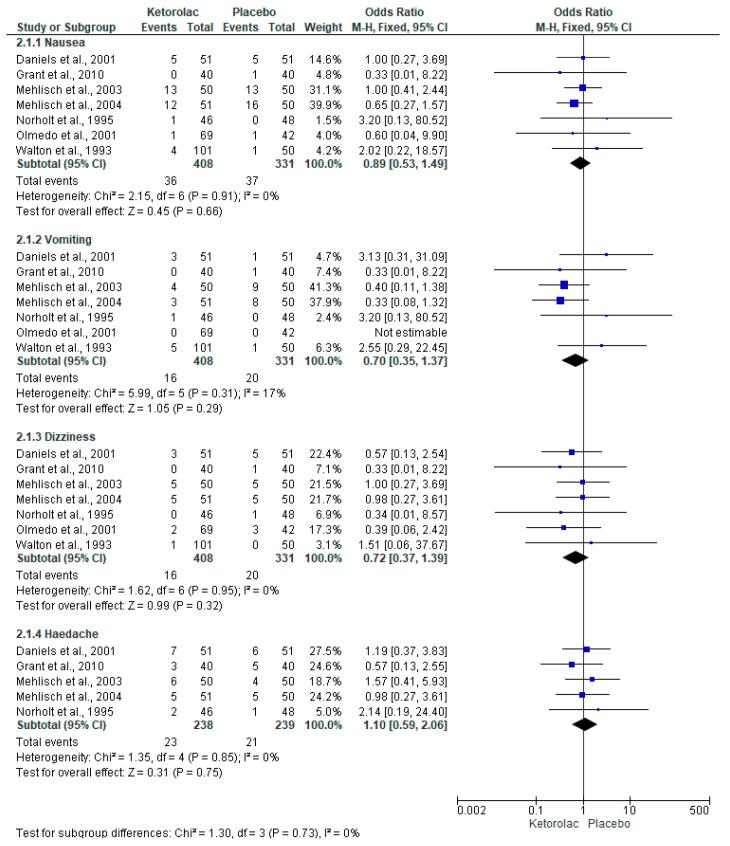
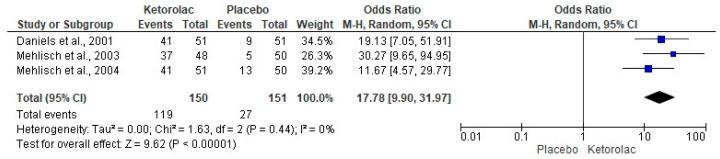
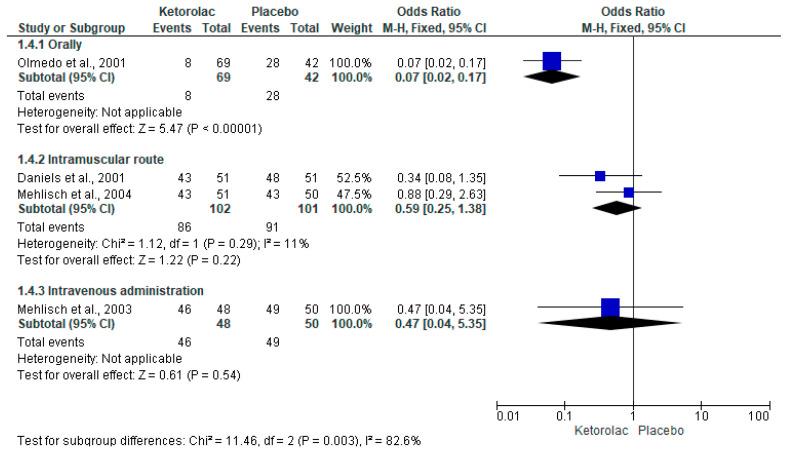
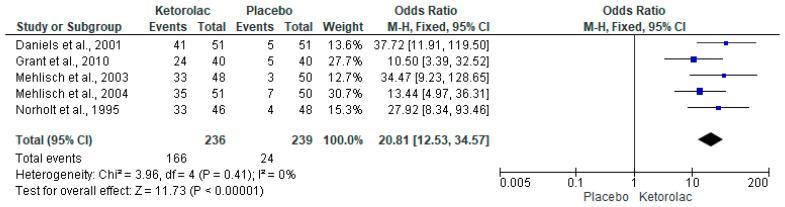
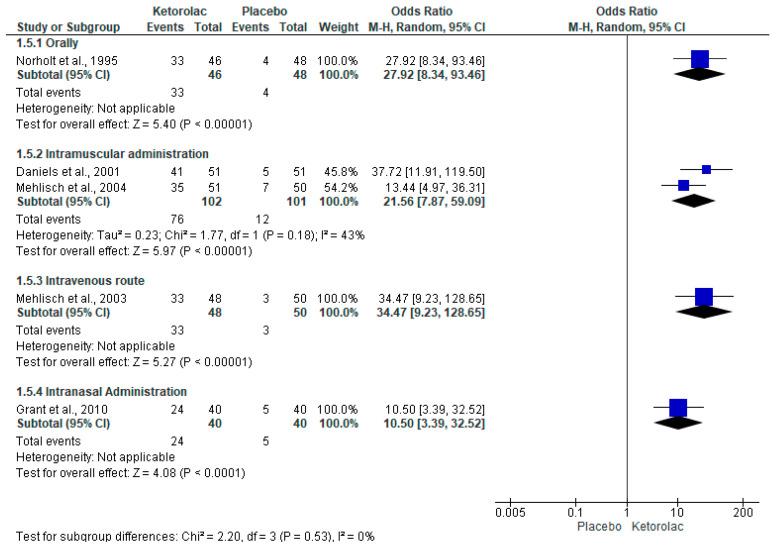
The qualitative assessment of the included studies showed that ketorolac was more effective than a placebo and the quantitative evaluation on the onset of analgesia (NNT = 1.6 (95%CIs = 1.4, 1.9), n = 301), the number of patients who took rescue analgesics (NNT = 3.6 (95%CIs = 2.8 to 4.9), n = 563), and the global evaluation of the treatments (NNT = 1.7 (95%CIs = 1.5 to 1.9), n = 475) showed estimates of analgesic efficacy with a statistical difference in favor of ketorolac when compared with a placebo. No statistical difference was observed in adverse effects between ketorolac and placebo (n = 739).
CONCLUSIONS
There is scientific evidence of moderate quality that allows estimators of the analgesic efficacy of ketorolac to be calculated, which will significantly help the clinician who performs pharmacological treatment after third molar surgery.
目的
本研究旨在确定与安慰剂相比,在拔除第三磨牙手术后使用酮咯酸的需治疗人数(NNT)。
方法
使用Cochrane偏倚风险评估工具对PubMed、Scopus和Web of Science数据库中检索到的研究进行评估。提取有关镇痛起效时间、需要使用解救药物的患者数量、对研究药物的整体或综合评价以及不良反应的数据。使用适用于Windows的Review Manager 5.3软件进行数据分析。
结果
纳入研究的定性评估表明,酮咯酸比安慰剂更有效,并且在镇痛起效时间(NNT = 1.6(95%CI = 1.4, 1.9),n = 301)、使用解救镇痛药的患者数量(NNT = 3.6(95%CI = 2.8至4.9),n = 563)以及治疗的整体评价(NNT = 1.7(95%CI = 1.5至1.9),n = 475)方面的定量评估显示,与安慰剂相比,酮咯酸的镇痛效果估计值具有统计学差异,支持酮咯酸。在酮咯酸和安慰剂之间未观察到不良反应的统计学差异(n = 739)。
结论
有中等质量的科学证据可用于计算酮咯酸的镇痛效果估计值,这将对在拔除第三磨牙手术后进行药物治疗的临床医生有显著帮助。


 Zotero 插件