
神经退行性疾病中的脑铁蓄积:空气污染是否起作用?
Brain iron accumulation in neurodegenerative disorders: Does air pollution play a role?
作者信息
George Jithin V, Hornburg Kathryn J, Merrill Alyssa, Marvin Elena, Conrad Katherine, Welle Kevin, Gelein Robert, Chalupa David, Graham Uschi, Oberdörster Günter, Johnson G Allan, Cory-Slechta Deborah A, Sobolewski Marissa
机构信息
Department of Environmental Medicine, University of Rochester Medical Center, Rochester, NY, 14642, USA.
Department of Radiology, Duke University School of Medicine, Durham, NC, 27710, USA.
出版信息
Part Fibre Toxicol. 2025 May 1;22(1):9. doi: 10.1186/s12989-025-00622-z.
BACKGROUND
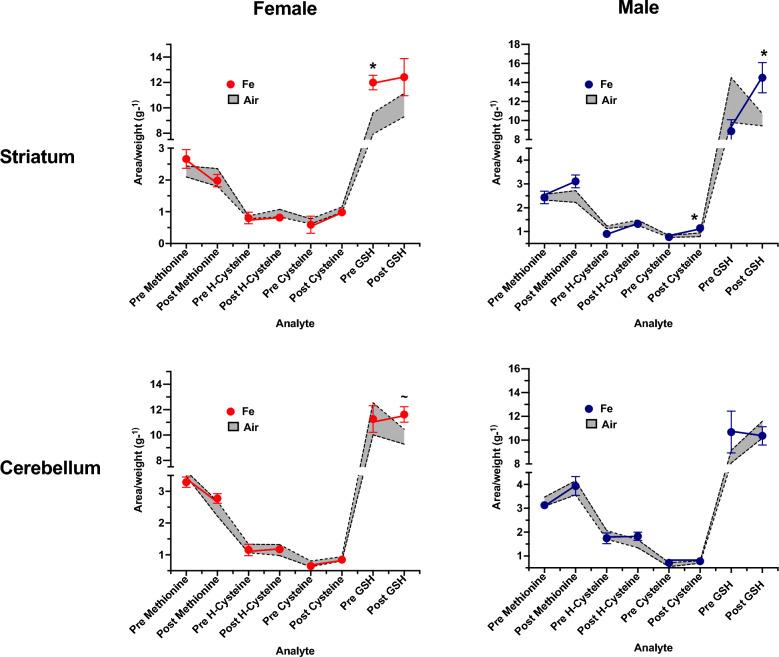
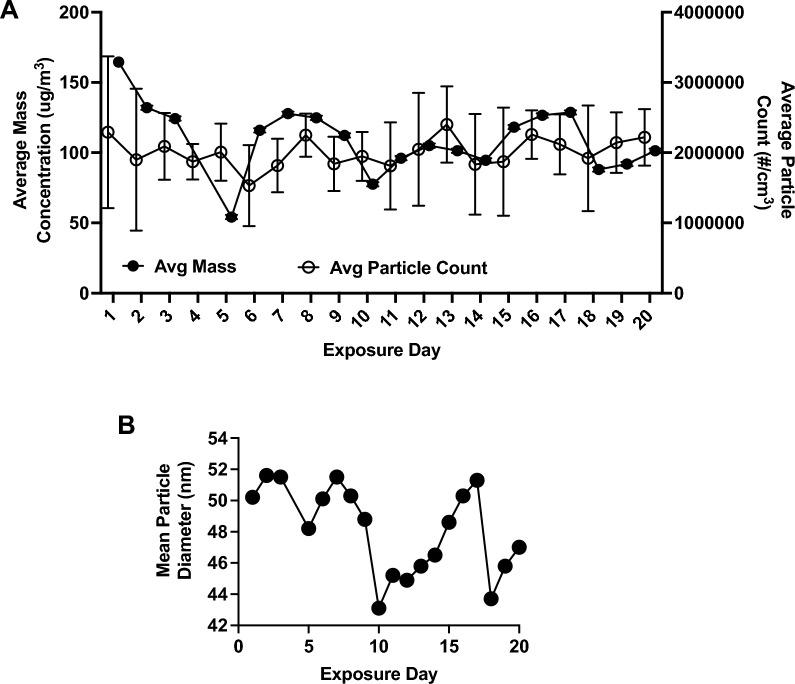
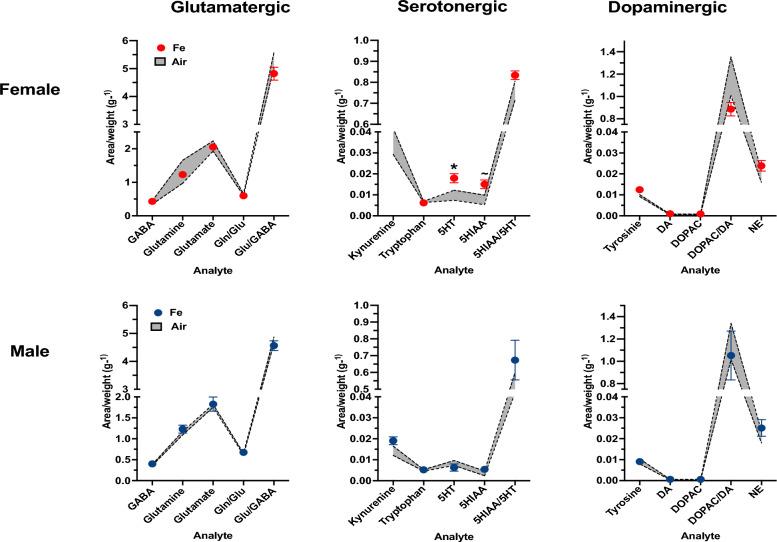
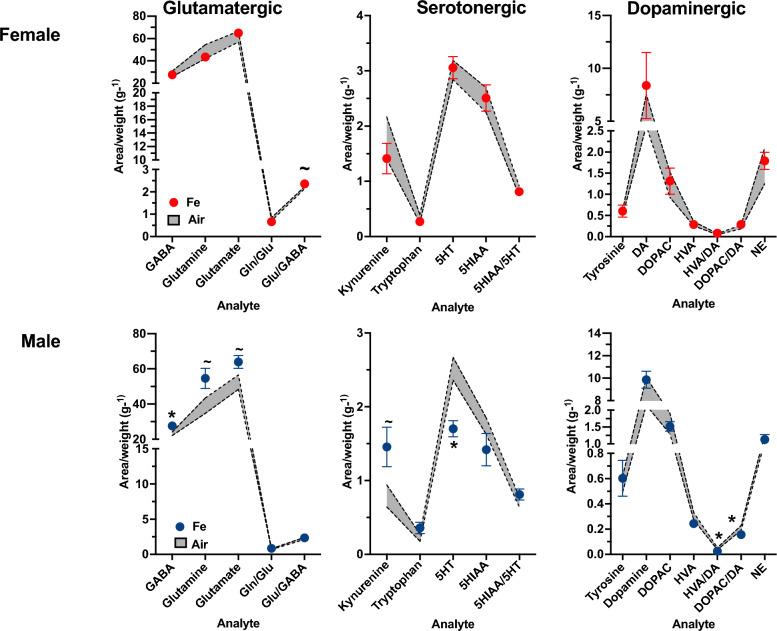
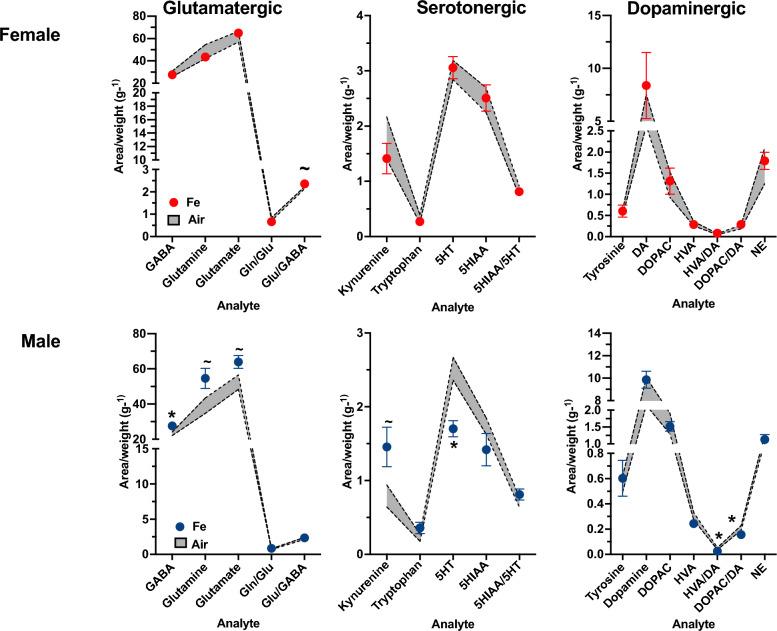
Both excess brain Fe and air pollution (AP) exposures are associated with increased risk for multiple neurodegenerative disorders. Fe is a redox-active metal that is abundant in AP and even further elevated in U.S. subway systems. Exposures to AP and associated contaminants, such as Fe, are lifelong and could therefore contribute to elevated brain Fe observed in neurodegenerative diseases, particularly via nasal olfactory uptake of ultrafine particle AP. These studies tested the hypotheses that exogenously generated Fe oxide nanoparticles could reach the brain following inhalational exposures and produce neurotoxic effects consistent with neurodegenerative diseases and disorders in adult C57/Bl6J mice exposed by inhalation to Fe nanoparticles at a concentration similar to those found in underground subway systems (~ 150 µg/m) for 20 days. Olfactory bulb sections and exposure chamber TEM grids were analyzed for Fe speciation. Measures included brain volumetric and diffusivity changes; levels of striatal and cerebellar neurotransmitters and trans-sulfuration markers; quantification of frontal cortical and hippocampal Aβ42, total tau, and phosphorylated tau; and behavioral alterations in locomotor activity and memory.
RESULTS
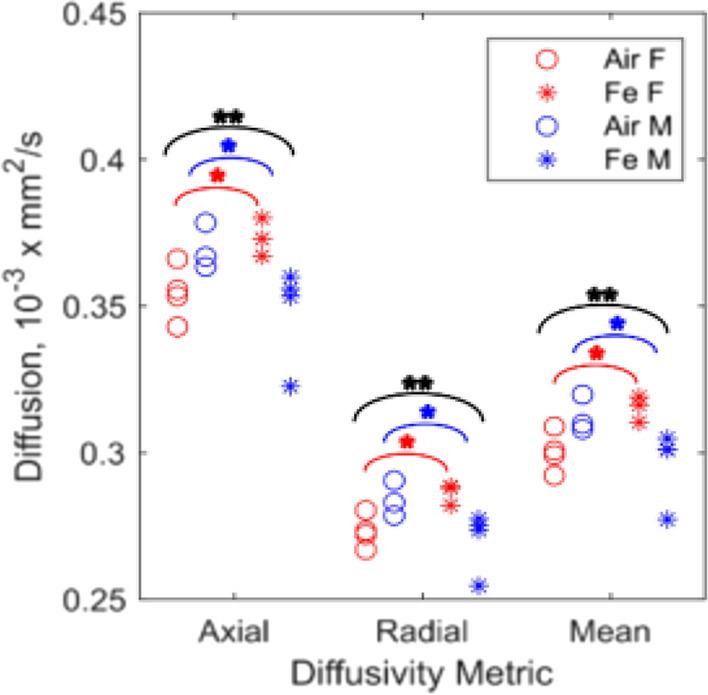
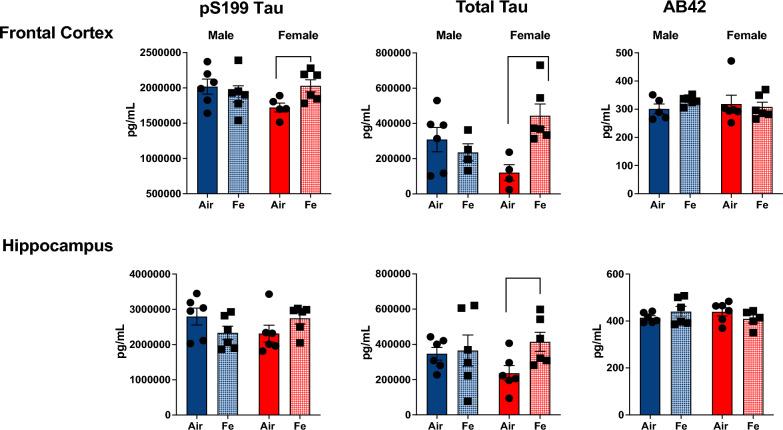
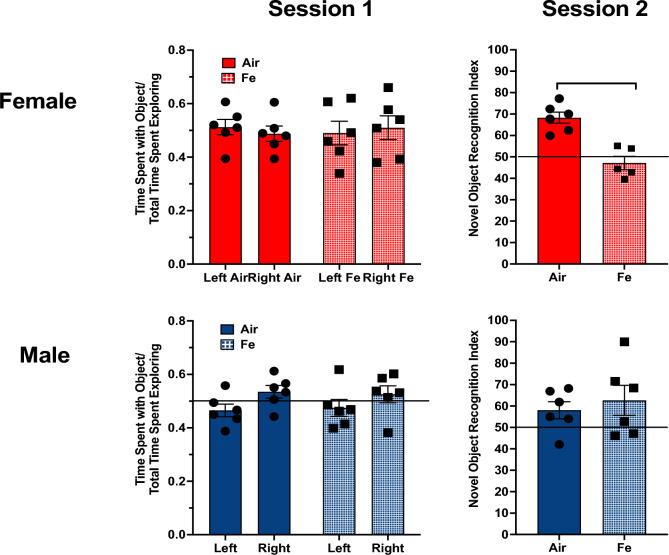
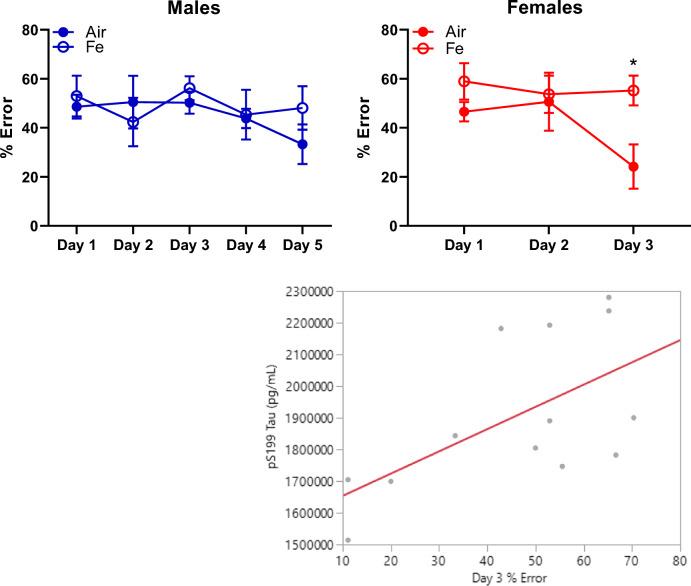
Particle speciation confirmed similarity of Fe oxides (mostly magnetite) found on chamber TEM grids and in olfactory bulb. Alzheimer's disease (AD) like characteristics were seen in Fe-exposed females including increased olfactory bulb diffusivity, impaired memory, and increased accumulation of total and phosphorylated tau, with total hippocampal tau levels significantly correlated with increased errors in the radial arm maze. Fe-exposed males showed increased volume of the substantia nigra pars compacta, a region critical to the motor impairments seen in Parkinson's disease (PD), in conjunction with reduced volume of the trigeminal nerve and optic tract and chiasm.
CONCLUSIONS
Inhaled Fe oxide nanoparticles appeared to lead to olfactory bulb uptake. Further, these exposures reproduced characteristic features of neurodegenerative diseases in a sex-dependent manner, with females evidencing features similar to those seen in AD and effects in regions in males associated with PD. As such, prolonged inhaled Fe exposure via AP should be considered as a source of elevated brain Fe with aging, and as a risk factor for neurodegenerative diseases. The bases for dichotomous sex effects of inhaled Fe nanoparticles is as of yet unclear. Also as of yet unknown is how duration of such Fe exposures affect outcome, and/or whether exposures to inhaled Fe during early brain development enhances vulnerability to subsequent Fe exposures. Collectively, these findings suggest that regulation of air Fe levels, particularly in enclosed areas like subway stations, may have broad public health protective effects.
背景
大脑中铁含量过高和接触空气污染(AP)均与多种神经退行性疾病风险增加有关。铁是一种具有氧化还原活性的金属,在空气污染中含量丰富,在美国地铁系统中含量甚至更高。接触空气污染及其相关污染物(如铁)是终生的,因此可能导致神经退行性疾病中观察到的大脑铁含量升高,特别是通过鼻腔嗅觉摄取超细颗粒空气污染。这些研究检验了以下假设:外源性生成的氧化铁纳米颗粒在吸入暴露后可进入大脑,并在成年C57/Bl6J小鼠中产生与神经退行性疾病一致的神经毒性作用,这些小鼠通过吸入浓度与地铁系统中发现的浓度相似(约150μg/m)的铁纳米颗粒暴露20天。对嗅球切片和暴露室透射电镜网格进行铁形态分析。测量指标包括脑容量和扩散率变化;纹状体和小脑神经递质及转硫标记物水平;额叶皮质和海马体Aβ42、总tau蛋白和磷酸化tau蛋白的定量;以及运动活动和记忆方面的行为改变。
结果
颗粒形态分析证实了在暴露室透射电镜网格和嗅球中发现的氧化铁(主要是磁铁矿)的相似性。在接触铁的雌性小鼠中观察到类似阿尔茨海默病(AD)的特征,包括嗅球扩散率增加、记忆受损以及总tau蛋白和磷酸化tau蛋白积累增加,海马体总tau蛋白水平与放射状臂迷宫中错误增加显著相关。接触铁的雄性小鼠黑质致密部体积增加,这是帕金森病(PD)中运动障碍的关键区域,同时三叉神经、视束和视交叉体积减小。
结论
吸入的氧化铁纳米颗粒似乎导致嗅球摄取。此外,这些暴露以性别依赖的方式重现了神经退行性疾病的特征,雌性小鼠表现出与AD相似的特征,雄性小鼠在与PD相关的区域出现影响。因此,随着年龄增长,通过空气污染长期吸入铁应被视为大脑铁含量升高的一个来源,以及神经退行性疾病的一个风险因素。吸入铁纳米颗粒产生性别差异效应的原因尚不清楚。同样未知的是这种铁暴露的持续时间如何影响结果,以及/或者在大脑早期发育过程中吸入铁是否会增加对后续铁暴露的易感性。总体而言,这些发现表明,调节空气中铁的水平,特别是在地铁站等封闭区域,可能具有广泛的公共卫生保护作用。



 Zotero 插件