
一种鼻内亚单位疫苗在小鼠模型中诱导针对呼吸道病毒的保护性全身和黏膜抗体免疫。
An intranasal subunit vaccine induces protective systemic and mucosal antibody immunity against respiratory viruses in mouse models.
作者信息
Anthi Aina Karen, Kolderup Anette, Vaage Eline Benno, Bern Malin, Benjakul Sopisa, Tjärnhage Elias, Ruso-Julve Fulgencio, Jensen Kjell-Rune, Lode Heidrun Elisabeth, Vaysburd Marina, Nilsen Jeannette, Herigstad Marie Leangen, Sakya Siri Aastedatter, Tietze Lisa, Pilati Diego, Nyquist-Andersen Mari, Dürkoop Mirjam, Gjølberg Torleif Tollefsrud, Peng Linghang, Foss Stian, Moe Morten C, Low Benjamin E, Wiles Michael V, Nemazee David, Jahnsen Frode L, Vaage John Torgils, Howard Kenneth A, Sandlie Inger, James Leo C, Grødeland Gunnveig, Lund-Johansen Fridtjof, Andersen Jan Terje
机构信息
Department of Immunology, Oslo University Hospital Rikshospitalet, 0372, Oslo, Norway.
Institute of Clinical Medicine and Department of Pharmacology, University of Oslo and Oslo University Hospital Rikshospitalet, 0372, Oslo, Norway.
出版信息
Nat Commun. 2025 May 1;16(1):3999. doi: 10.1038/s41467-025-59353-6.
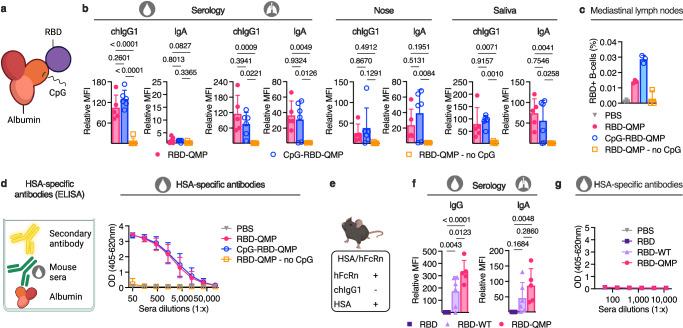
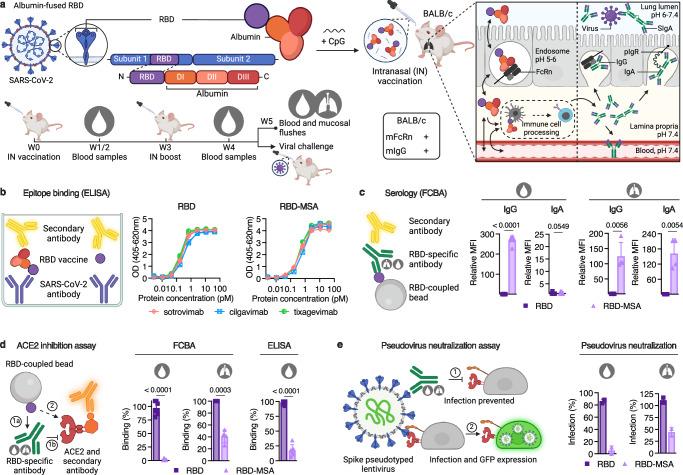
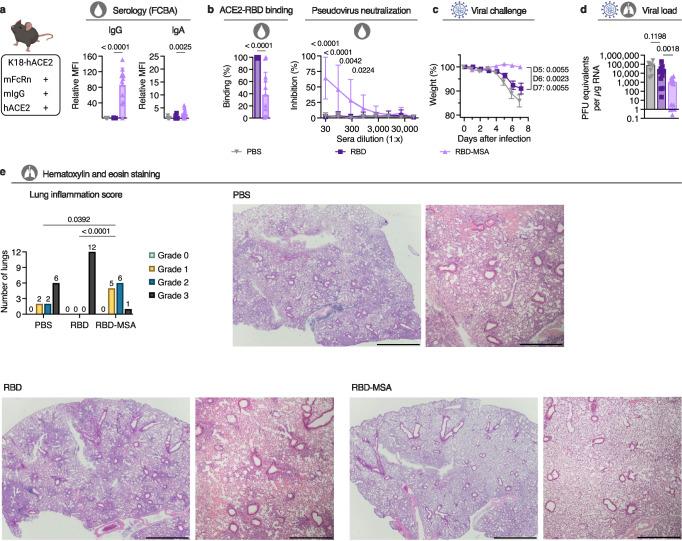
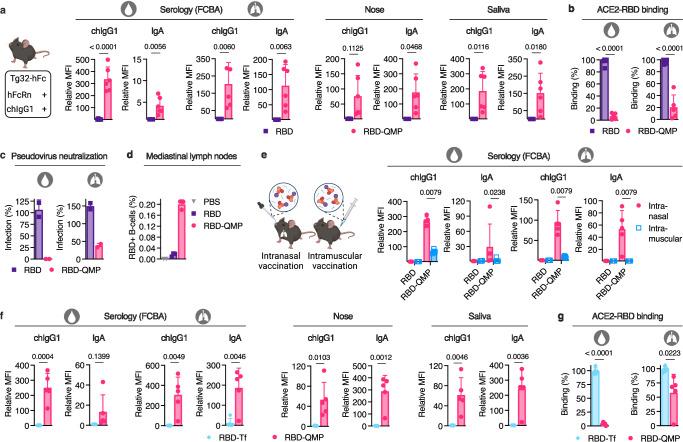
Although vaccines are usually given intramuscularly, the intranasal delivery route may lead to better mucosal protection and limit the spread of respiratory virus while easing administration and improving vaccine acceptance. The challenge, however, is to achieve delivery across the selective epithelial cell barrier. Here we report on a subunit vaccine platform, in which the antigen is genetically fused to albumin to facilitate FcRn-mediated transport across the mucosal barrier in the presence of adjuvant. Intranasal delivery in conventional and transgenic mouse models induces both systemic and mucosal antigen-specific antibody responses that protect against challenge with SARS-CoV-2 or influenza A. When benchmarked against an intramuscularly administered mRNA vaccine or an intranasally administered antigen fused to an alternative carrier of similar size, only the albumin-based intranasal vaccine yields robust mucosal IgA antibody responses. Our results thus suggest that this needle-free, albumin-based vaccine platform may be suited for vaccination against respiratory pathogens.
尽管疫苗通常通过肌肉注射给药,但鼻内给药途径可能会带来更好的黏膜保护,并在减轻给药难度和提高疫苗接受度的同时限制呼吸道病毒的传播。然而,挑战在于如何实现跨选择性上皮细胞屏障的递送。在此,我们报告了一种亚单位疫苗平台,其中抗原通过基因融合与白蛋白结合,以在佐剂存在的情况下促进FcRn介导的跨黏膜屏障转运。在传统和转基因小鼠模型中进行鼻内给药可诱导全身性和黏膜性抗原特异性抗体反应,从而预防SARS-CoV-2或甲型流感病毒的攻击。当与肌肉注射的mRNA疫苗或与类似大小的替代载体融合的鼻内给药抗原进行对比时,只有基于白蛋白的鼻内疫苗能产生强大的黏膜IgA抗体反应。因此,我们的结果表明,这种无需注射、基于白蛋白的疫苗平台可能适用于针对呼吸道病原体的疫苗接种。

 Zotero 插件