
具有荧光寿命读数的硫醇-二硫键氧化还原生物传感器的机制与应用
Mechanism and application of thiol-disulfide redox biosensors with a fluorescence-lifetime readout.
作者信息
Rosen Paul C, Glaser Andrew, Martínez-François Juan R, Lim Daniel C, Brooks Daniel J, Fu Panhui, Kim Erica, Kern Dorothee, Yellen Gary
机构信息
Department of Neurobiology, Harvard Medical School, Boston, MA 02115.
Department of Biology, Massachusetts Institute of Technology, Cambridge, MA 02139.
出版信息
Proc Natl Acad Sci U S A. 2025 May 13;122(19):e2503978122. doi: 10.1073/pnas.2503978122. Epub 2025 May 6.
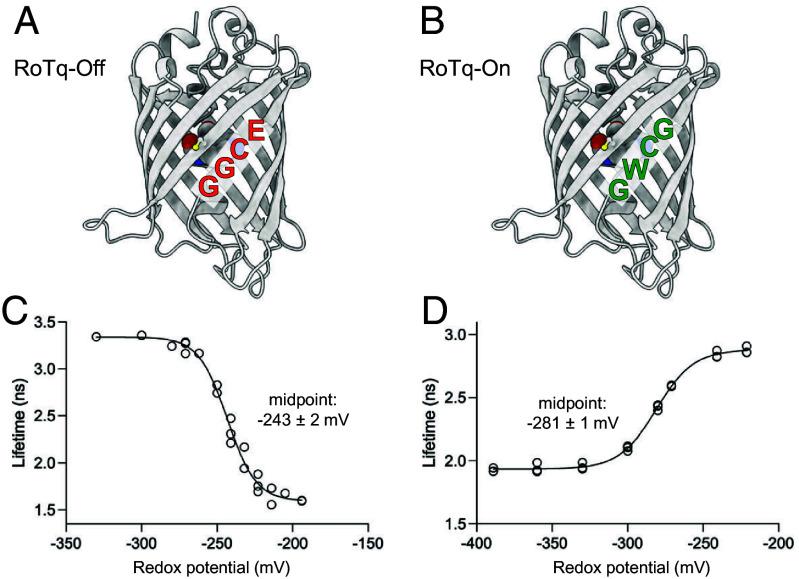
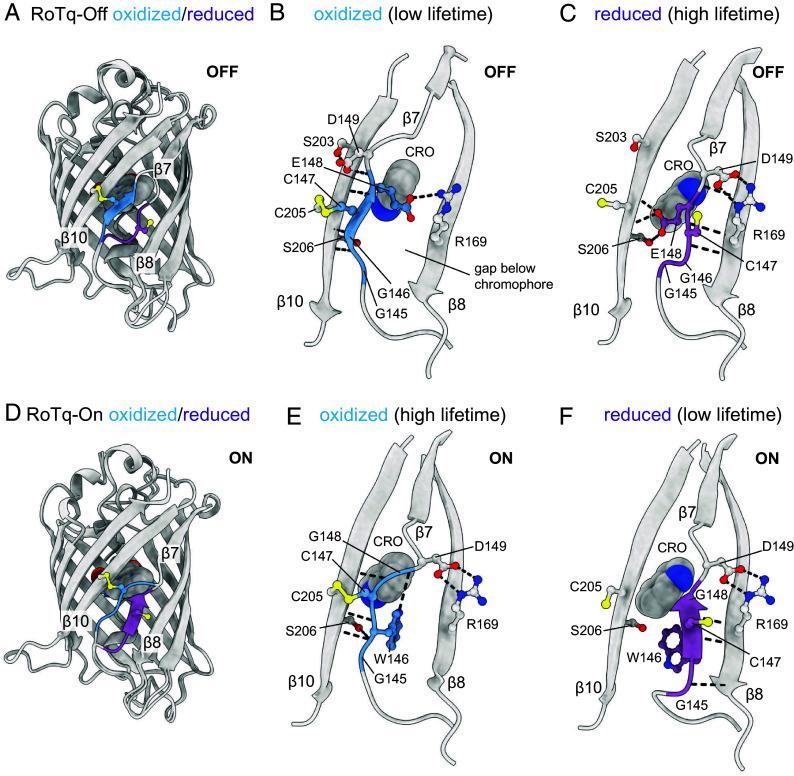
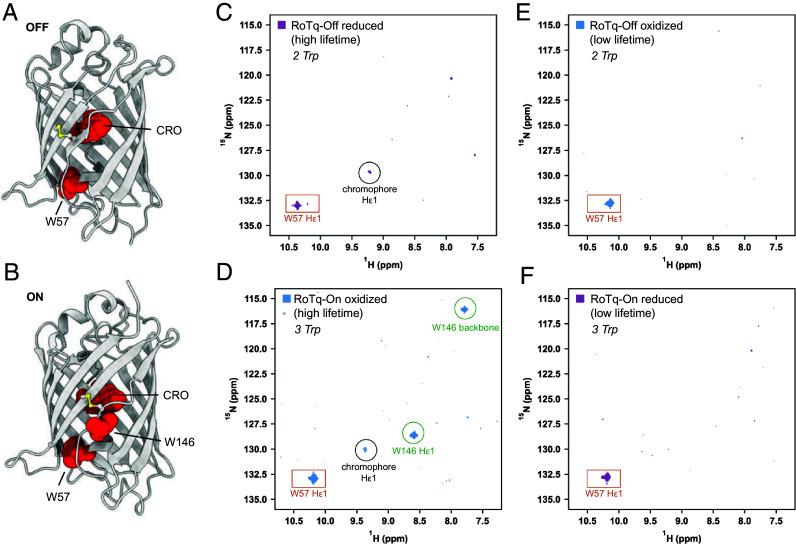
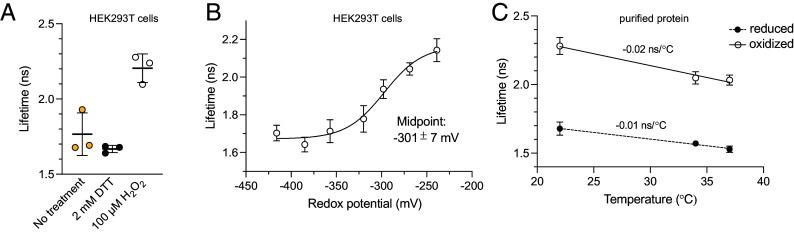
Genetically encoded biosensors with changes in fluorescence lifetime (as opposed to fluorescence intensity) can quantify small molecules in complex contexts, even in vivo. However, lifetime-readout sensors are poorly understood at a molecular level, complicating their development. Although there are many sensors that have fluorescence-intensity changes, there are currently only a few with fluorescence-lifetime changes. Here, we optimized two biosensors for thiol-disulfide redox (RoTq-Off and RoTq-On) with opposite changes in fluorescence lifetime in response to oxidation. Using biophysical approaches, we showed that the high-lifetime states of these sensors lock the chromophore more firmly in place than their low-lifetime states do. Two-photon fluorescence lifetime imaging of RoTq-On fused to a glutaredoxin (Grx1) enabled robust, straightforward monitoring of cytosolic glutathione redox state in acute mouse brain slices. The motional mechanism described here is probably common and may inform the design of other lifetime-readout sensors; the Grx1-RoTq-On fusion sensor will be useful for studying glutathione redox in physiology.
荧光寿命发生变化(与荧光强度变化相反)的基因编码生物传感器能够在复杂环境中,甚至在体内对小分子进行定量分析。然而,在分子水平上,人们对寿命读出传感器的了解甚少,这使得它们的开发变得复杂。虽然有许多具有荧光强度变化的传感器,但目前只有少数具有荧光寿命变化的传感器。在这里,我们优化了两种用于硫醇-二硫化物氧化还原的生物传感器(RoTq-Off和RoTq-On),它们在氧化时荧光寿命呈现相反的变化。通过生物物理方法,我们表明这些传感器的高寿命状态比低寿命状态更能将发色团牢固地锁定在原位。与谷氧还蛋白(Grx1)融合的RoTq-On的双光子荧光寿命成像能够在急性小鼠脑切片中对胞质谷胱甘肽氧化还原状态进行稳健、直接的监测。这里描述的运动机制可能很常见,并且可能为其他寿命读出传感器的设计提供参考;Grx1-RoTq-On融合传感器将有助于研究生理学中的谷胱甘肽氧化还原。


 Zotero 插件