
比较转录组分析揭示高蛋白饮食对家蚕中肠的影响。
Comparative Transcriptome Analysis Reveals the Effects of a High-Protein Diet on Silkworm Midgut.
作者信息
Chen Xinyi, Li Jiahao, Shan Yuxi, Wang Qiaoling, Xu Pingzhen, Qian Heying, Wu Yangchun
机构信息
Jiangsu Key Laboratory of Sericultural and Animal Biotechnology, School of Biotechnology, Jiangsu University of Science and Technology, Zhenjiang 212100, China.
Key Laboratory of Silkworm and Mulberry Genetic Improvement, Ministry of Agriculture and Rural Affairs, Sericultural Scientific Research Center, Chinese Academy of Agricultural Sciences, Zhenjiang 212100, China.
出版信息
Insects. 2025 Mar 24;16(4):337. doi: 10.3390/insects16040337.
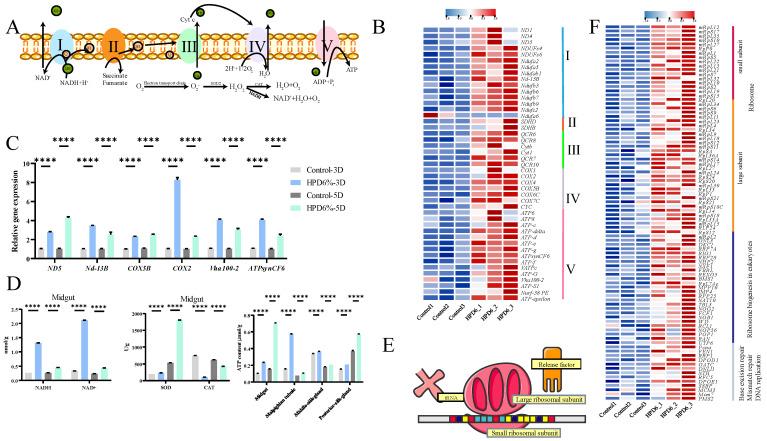
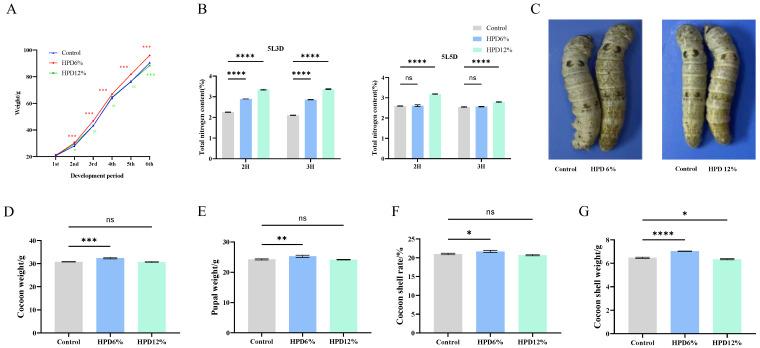
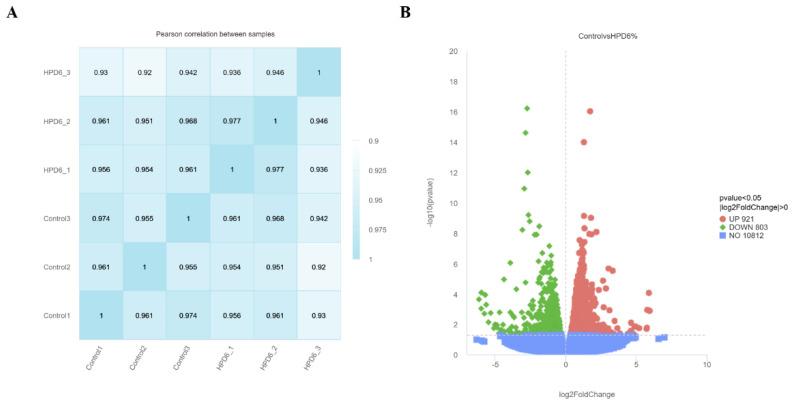
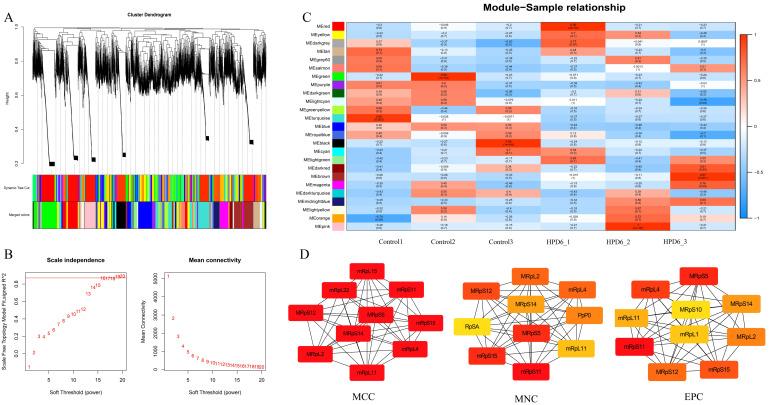
The silkworm is a species within the order Lepidoptera and an economic insect. The nutrients are obtained from the leaf and utilized by the silkworm larvae for body growth, development, and cocoon formation. Protein plays a significant functional role in the diet of silkworms. To investigate the impact of the high-protein diet (HPD 6%) on silkworm growth and development, transcriptomic analysis was conducted on the silkworm midgut, and 1724 differentially expressed genes (DEGs) were identified, comprising 803 up-regulated genes and 921 down-regulated genes. The up-regulated genes exhibited the majority pathway of mitochondrial oxidative phosphorylation, ribosome, and ribosome biogenesis in eukaryotes. The down-regulated genes of DEGs were mostly annotated in ABC transporters, lysosome, endocytosis, and sphingolipid metabolism pathways. The comprehensive analysis of DEGs indicated that substantial modifications were observed in various pathways associated with crucial biological processes. HPD 6% decreased oxidative stress and increased mitochondrial activity, ribosomal activity, and DNA repair capacity. Additionally, the ATP levels were increased in the midgut, malpighian tubule, middle silk gland, and posterior silk gland of the HPD 6% group. Moreover, the activities of SOD and NADH were enhanced in the midgut of the HPD 6% group. Our findings provide valuable insights into the wide-ranging effects of an HPD treatment in insects such as silkworms.
家蚕是鳞翅目昆虫中的一个物种,也是一种经济昆虫。其营养物质从叶片中获取,并被家蚕幼虫用于身体生长、发育和结茧。蛋白质在家蚕的饮食中起着重要的功能作用。为了研究高蛋白饲料(6% HPD)对家蚕生长发育的影响,对家蚕中肠进行了转录组分析,共鉴定出1724个差异表达基因(DEGs),其中包括803个上调基因和921个下调基因。上调基因主要富集在线粒体氧化磷酸化、核糖体以及真核生物核糖体生物合成等途径。DEGs中的下调基因大多注释于ABC转运蛋白、溶酶体、内吞作用和鞘脂代谢途径。对DEGs的综合分析表明,在与关键生物学过程相关的各种途径中都观察到了显著变化。6% HPD降低了氧化应激,增加了线粒体活性、核糖体活性和DNA修复能力。此外,6% HPD组的中肠、马氏管、中部丝腺和后部丝腺中的ATP水平均有所升高。而且,6% HPD组中肠的超氧化物歧化酶(SOD)和烟酰胺腺嘌呤二核苷酸(NADH)活性增强。我们的研究结果为HPD处理对家蚕等昆虫的广泛影响提供了有价值的见解。

 Zotero 插件