
厄多司坦对人呼吸道病毒感染细胞的抗病毒作用。
Antiviral Effect of Erdosteine in Cells Infected with Human Respiratory Viruses.
作者信息
Santus Pierachille, Strizzi Sergio, Danzo Fiammetta, Biasin Mara, Saulle Irma, Vanetti Claudia, Saad Marina, Radovanovic Dejan, Trabattoni Daria
机构信息
Division of Respiratory Diseases, Ospedale L. Sacco, ASST Fatebenefratelli-Sacco, 20147 Milan, Italy.
Department of Biomedical and Clinical Sciences (DIBIC), Università degli Studi di Milano, 20122 Milan, Italy.
出版信息
Pathogens. 2025 Apr 15;14(4):388. doi: 10.3390/pathogens14040388.
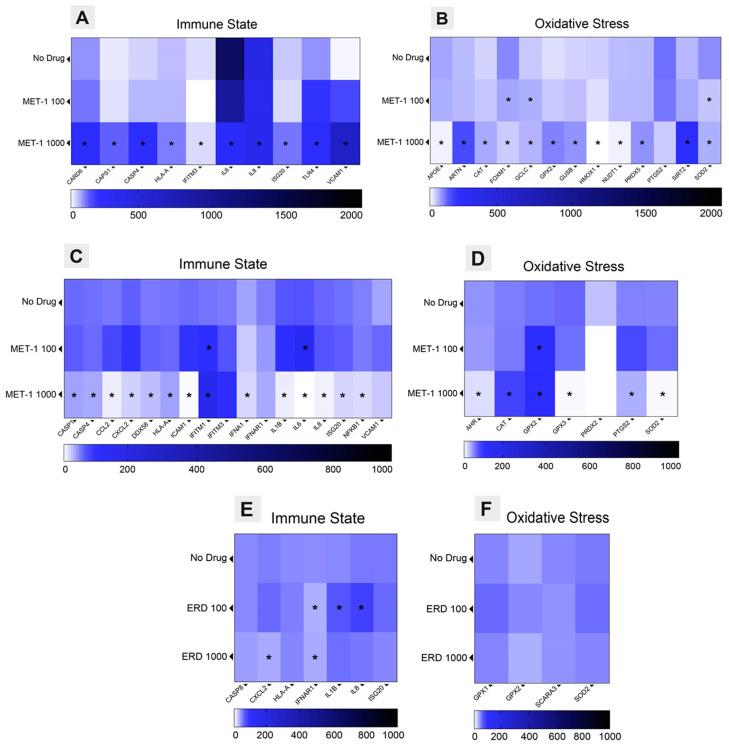
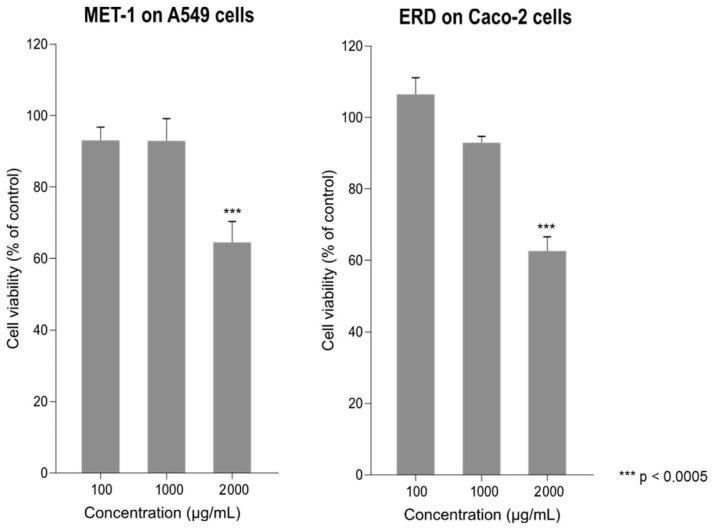
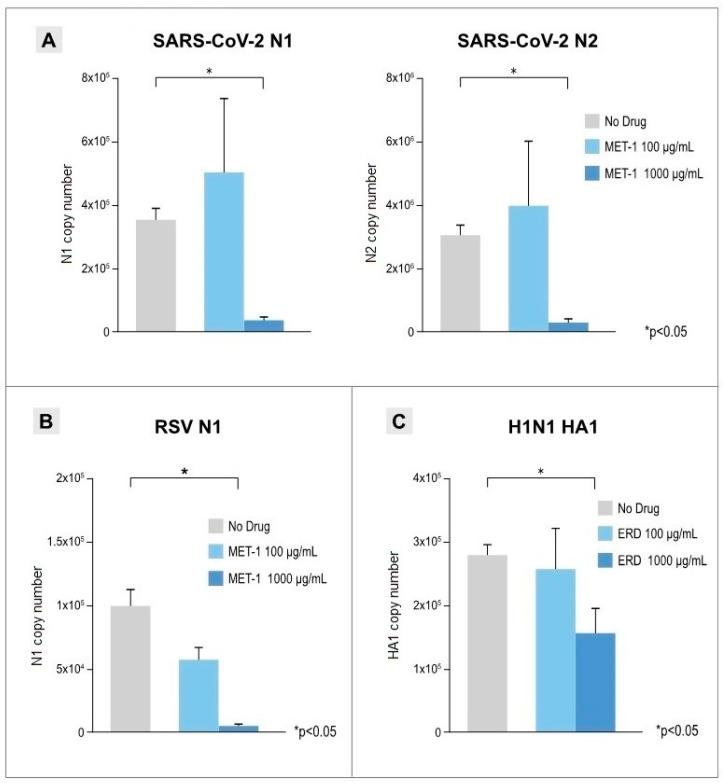
Respiratory viral infections trigger immune and inflammatory responses that can be associated with excessive oxidative stress, glutathione (GSH) depletion, and a cytokine storm that drives virus-induced cell/tissue damage and severe disease. Erdosteine is a thiol-based drug with proven mucolytic, anti-inflammatory, antioxidant, and antibacterial properties, but less is known about its antiviral effects. We performed in vitro studies to investigate the antiviral and anti-inflammatory activity of erdosteine in A549-hACE2 human lung epithelial cells infected with severe acute respiratory syndrome coronavirus 2 (SARS-CoV-2) or respiratory syncytial virus (RSV) and in Caco-2 human colon carcinoma cells infected with influenza A virus (H1N1). The cells were treated with different concentrations of erdosteine or its active metabolite 3-(4,5-dimethylthiazol-2-yl)-2,5-diphenyl-2H-tetrazolium bromide (MET-1) before and after viral infection. The viral replication/load in the cell culture supernatants was measured by real-time quantitative polymerase chain reaction (RT-qPCR) assay and digital droplet PCR. The gene expression of innate immune response signaling pathways and oxidative stress was analyzed by reverse transcription PCR custom-array. The results showed that erdosteine and its active metabolite, at concentrations consistent with an approved therapeutic human dosage, were not directly cytotoxic and had significant antiviral effects in cells pre-infected with SARS-CoV-2, RSV, and H1N1. The transcriptome analysis showed that erdosteine activated innate immune responses by stimulating overexpression of type I interferon and inflammasome pathways and modulated oxidative stress by inducing the modulation of oxidative stress and GSH pathways. These findings suggest that erdosteine may be a useful treatment for respiratory viral infections.
呼吸道病毒感染会引发免疫和炎症反应,这些反应可能与过度氧化应激、谷胱甘肽(GSH)耗竭以及驱动病毒诱导的细胞/组织损伤和严重疾病的细胞因子风暴有关。厄多司坦是一种基于硫醇的药物,具有已证实的黏液溶解、抗炎、抗氧化和抗菌特性,但对其抗病毒作用了解较少。我们进行了体外研究,以调查厄多司坦在感染严重急性呼吸综合征冠状病毒2(SARS-CoV-2)或呼吸道合胞病毒(RSV)的A549-hACE2人肺上皮细胞以及感染甲型流感病毒(H1N1)的Caco-2人结肠癌细胞中的抗病毒和抗炎活性。在病毒感染前后,用不同浓度的厄多司坦或其活性代谢物3-(4,5-二甲基噻唑-2-基)-2,5-二苯基-2H-四唑溴盐(MET-1)处理细胞。通过实时定量聚合酶链反应(RT-qPCR)测定法和数字液滴PCR测量细胞培养上清液中的病毒复制/载量。通过逆转录PCR定制阵列分析先天免疫反应信号通路和氧化应激的基因表达。结果表明,厄多司坦及其活性代谢物在与批准的治疗性人体剂量一致的浓度下,没有直接细胞毒性,并且在预先感染SARS-CoV-2、RSV和H1N1的细胞中具有显著的抗病毒作用。转录组分析表明,厄多司坦通过刺激I型干扰素和炎性小体途径的过表达激活先天免疫反应,并通过诱导氧化应激和GSH途径的调节来调节氧化应激。这些发现表明,厄多司坦可能是治疗呼吸道病毒感染的有效药物。
 Zotero 插件