
ProgModule:一种用于识别突变驱动模块以预测癌症预后和免疫治疗反应的新型计算框架。
ProgModule: A novel computational framework to identify mutation driver modules for predicting cancer prognosis and immunotherapy response.
作者信息
Li Xiangmei, Pan Bingyue, Zhao Xilong, Su Yinchun, Lai Jiyin, Li Siyuan, He Yalan, Wu Jiashuo, Han Junwei
机构信息
College of Bioinformatics Science and Technology, Harbin Medical University, Harbin, 150081, China.
Department of Neurobiology, Harbin Medical University, Harbin, 150081, China.
出版信息
J Transl Med. 2025 May 8;23(1):518. doi: 10.1186/s12967-025-06497-0.
BACKGROUND
Cancer originates from dysregulated cell proliferation driven by driver gene mutations. Despite numerous algorithms developed to identify genomic mutational signatures, they often suffer from high computational complexity and limited clinical applicability.
METHODS
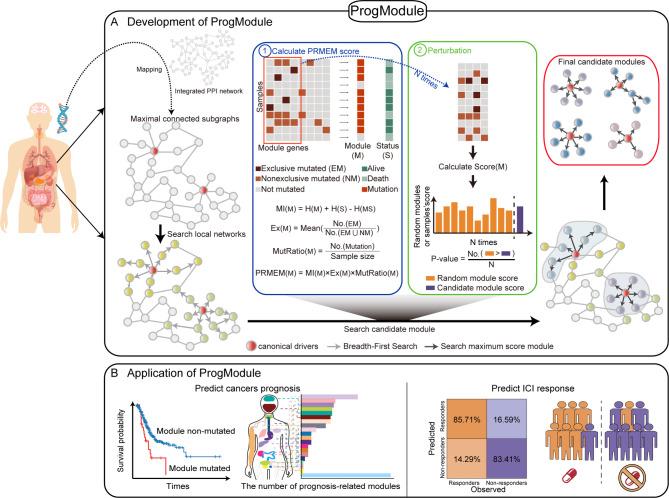
Here, we presented ProgModule, an advanced computational framework designed to identify mutation driver modules for cancer prognosis and immunotherapy response prediction. In ProgModule, we introduced the Prognosis-Related Mutually Exclusive Mutation (PRMEM) score, which optimizes the balance between exclusive mutation coverage and the incorporation of mutation combination mechanisms critical for cancer prognosis.
RESULTS
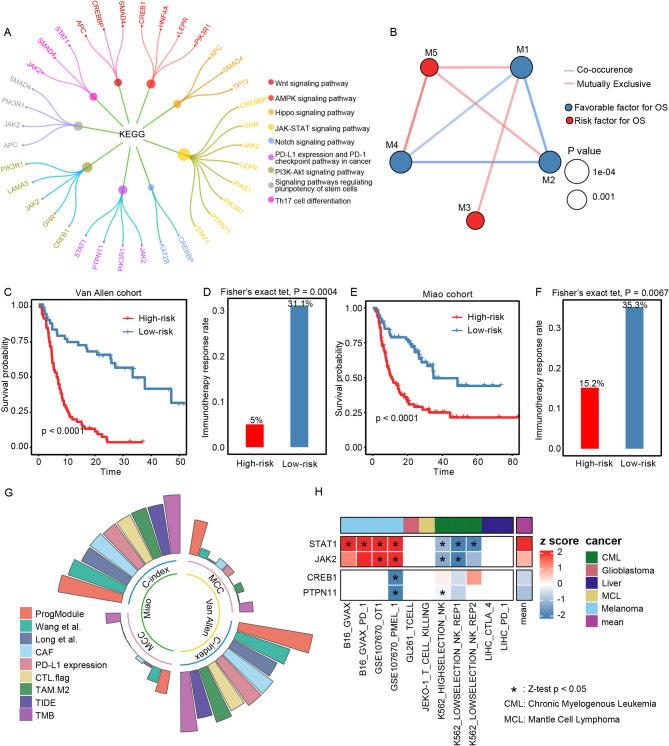
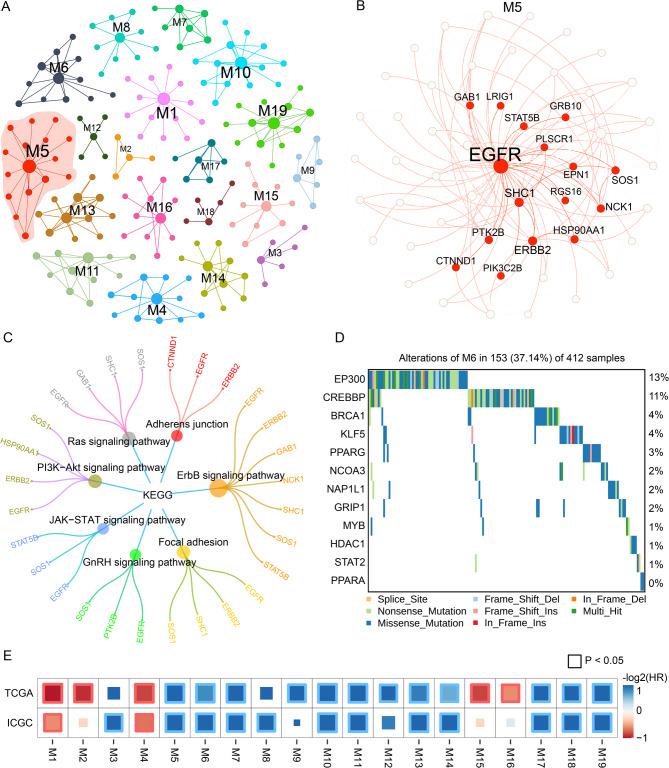
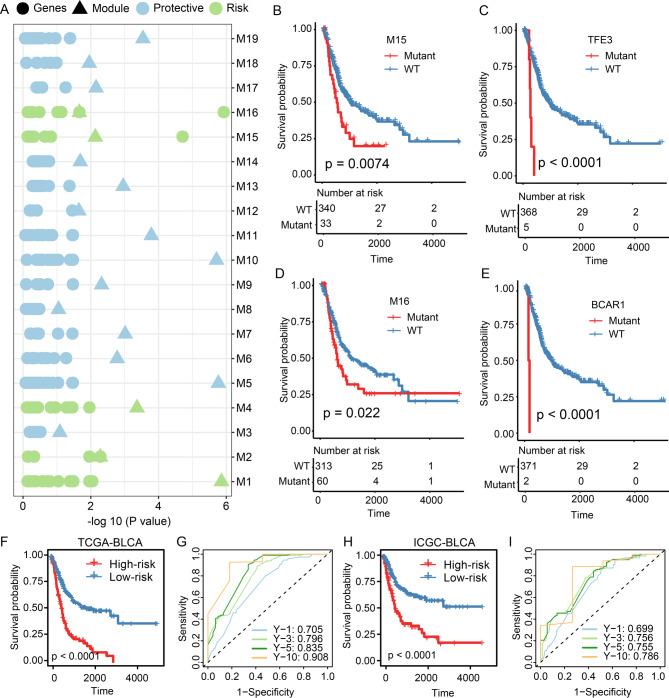
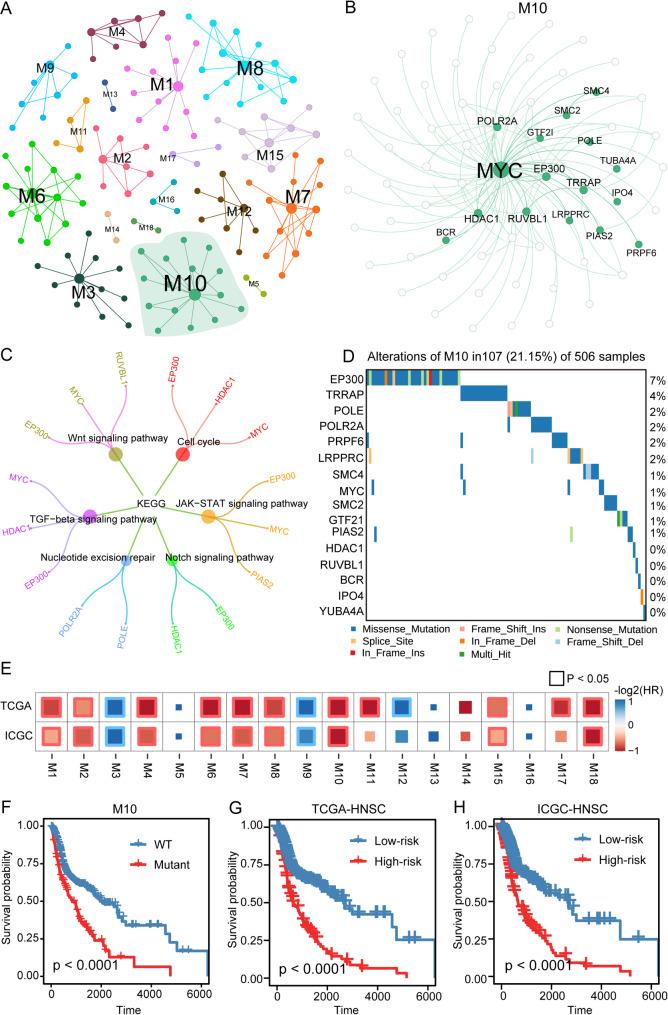
Applying to BLCA and HNSC cohorts, ProgModule successfully identified driver modules that stratify patients into distinct prognostic subgroups, and the combination of these modules could serve as an effective prognostic biomarker. Extending our method to diverse cancers, ProgModule presented robust prognostic performance and stability across model parameters, including stopping criteria and network topology. Moreover, our analysis suggested that driver modules can predict immunotherapeutic benefit more effectively than existing signatures. Further analyses based on published CRISPR data indicated that genes within these modules may serve as potential therapeutic targets.
CONCLUSIONS
Altogether, ProgModule emerges as a powerful tool for identifying mutation driver modules as prognostic and immunotherapy response biomarkers, and genes within these modules may be used as potential therapeutic targets for cancer, offering new insights into precision oncology.
背景
癌症起源于由驱动基因突变驱动的细胞增殖失调。尽管已经开发了许多算法来识别基因组突变特征,但它们往往存在计算复杂度高和临床适用性有限的问题。
方法
在此,我们提出了ProgModule,这是一个先进的计算框架,旨在识别用于癌症预后和免疫治疗反应预测的突变驱动模块。在ProgModule中,我们引入了预后相关互斥突变(PRMEM)评分,该评分优化了互斥突变覆盖率与纳入对癌症预后至关重要的突变组合机制之间的平衡。
结果
应用于BLCA和HNSC队列时,ProgModule成功识别出将患者分层为不同预后亚组的驱动模块,这些模块的组合可作为有效的预后生物标志物。将我们的方法扩展到多种癌症,ProgModule在包括停止标准和网络拓扑在内的模型参数中表现出强大的预后性能和稳定性。此外,我们的分析表明,驱动模块比现有特征更能有效地预测免疫治疗益处。基于已发表的CRISPR数据的进一步分析表明,这些模块中的基因可能作为潜在的治疗靶点。
结论
总之,ProgModule成为识别突变驱动模块作为预后和免疫治疗反应生物标志物的强大工具,这些模块中的基因可用作癌症的潜在治疗靶点,为精准肿瘤学提供了新的见解。
 Zotero 插件