
全基因组测序分析以鉴定来自埃塞俄比亚阿姆哈拉地区结核分枝杆菌分离株中的抗菌耐药区域和毒力因子。
Whole-genome sequencing analysis to identify antimicrobial resistance regions and virulence factors in Mycobacterium tuberculosis isolates from the Amhara Region, Ethiopia.
作者信息
Gessese Abebe Tesfaye, Kinde Mebrie Zemene, Eshetu Tegegne, Kerisew Bizuayehu
机构信息
Department of Biomedical Sciences, College of Veterinary Medicine and Animal Sciences, University of Gondar, P.O. Box 196, Gondar, Ethiopia.
Department of Medical Parasitology, School of Biomedical and Laboratory Sciences, College of Medicine and Health Sciences, University of Gondar, P. O. Box: 196, Gondar, Ethiopia.
出版信息
Sci Rep. 2025 May 8;15(1):16076. doi: 10.1038/s41598-025-01241-6.
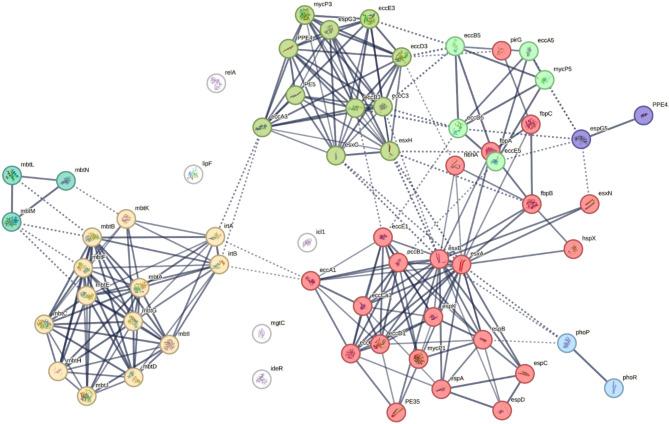
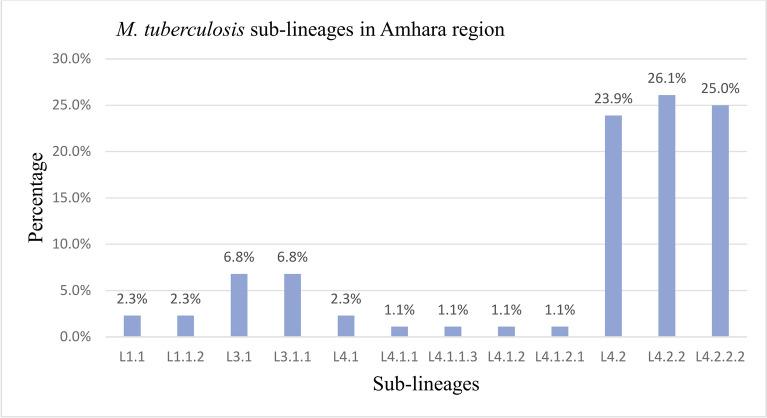
Tuberculosis caused by Mycobacterium tuberculosis complex is a significant global health burden, with drug-resistant TB, especially multidrug-resistant TB, causing severe challenges to treatment. In Ethiopia, a high TB-burden country, drug resistance has continued spreading. However, some studies indicate genetic diversity, transmission dynamics, and resistance-conferring mutations by using targeted amplification, there are limited reports of whole genome sequencing analysis to uncover the antimicrobial resistance and virulent genes. Based on that, the objective of this project was to identify antimicrobial resistance regions and characterize virulence factors in M. tuberculosis isolates through in silico whole-genome sequence analysis. A FASTQ file of 45 M. tuberculosis isolates whole genome sequence was downloaded from the SAR database. Following quality control using FASTQC coupled with MultiQC and trimming with Trimmomatic, de novo assembly was conducted using SPAdes. The Burrows-Wheeler Aligner was used for mapping against the M. tuberculosis H37Rv reference genome, followed by variant calling with FreeBayes. In silico spoligotyping was performed using SpoTyping, and drug resistance mutations were identified with TB-Profiler and validated using Mykrobe. Virulence factors were detected through ABRicate and the Virulence Factor Database. STRING was used to network the virulent genes. All statistical analyses were performed using R software. This study revealed the most prevalent TB-lineage in the Amhara region was L4 (58.53%), followed by L3 (34.15%), and L1 (4.88%), and in silico spoligotyping classified 90.24% of the isolates into 12 shared types, with SIT 149 (41.46%) and SIT 21 (14.63%) as the most frequent spoligotypes. Seven major genotypic families were identified, with T3-ETH being the dominant family (48.78%). Drug resistance analysis revealed that 38 isolates (92.7%) were multidrug-resistant, and 1 (2.4%) was pre-extensively drug-resistant. Lineage 4 (59%) and its sub-lineage 4.2.2 (51.3%) show the highest resistance. The most frequent mutations to rifampicin, isoniazid, pyrazinamide, ethambutol, streptomycin, ethionamide, fluoroquinolone, and 2nd-line injectable drugs occurred at rpoB Ser450Leu, katG Ser315Thr, pncA c.-11A > G, embB Gly406Ala, rpsL Lys43Arg, Lys88Thr, ethA Met1, gyrA Ala90Val, Asp94Asn, and rrs 1401A > G, respectively. Additionally, a mutation at the mmpR5 gene for bedaquiline and clofazimine resistance occurred in one isolate. A total of 67 virulence genes were identified and 63 of them occurred in all isolates. The high prevalence of MDR-TB and the detection of resistance to both first- and second-line drugs in this study underscore the urgent need for enhanced TB control measures in the Amhara region.
由结核分枝杆菌复合群引起的结核病是一项重大的全球健康负担,耐药结核病,尤其是耐多药结核病,给治疗带来了严峻挑战。在结核病负担较重的国家埃塞俄比亚,耐药性仍在持续蔓延。然而,一些研究通过靶向扩增表明了基因多样性、传播动态和耐药性赋予突变,但关于全基因组测序分析以揭示抗菌药物耐药性和毒力基因的报道有限。基于此,本项目的目的是通过计算机全基因组序列分析来鉴定结核分枝杆菌分离株中的抗菌药物耐药区域并表征毒力因子。从SAR数据库下载了45株结核分枝杆菌全基因组序列的FASTQ文件。使用FASTQC结合MultiQC进行质量控制,并使用Trimmomatic进行修剪,然后使用SPAdes进行从头组装。使用Burrows-Wheeler比对器与结核分枝杆菌H37Rv参考基因组进行比对,随后使用FreeBayes进行变异检测。使用SpoTyping进行计算机寡核苷酸分型,并使用TB-Profiler鉴定耐药性突变并使用Mykrobe进行验证。通过ABRicate和毒力因子数据库检测毒力因子。使用STRING对毒力基因进行网络分析。所有统计分析均使用R软件进行。本研究表明,阿姆哈拉地区最常见的结核分支是L4(58.53%),其次是L3(34.15%)和L1(4.88%),计算机寡核苷酸分型将90.24%的分离株分为12种共享类型,其中SIT 149(41.46%)和SIT 21(14.63%)是最常见的寡核苷酸分型。鉴定出七个主要基因型家族,其中T3-ETH是主要家族(48.78%)。耐药性分析显示,38株(92.7%)为耐多药,1株(2.4%)为广泛耐药前期。分支4(59%)及其亚分支4.2.2(51.3%)显示出最高的耐药性。对利福平、异烟肼、吡嗪酰胺、乙胺丁醇、链霉素、乙硫异烟胺、氟喹诺酮和二线注射用药物最常见的突变分别发生在rpoB Ser450Leu、katG Ser315Thr、pncA c.-11A>G、embB Gly406Ala、rpsL Lys43Arg、Lys88Thr、ethA Met1、gyrA Ala90Val、Asp94Asn和rrs 1401A>G。此外,一株分离株中发生了对贝达喹啉和氯法齐明耐药的mmpR5基因突变。共鉴定出67个毒力基因,其中63个在所有分离株中都存在。本研究中耐多药结核病的高流行率以及对一线和二线药物耐药性的检测强调了阿姆哈拉地区加强结核病控制措施的迫切需要。
 Zotero 插件