
免疫细胞表型与胶质瘤风险的中介孟德尔随机化分析:揭示脑脊液代谢物的调控机制
Mediation Mendelian randomization analysis of immune cell phenotypes and glioma risk: unveiling the regulation of cerebrospinal fluid metabolites.
作者信息
Zhao Siyuan, Jiang Jinghao, Zhang Jianwu, Jin Xiaoqing
机构信息
Emergency Center, Zhongnan Hospital of Wuhan University, 169 Donghu Road, Wuchang, Wuhan, 430071, Hubei, China.
The Second Clinical College, Wuhan University, Wuhan, 430071, Hubei, China.
出版信息
Discov Oncol. 2025 May 9;16(1):712. doi: 10.1007/s12672-025-02499-y.
BACKGROUND AND OBJECTIVE
Gliomas, particularly glioblastoma multiforme (GBM), are the most common primary central nervous system tumors in adults and are notoriously difficult to treat due to their high heterogeneity and invasiveness. Despite advances in molecular diagnostics and personalized therapies, prognosis remains poor. The immune system plays a critical role in glioma progression. This study employed mediation Mendelian randomization analysis to explore the relationships between immune cell phenotypes, cerebrospinal fluid metabolites, and glioma, aiming to uncover potential mechanisms of tumor progression and immune evasion.
METHOD
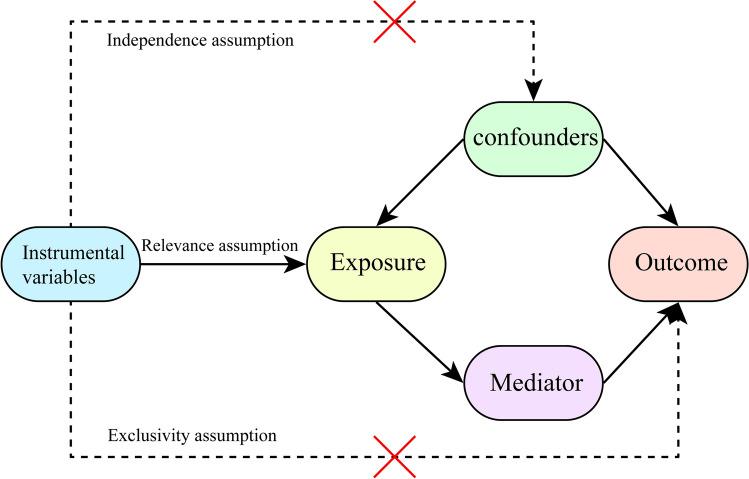
In this study, we employed several analytical methods including IVW, MR Egger, Simple mode, Weighted median, and Weighted mode, with IVW results being considered the primary basis. We assessed heterogeneity and pleiotropy, and used leave-one-out analysis to determine sensitivity, ensuring the stability and reliability of the results. The potential mediating effects of cerebrospinal fluid metabolites were investigated to explore the underlying mechanisms linking immune cell function and glioma. The GWAS data for immune cells, cerebrospinal fluid metabolites, and glioma used in this study were sourced from public databases.
RESULT
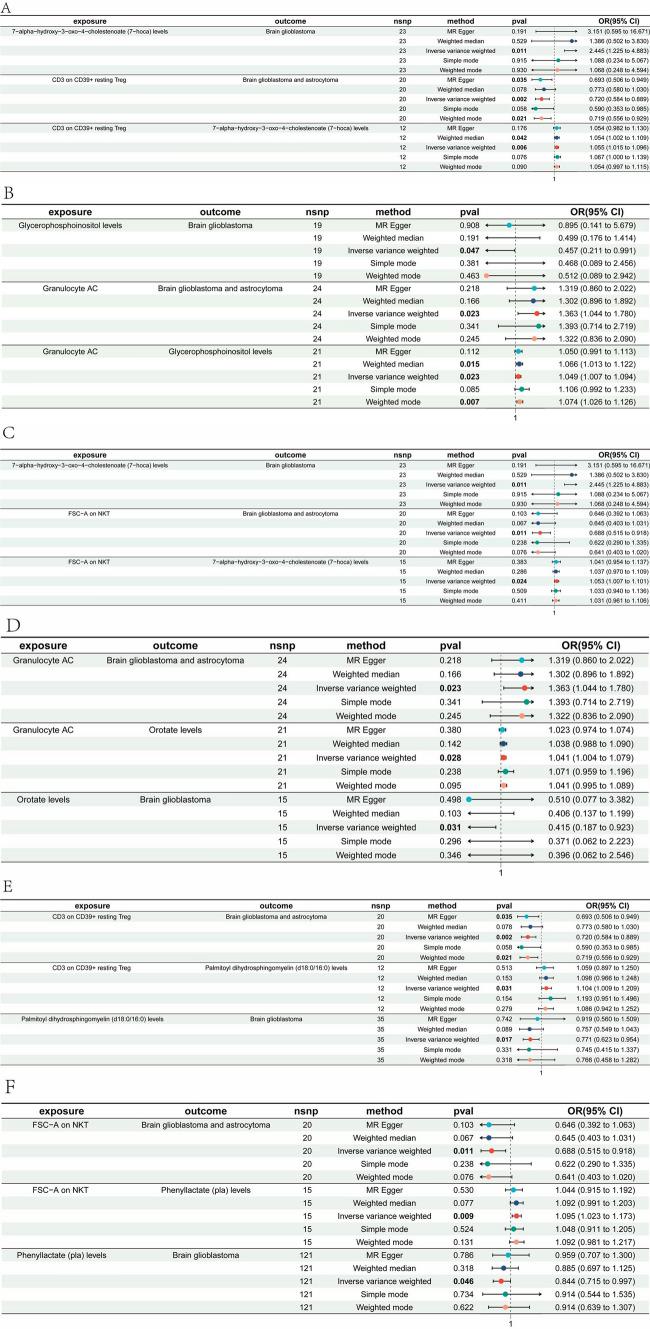
We identified nine risk immune cell phenotypes for glioma (such as CD19 on IgD( +) CD24(-)), and ten protective immune cell phenotypes (such as CD11c on monocytes). Mediation analysis revealed that levels of 7-alpha-hydroxy-3-oxo-4-cholestenoate (7-hoca) (MP = - 14.6%) and Palmitoyl dihydrosphingomyelin (d18:0/16:0) (MP = 7.9%) partially mediated the relationship between CD3 on CD39( +) resting Treg cells and glioma. Additionally, 7-hoca levels (MP = - 12.3%) and Phenyllactate (pla) levels (MP = 4.12%) partially mediated the association between FSC-A on NKT cells and glioma. Furthermore, Glycerophosphoinositol levels (MP = - 12.1%) and Orotate levels (MP = - 11.4%) partially mediated the relationship between Granulocyte adenylyl cyclase (Granulocyte AC) and glioma.
CONCLUSION
This study identified that specific immune cell phenotypes directly influence glioma risk and indirectly modulate this risk through cerebrospinal fluid metabolites. CD19 on IgD( +) CD24(-) B cells were identified as risk factors, while CD11c on monocytes were protective. Metabolites like 7-hoca and glycerophosphoinositol play key mediating roles. These findings enhance our understanding of glioma pathophysiology and suggest that immune modulation and metabolic intervention may be promising therapeutic strategies.
背景与目的
胶质瘤,尤其是多形性胶质母细胞瘤(GBM),是成人中最常见的原发性中枢神经系统肿瘤,因其高度异质性和侵袭性而 notoriously难以治疗。尽管分子诊断和个性化治疗取得了进展,但预后仍然很差。免疫系统在胶质瘤进展中起关键作用。本研究采用中介孟德尔随机化分析来探讨免疫细胞表型、脑脊液代谢物与胶质瘤之间的关系,旨在揭示肿瘤进展和免疫逃逸的潜在机制。
方法
在本研究中,我们采用了几种分析方法,包括逆方差加权法(IVW)、MR-Egger回归法、简单模式、加权中位数法和加权模式法,其中IVW结果被视为主要依据。我们评估了异质性和多效性,并使用留一法分析来确定敏感性,以确保结果的稳定性和可靠性。研究了脑脊液代谢物的潜在中介作用,以探索连接免疫细胞功能和胶质瘤的潜在机制。本研究中使用的免疫细胞、脑脊液代谢物和胶质瘤的全基因组关联研究(GWAS)数据均来自公共数据库。
结果
我们确定了9种胶质瘤风险免疫细胞表型(如IgD(+)CD24(-)上的CD19)和10种保护性免疫细胞表型(如单核细胞上的CD11c)。中介分析显示,7-α-羟基-3-氧代-4-胆甾烯酸(7-hoca)(中介比例[MP]=-14.6%)和棕榈酰二氢鞘磷脂(d18:0/16:0)(MP=7.9%)部分介导了CD39(+)静息调节性T细胞上的CD3与胶质瘤之间的关系。此外,7-hoca水平(MP=-12.3%)和苯乳酸(pla)水平(MP=4.12%)部分介导了自然杀伤T细胞上的前向散射光面积(FSC-A)与胶质瘤之间的关联。此外,甘油磷酸肌醇水平(MP=-12.1%)和乳清酸水平(MP=-11.4%)部分介导了粒细胞腺苷酸环化酶与胶质瘤之间的关系。
结论
本研究确定特定免疫细胞表型直接影响胶质瘤风险,并通过脑脊液代谢物间接调节这种风险。IgD(+)CD24(-)B细胞上的CD19被确定为危险因素,而单核细胞上的CD11c具有保护作用。7-hoca和甘油磷酸肌醇等代谢物起关键中介作用。这些发现加深了我们对胶质瘤病理生理学的理解,并表明免疫调节和代谢干预可能是有前景的治疗策略。
 Zotero 插件