
1型糖尿病患者胰岛素治疗中添加SGLT-2抑制剂的长期影响。一项观察性研究及真实世界证据的系统评价。
Long-term effects of adding an SGLT-2 inhibitor to insulin therapy in patients with type 1 diabetes. An observational study and systematic review of real-world evidence.
作者信息
Maran Alberto, Boscari Federico, Fagarazzi Carlo, Crepaldi Maria Cristina, Vedovato Monica, Bonora Benedetta Maria, Bruttomesso Daniela, Morieri Mario Luca, Fadini Gian Paolo
机构信息
Department of Medicine, University of Padova, Padova, Italy.
Division of Metabolic Disease and Diabetology, University Hospital of Padova, Via Giustiniani 2, Padua, 35128, Italy.
出版信息
J Endocrinol Invest. 2025 Aug;48(8):1759-1768. doi: 10.1007/s40618-025-02602-8. Epub 2025 May 10.
PURPOSE
The addition of SGLT2i to insulin therapy in type 1 diabetes (T1D) is an emerging treatment strategy. This study evaluates the real-world effects of SGLT2i on glycaemic control and other outcomes in individuals with T1D.
METHODS
In this single-center retrospective study, we included 78 adults with T1D who initiated SGLT2i and were observed for up to 24 months. Data included demographics, laboratory values, diabetic complications, and ongoing therapy. The primary outcome was the change in HbA1c over time. Persistence on therapy and adverse events were also recorded.
RESULTS
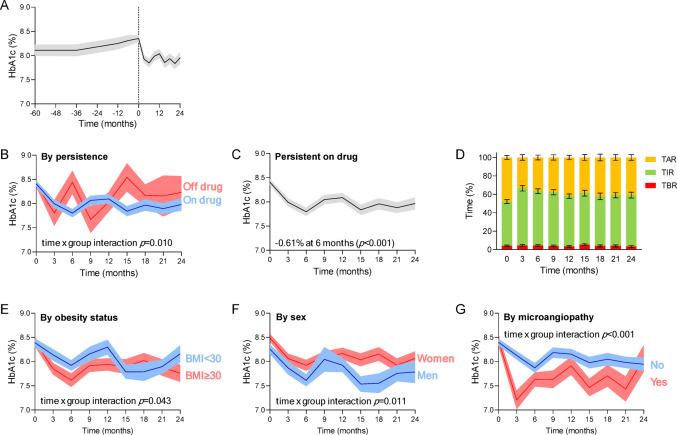
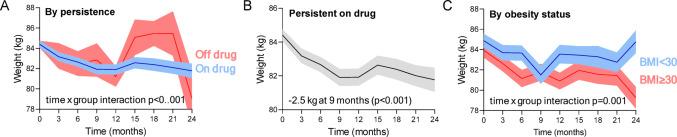
The mean age was 47.2 years, diabetes duration 24.6 years, baseline HbA1c 8.3%, and BMI 29.8 kg/m. The median persistence on therapy was 14.8 months. HbA1c reduction was significantly associated with persistence (p = 0.01), with a maximum decrease of 0.61% at 6 months (p < 0.001). Time in range improved by 13.7% at 3 months (p < 0.001). Persistent users experienced a maximum weight loss of 2.5 kg at 9 months (p < 0.001). Insulin doses declined significantly (max 15% at 21 months). UACR declined significantly at 15 months (p = 0.025). Treatment discontinuation due to adverse events (mainly genitourinary tract infections) occurred in 25.6% of patients, and 1 episode of diabetic ketoacidosis was recorded. A review of the literature suggests that the observed effects are within the range of benefits reported previously from different countries.
CONCLUSION
SGLT2i addition to insulin therapy in T1D patients resulted in sustained HbA1c reductions and weight loss. Therapy persistence significantly influenced outcomes, underscoring the importance of patient selection and monitoring for adverse effects.
目的
在1型糖尿病(T1D)患者的胰岛素治疗中添加钠-葡萄糖协同转运蛋白2抑制剂(SGLT2i)是一种新兴的治疗策略。本研究评估了SGLT2i对T1D患者血糖控制及其他结局的实际影响。
方法
在这项单中心回顾性研究中,我们纳入了78例开始使用SGLT2i的成年T1D患者,并对其进行了长达24个月的观察。数据包括人口统计学信息、实验室检查值、糖尿病并发症及正在进行的治疗。主要结局是糖化血红蛋白(HbA1c)随时间的变化。还记录了治疗的持续性及不良事件。
结果
平均年龄为47.2岁,糖尿病病程24.6年,基线HbA1c为8.3%,体重指数(BMI)为29.8kg/m²。治疗的中位持续时间为14.8个月。HbA1c的降低与治疗持续性显著相关(p = 0.01),在6个月时最大降幅为0.61%(p < 0.001)。3个月时血糖达标时间改善了13.7%(p < 0.001)。持续用药者在9个月时体重最大减轻了2.5kg(p < 0.001)。胰岛素剂量显著下降(21个月时最大降幅为15%)。尿白蛋白肌酐比值(UACR)在15个月时显著下降(p = 0.025)。25.6%的患者因不良事件(主要是泌尿生殖道感染)停药,记录到1例糖尿病酮症酸中毒。文献综述表明,观察到的效果在先前不同国家报道的获益范围内。
结论
在T1D患者的胰岛素治疗中添加SGLT2i可使HbA1c持续降低并减轻体重。治疗持续性对结局有显著影响,强调了患者选择及监测不良反应情况的重要性。

 Zotero 插件