
通过靶向病毒核蛋白鉴定鲁拉西酮为严重发热伴血小板减少综合征病毒的有效抑制剂。
Identification of lurasidone as a potent inhibitor of severe fever with thrombocytopenia syndrome virus by targeting the viral nucleoprotein.
作者信息
Cheng Ting, Xiao Qingcui, Cui Jing, Dong Shuangjie, Wu Yuqin, Li Wenqiang, Yang Xinya, Ma Lina, Li Zhiyong, Sun Peng, Xie Yinli
机构信息
School of Basic Medical Sciences, Cixi Biomedical Research Institute, Wenzhou Medical University, Wenzhou, Zhejiang, China.
Institute of Virology, Wenzhou Medical University, Wenzhou, Zhejiang, China.
出版信息
Front Microbiol. 2025 Apr 28;16:1578844. doi: 10.3389/fmicb.2025.1578844. eCollection 2025.
INTRODUCTION
Severe fever with thrombocytopenia syndrome virus (SFTSV) is an emerging tick-borne bunyavirus that causes acute febrile illness with thrombocytopenia and a high mortality rate in humans. Currently, no specific antiviral agents have been approved for the prevention or treatment of SFTSV infection. The viral nucleoprotein (NP) is a critical component involved in viral RNA replication and transcription, representing a promising target for antiviral drug development.
METHODS
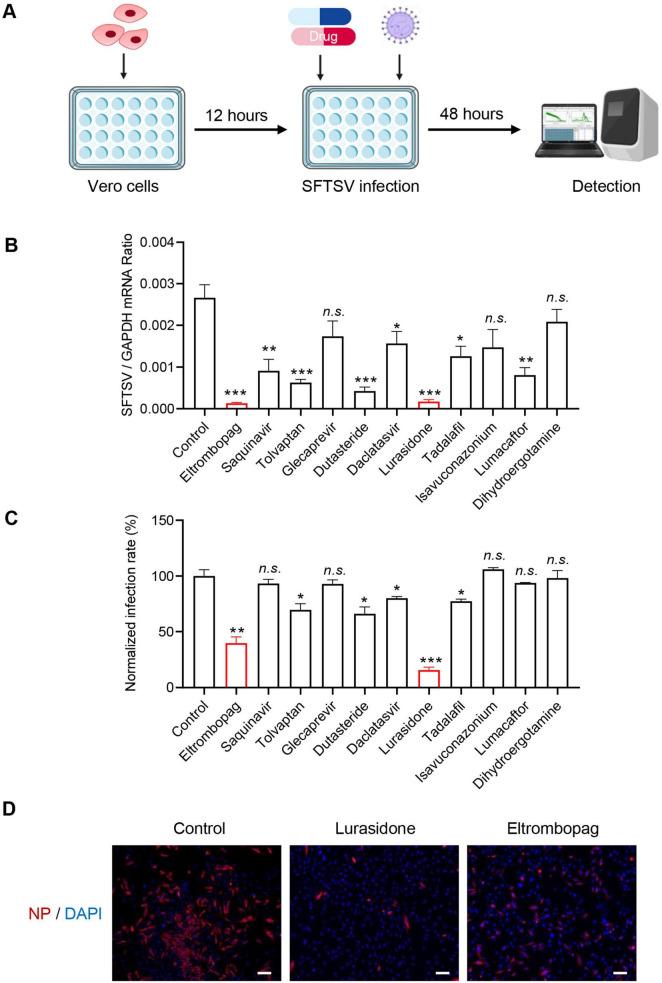
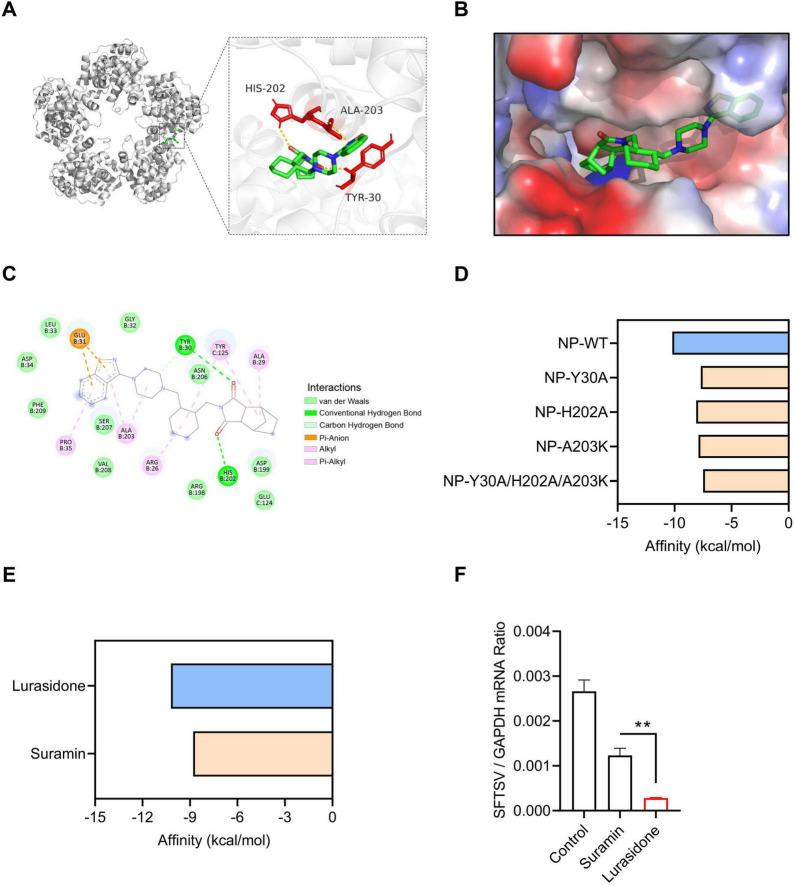
We performed a structure-based virtual screening of the FDA-approved drug library using AutoDock Vina, aiming to identify potential inhibitors targeting the RNA-binding pocket of SFTSV NP. Promising candidates were further evaluated for antiviral activity in vitro.
RESULTS
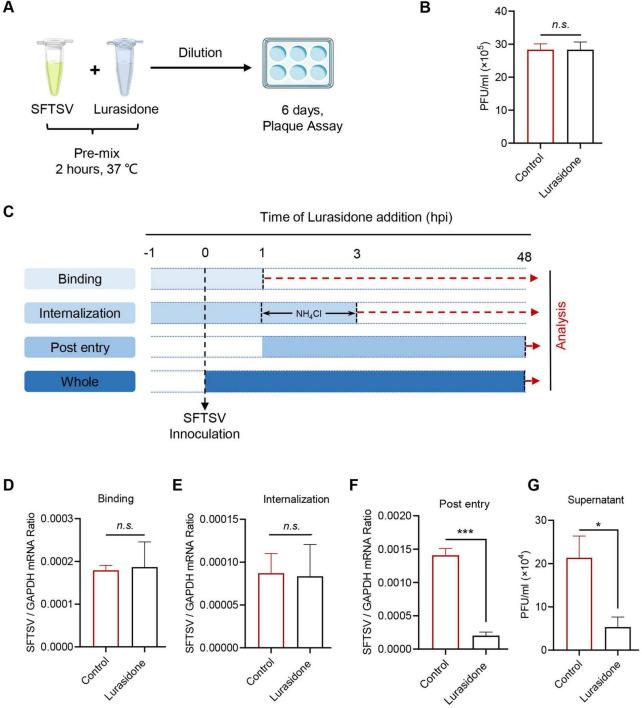
Among the screened compounds, lurasidone exhibited strong antiviral activity against SFTSV, with an IC value of 4.552 μM and a selectivity index (SI) greater than 10, indicating favorable antiviral potency and low cytotoxicity. Mechanistic investigations suggest that lurasidone may exert its inhibitory effect by directly binding to the NP, thereby interfering with viral genome replication.
CONCLUSION
This study identifies lurasidone as a potential antiviral candidate targeting SFTSV NP and provides a theoretical basis for the repurposing of FDA-approved drugs against emerging viral infections. These findings offer new insights into therapeutic strategies for the treatment of SFTSV.
引言
发热伴血小板减少综合征病毒(SFTSV)是一种新出现的蜱传布尼亚病毒,可引起人类急性发热性疾病并伴有血小板减少,且死亡率很高。目前,尚无经批准用于预防或治疗SFTSV感染的特异性抗病毒药物。病毒核蛋白(NP)是参与病毒RNA复制和转录的关键成分,是抗病毒药物研发的一个有前景的靶点。
方法
我们使用AutoDock Vina对FDA批准的药物库进行基于结构的虚拟筛选,旨在鉴定靶向SFTSV NP的RNA结合口袋的潜在抑制剂。对有前景的候选药物进一步进行体外抗病毒活性评估。
结果
在筛选出的化合物中,鲁拉西酮对SFTSV表现出较强的抗病毒活性,IC值为4.552 μM,选择性指数(SI)大于10,表明其具有良好的抗病毒效力和低细胞毒性。机制研究表明,鲁拉西酮可能通过直接与NP结合发挥抑制作用,从而干扰病毒基因组复制。
结论
本研究确定鲁拉西酮为靶向SFTSV NP的潜在抗病毒候选药物,并为重新利用FDA批准的药物治疗新出现的病毒感染提供了理论依据。这些发现为SFTSV的治疗策略提供了新的见解。


 Zotero 插件