
通过化学修饰的寡核苷酸对CRISPR/Cas9功能进行条件控制。
Conditional Control of CRISPR/Cas9 Function by Chemically Modified Oligonucleotides.
作者信息
Wang Liangliang, Liu Yan, Song Hongjun, Zhang Xue, Wang Yang
机构信息
School of Biological and Pharmaceutical Engineering, Lanzhou Jiaotong University, Lanzhou 730070, China.
Key Laboratory of Bioinorganic and Synthetic Chemistry (Sun Yat-sen University), Ministry of Education, Guangzhou 510006, China.
出版信息
Molecules. 2025 Apr 28;30(9):1956. doi: 10.3390/molecules30091956.
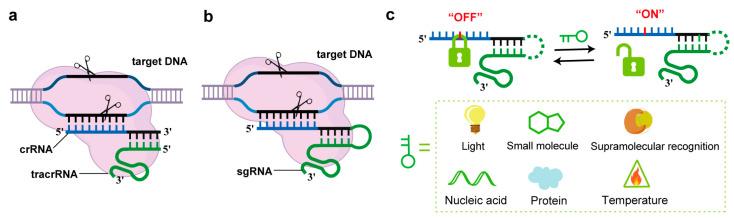
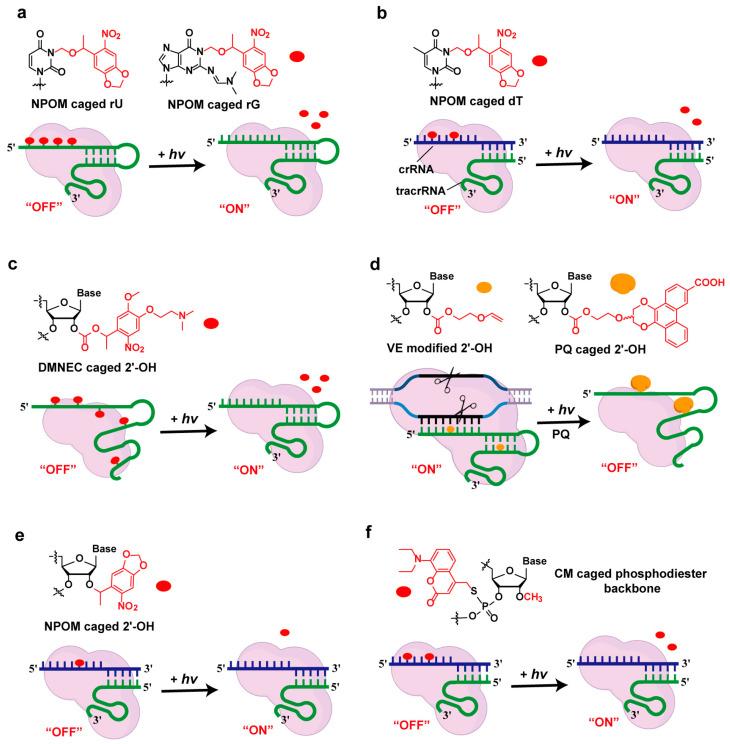
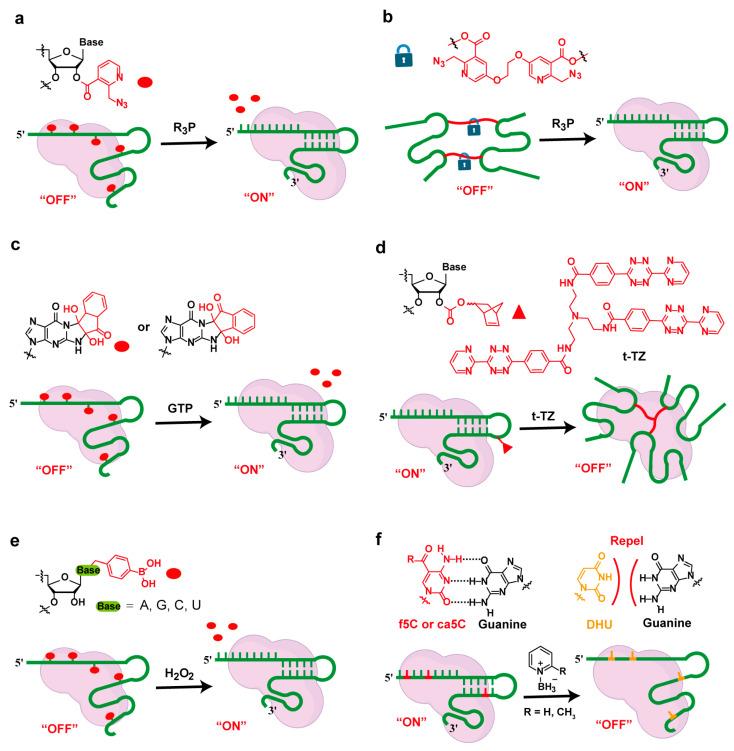
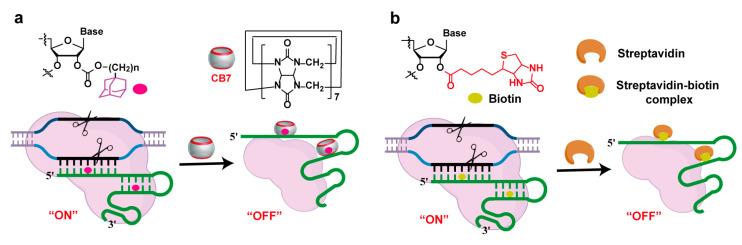
The CRISPR (clustered regularly interspaced short palindromic repeats) system has emerged as a revolutionary gene-editing tool with immense potential in gene therapy, functional genomics, and beyond. However, achieving precise spatiotemporal control of gene editing in specific cells and tissues while effectively mitigating potential risks, such as off-target effects, remains a key challenge for its clinical translation. To overcome these limitations, researchers have developed innovative strategies based on chemical modifications of oligonucleotides to enhance the precision, efficiency, and controllability of CRISPR/Cas9-mediated gene editing. By introducing conditional responsive elements, such as photosensitive groups, small-molecule responsive units, and supramolecular structures, they have successfully achieved precise spatiotemporal and dose-dependent regulation of CRISPR/Cas9 function. This review provides a comprehensive overview of recent advancements in gRNA regulation strategies based on chemical modifications of oligonucleotides, discussing their applications in improving the efficiency, specificity, and controllability of CRISPR/Cas9 editing. We also highlight the challenges associated with the conditional control of gRNA and offer insights into future directions for the chemical regulation of gRNA to further advance CRISPR/Cas9 technology.
CRISPR(成簇规律间隔短回文重复序列)系统已成为一种具有革命性的基因编辑工具,在基因治疗、功能基因组学及其他领域具有巨大潜力。然而,在特定细胞和组织中实现基因编辑的精确时空控制,同时有效降低潜在风险,如脱靶效应,仍然是其临床转化的关键挑战。为克服这些限制,研究人员基于寡核苷酸的化学修饰开发了创新策略,以提高CRISPR/Cas9介导的基因编辑的精确性、效率和可控性。通过引入条件响应元件,如光敏基团、小分子响应单元和超分子结构,他们成功实现了对CRISPR/Cas9功能的精确时空和剂量依赖性调控。本文综述了基于寡核苷酸化学修饰的gRNA调控策略的最新进展,讨论了它们在提高CRISPR/Cas9编辑效率、特异性和可控性方面的应用。我们还强调了与gRNA条件控制相关的挑战,并对gRNA化学调控的未来方向提供见解,以进一步推动CRISPR/Cas9技术发展。


 Zotero 插件