
斋月期间1型糖尿病患者反复长时间禁食后发生低血糖时,使用小剂量胰高血糖素治疗的患者体验及治疗满意度
Patient Experiences and Treatment Satisfaction with Mini-Dose Glucagon as a Treatment for Hypoglycemia Following Repeated, Prolonged Fasts in Type 1 Diabetes During Ramadan.
作者信息
Algeffari Metab, Hussain Sufyan, Alsharidah Mansour, Alkhalifah Salsabil, Almogbel Turki
机构信息
Department of Family and Community Medicine, Collage of Medicine, Qassim University, Buraydah 52571, Saudi Arabia.
Department of Diabetes, School of Cardiovascular, Metabolic Medicine and Sciences, King's College London, London WC2R 2LS, UK.
出版信息
J Clin Med. 2025 May 6;14(9):3222. doi: 10.3390/jcm14093222.
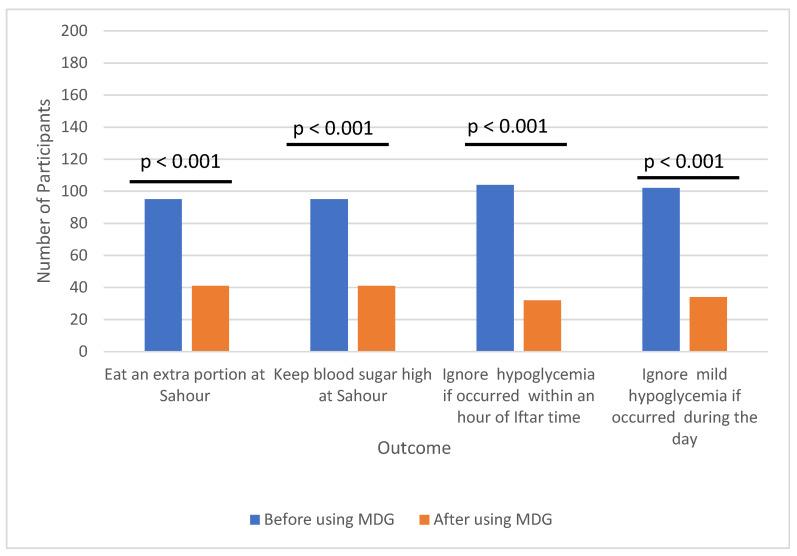
Mini-dose glucagon (MDG) is a safe and effective option for managing hypoglycemia during prolonged, repetitive fasts in people with type 1 diabetes (pwT1D) during Ramadan. We aimed in this study to evaluate the effectiveness and patient satisfaction of MDG for the management of fasting-induced hypoglycemia from the perspective of pwT1D fasting during Ramadan. We conducted an online survey shared via social media platforms and email announcements from May 2021 to April 2023 to collect feedback from 136 (72 female) persons with T1D about their experiences using MDG. In the survey, participants were asked to answer questions about diabetes history, hypoglycemia management during Ramadan, the efficacy of MDG treatment, the psychological impact of breaking the fast, side effects, injection experiences, and preferred future treatments for hypoglycemia caused by fasting. After using MDG, 123 (91%) of participants reported they were able to complete their fasts. A total of 110 (80%) of participants reported that they prefer to use MDG over oral options in the future to correct fasting-induced hypoglycemia. Furthermore, participants showed significant change in their habits, which would otherwise have left them exposed to hypoglycemia or hyperglycemia for longer periods of time during fasts. These data demonstrate positive user experience and satisfaction following MDG as a treatment for fasting-induced hypoglycemia in pwT1D. Furthermore, MDG can promote the successful completion of fasts in Ramadan and encourage a change in unhealthy habits that may lead to prolonged hypoglycemia during fasts.
小剂量胰高血糖素(MDG)是斋月期间1型糖尿病患者(T1D患者)在长时间反复禁食期间管理低血糖的一种安全有效的选择。我们在本研究中的目的是从斋月期间禁食的T1D患者的角度评估MDG治疗禁食诱导低血糖的有效性和患者满意度。我们于2021年5月至2023年4月通过社交媒体平台和电子邮件公告进行了一项在线调查,以收集136名(72名女性)T1D患者使用MDG的经验反馈。在调查中,参与者被要求回答有关糖尿病病史、斋月期间低血糖管理、MDG治疗效果、破斋的心理影响、副作用、注射体验以及未来治疗禁食引起的低血糖的首选方法等问题。使用MDG后,123名(91%)参与者报告他们能够完成禁食。共有110名(80%)参与者报告他们未来更愿意使用MDG而非口服药物来纠正禁食诱导的低血糖。此外,参与者的习惯有了显著改变,否则他们在禁食期间会更长时间处于低血糖或高血糖状态。这些数据表明,MDG作为T1D患者禁食诱导低血糖的治疗方法,具有积极的用户体验和满意度。此外,MDG可以促进斋月禁食的成功完成,并鼓励改变可能导致禁食期间长时间低血糖的不健康习惯。
 Zotero 插件