
多酚和黄酮类化合物在光感受器退行性疾病中的神经保护作用。
Neuroprotection provided by polyphenols and flavonoids in photoreceptor degenerative diseases.
作者信息
de Lima-Vasconcellos Théo Henrique, Bovi Dos Santos Gabrieli, Móvio Marília Inês, Donnici Giovanna Klemenc, Badin Gabriela Maria, de Araujo Daniele Ribeiro, Kihara Alexandre Hiroaki
机构信息
Laboratório de Neurogenética, Universidade Federal do ABC, São Bernardo do Campo, SP, Brasil.
Departamento de Biofísica, Escola Paulista de Medicina, Universidade Federal de São Paulo, São Paulo, SP, Brasil.
出版信息
Neural Regen Res. 2026 Mar 1;21(3):908-922. doi: 10.4103/NRR.NRR-D-24-01638. Epub 2025 May 6.
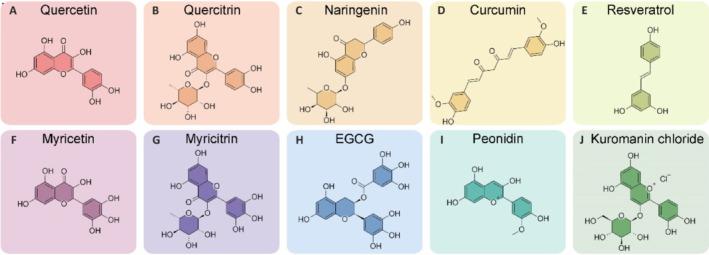
The intricate landscape of neurodegenerative diseases complicates the search for effective therapeutic approaches. Photoreceptor degeneration, the common endpoint in various retinal diseases, including retinitis pigmentosa and age-related macular degeneration, leads to vision loss or blindness. While primary cell death is driven by genetic mutations, oxidative stress, and neuroinflammation, additional mechanisms contribute to disease progression. In retinitis pigmentosa, a multitude of genetic alterations can trigger the degeneration of photoreceptors, while other retinopathies, such as age-related macular degeneration, are initiated by combinations of environmental factors, such as diet, smoking, and hypertension, with genetic predispositions. Nutraceutical therapies, which blend the principles of nutrition and pharmaceuticals, aim to harness the health benefits of bioactive compounds for therapeutic applications. These compounds generally possess multi-target effects. Polyphenols and flavonoids, secondary plant metabolites abundant in plant-based foods, are known for their antioxidant, neuroprotective, and anti-inflammatory properties. This review focuses on the potential of polyphenols and flavonoids as nutraceuticals to treat neurodegenerative diseases such as retinitis pigmentosa. Furthermore, the importance of developing reliable delivery methods to enhance the bioavailability and therapeutic efficacy of these compounds will be discussed. By combining nutraceuticals with other emerging therapies, such as genetic and cell-based treatments, it is possible to offer a more comprehensive approach to treating retinal degenerative diseases. These advancements could lead to a viable and accessible option, improving the quality of life for patients with retinal diseases.
神经退行性疾病错综复杂的情况使寻找有效的治疗方法变得复杂。光感受器退化是包括视网膜色素变性和年龄相关性黄斑变性在内的各种视网膜疾病的常见终点,会导致视力丧失或失明。虽然原发性细胞死亡是由基因突变、氧化应激和神经炎症驱动的,但其他机制也会导致疾病进展。在视网膜色素变性中,多种基因改变可引发光感受器退化,而其他视网膜病变,如年龄相关性黄斑变性,则是由饮食、吸烟和高血压等环境因素与遗传易感性共同引发的。营养补充疗法融合了营养和药物学原理,旨在利用生物活性化合物的健康益处用于治疗应用。这些化合物通常具有多靶点效应。多酚和黄酮类化合物是植物性食物中丰富的次生植物代谢产物,以其抗氧化、神经保护和抗炎特性而闻名。本综述重点关注多酚和黄酮类化合物作为营养补充剂治疗视网膜色素变性等神经退行性疾病的潜力。此外,还将讨论开发可靠的递送方法以提高这些化合物的生物利用度和治疗效果的重要性。通过将营养补充剂与其他新兴疗法,如基因治疗和基于细胞的治疗相结合,有可能提供一种更全面的方法来治疗视网膜退行性疾病。这些进展可能会带来一个可行且可及的选择,改善视网膜疾病患者的生活质量。


 Zotero 插件