
用于将IL-15与IL-7或IL-21进行肿瘤靶向联合的三功能抗体-细胞因子融合蛋白形式
Trifunctional antibody-cytokine fusion protein formats for tumor-targeted combination of IL-15 with IL-7 or IL-21.
作者信息
Möller Annika M, Vettermann Sarah, Baumann Felix, Pütter Max, Müller Dafne
机构信息
Institute of Cell Biology and Immunology, University of Stuttgart, Stuttgart, Germany.
出版信息
Front Immunol. 2025 Apr 30;16:1498697. doi: 10.3389/fimmu.2025.1498697. eCollection 2025.
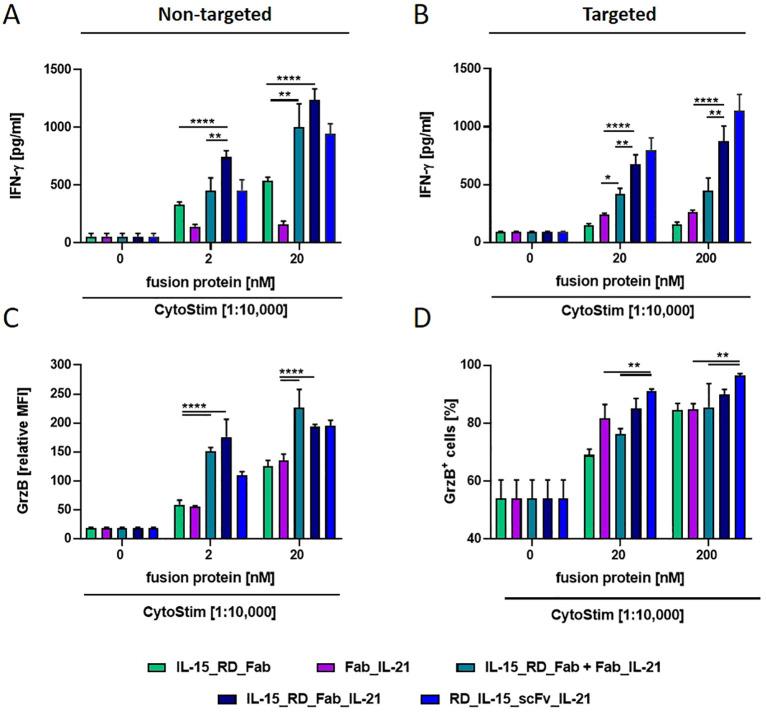
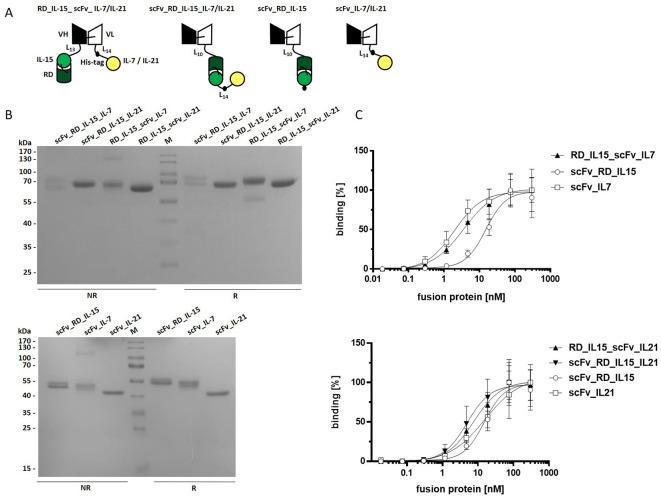
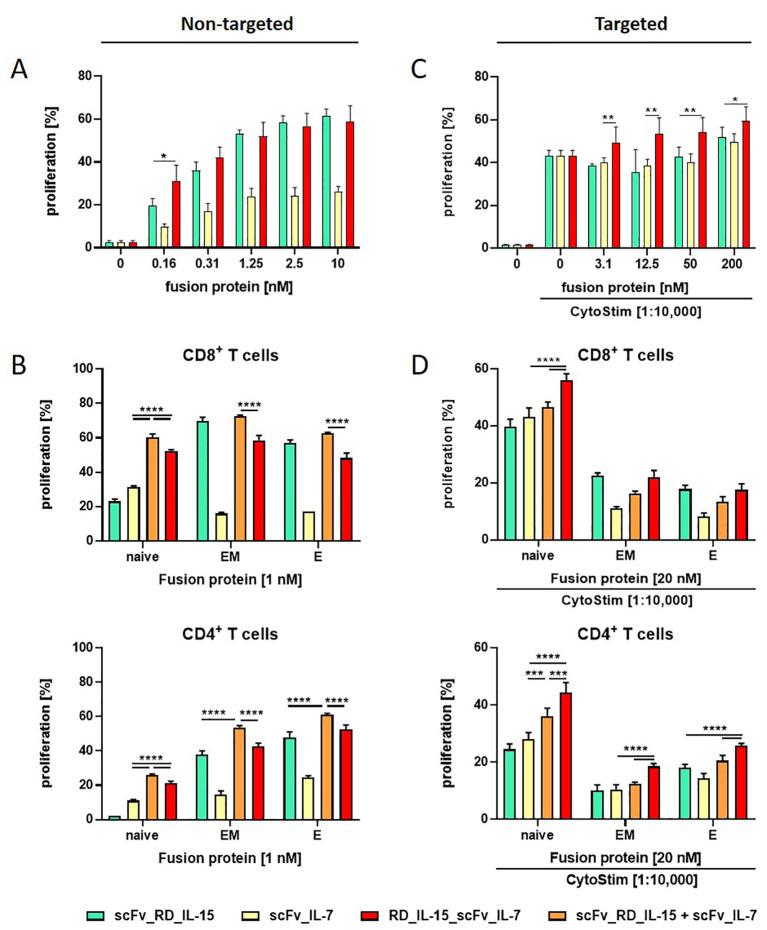
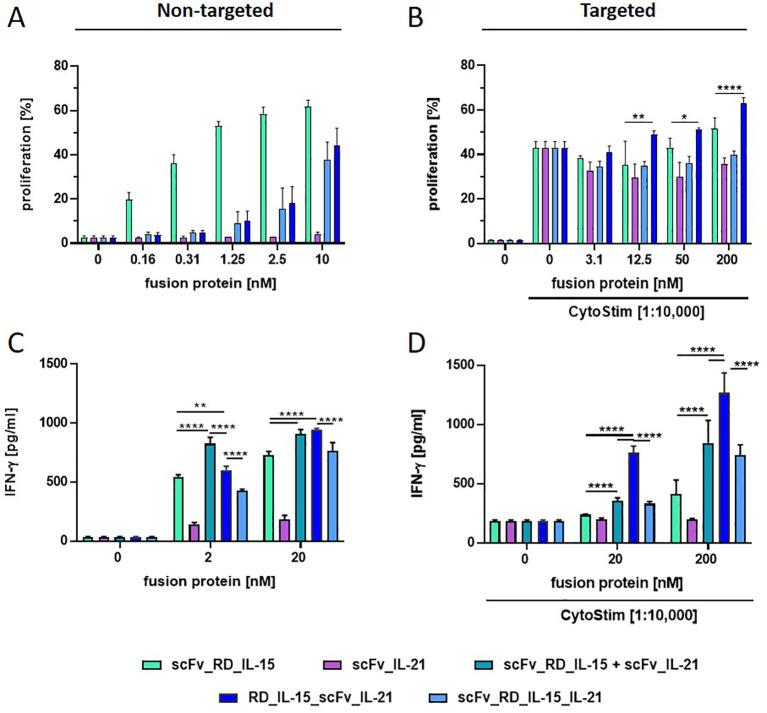
Cytokines from the common gamma chain receptor family, such as IL-15, IL-21 and IL-7, show promise for cancer immunotherapy and have been incorporated individually into the immunocytokine approach. However, their efficacy as monotherapy is limited. Here, we investigated the molecular design of tumor-directed trifunctional antibody-cytokine fusion proteins for a combinatorial approach of IL-15 with either IL-7 or IL-21. Various fusion proteins differing in antibody format, cytokine composition and arrangement were generated and cooperative cytokine activity assessed in solution and bound to target cells. Comparative analysis revealed that formats with cytokines positioned at the N- and C-termini of the antibody were more effective than those arranged in series. For the former design, cooperative effects were observed with the scFv-based (IL-15+IL-7) trifunctional fusion protein, primarily enhancing the proliferation of naive T cells, while the scFv/Fab-based (IL-15+IL-21) trifunctional fusion proteins enhanced IFN-y release and the cytotoxic potential of T cells. Combining cytokines in the two-in-one molecule approach was principally advantageous when bound to target cells. Greater potency in inducing JAK-STAT pathway activation highlighted the importance of cytokine colocalization for cooperative receptor activation. Compared to the Fab-based (IL-15+IL-21) format, the scFv-based (IL-15+IL-21) format displayed a tendency towards higher activity in targeted and lower activity in untargeted settings, emphasizing the targeted concept. Thus, this study underscores the importance of molecular design in developing trifunctional immunocytokines and identified the scFv-based trifunctional (IL-15+IL-21) fusion protein, with the antibody in the central position, as a particularly promising candidate for further drug development.
来自共同γ链受体家族的细胞因子,如白细胞介素-15(IL-15)、白细胞介素-21(IL-21)和白细胞介素-7(IL-7),在癌症免疫治疗方面显示出前景,并已分别被纳入免疫细胞因子疗法。然而,它们作为单一疗法的疗效有限。在此,我们研究了肿瘤导向的三功能抗体-细胞因子融合蛋白的分子设计,以实现IL-15与IL-7或IL-21的联合应用。我们生成了各种在抗体形式、细胞因子组成和排列上不同的融合蛋白,并在溶液中和与靶细胞结合时评估了细胞因子的协同活性。比较分析表明,细胞因子位于抗体N端和C端的形式比串联排列的形式更有效。对于前一种设计,基于单链抗体片段(scFv)的(IL-15+IL-7)三功能融合蛋白观察到协同效应,主要增强了初始T细胞的增殖,而基于scFv/Fab的(IL-15+IL-21)三功能融合蛋白增强了干扰素-γ(IFN-γ)的释放和T细胞的细胞毒性潜力。当与靶细胞结合时,在二合一分子方法中组合细胞因子主要具有优势。诱导JAK-STAT途径激活的更强效力突出了细胞因子共定位对协同受体激活的重要性。与基于Fab的(IL-15+IL-21)形式相比,基于scFv的(IL-15+IL-21)形式在靶向环境中显示出更高活性的趋势,而在非靶向环境中活性较低,强调了靶向概念。因此,本研究强调了分子设计在开发三功能免疫细胞因子中的重要性,并确定了以抗体位于中心位置的基于scFv的三功能(IL-15+IL-21)融合蛋白作为进一步药物开发的特别有前景的候选物。


 Zotero 插件