
γδ T细胞和嵌合抗原受体γδ T细胞在癌症免疫治疗中的前景。
Prospects for γδ T cells and chimeric antigen receptor γδ T cells in cancer immunotherapy.
作者信息
Wang Lu, Li Jiaqi, Xuan Yaping, Zhang Jinrui, Wang Xiao, Hu Wei, Xiu Lei
机构信息
State Key Laboratory of Reproductive Regulation and Breeding of Grassland Livestock, Institutes of Biomedical Sciences, School of Life Sciences, Inner Mongolia University, Hohhot, China.
State Key Laboratory of Genetic Engineering, School of Life Sciences, Fudan University, Shanghai, China.
出版信息
Front Immunol. 2025 Apr 30;16:1554541. doi: 10.3389/fimmu.2025.1554541. eCollection 2025.
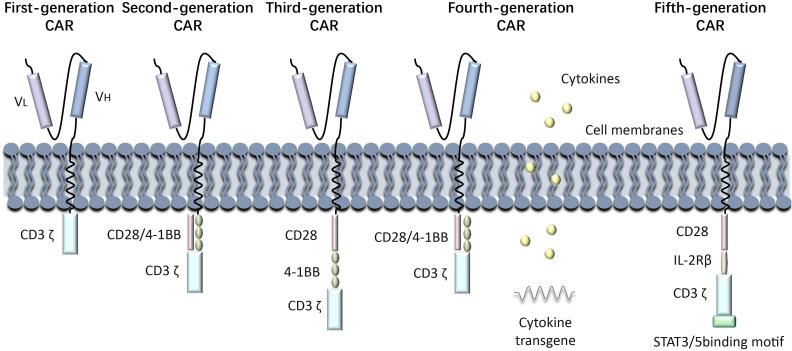
γδ T cells, a type of specialized T cell, differ from alpha-beta T cells due to the presence of γ and δ chain surface T cell receptors. These receptors allow them to directly recognize and bind antigenic molecules without the requirement of attachment to MHC or APC antigen presentation. Given their intrinsic properties and functional versatility, γδ T cells are under intensive investigation as carriers for chimeric antigen receptor (CAR) in the context of cancer therapy. In this regard, γδ CAR-T cells have demonstrated great potential to overcome the limitations of antigen recognition with the help of dual antigen identification mechanisms. However, there are still technological challenges that need to be addressed. This discussion focuses on the research status and future development prospects of γδ T cells and γδ CAR-T cells, aiming to provide valuable insights for the follow-up research and practical application of γδ CAR-T cells.
γδ T细胞是一种特殊类型的T细胞,由于其表面存在γ和δ链T细胞受体,因而与αβ T细胞不同。这些受体使它们能够直接识别并结合抗原分子,而无需附着于MHC或抗原呈递细胞(APC)的抗原呈递。鉴于其内在特性和功能多样性,γδ T细胞作为癌症治疗中嵌合抗原受体(CAR)的载体正受到深入研究。在这方面,γδ CAR-T细胞借助双重抗原识别机制已展现出克服抗原识别局限性的巨大潜力。然而,仍存在一些技术挑战有待解决。本讨论聚焦于γδ T细胞和γδ CAR-T细胞的研究现状及未来发展前景,旨在为γδ CAR-T细胞的后续研究及实际应用提供有价值的见解。

 Zotero 插件