
NFE2L1作为神经退行性疾病中蛋白质稳态的核心调节因子:与自噬、铁死亡和蛋白酶体的相互作用。
NFE2L1 as a central regulator of proteostasis in neurodegenerative diseases: interplay with autophagy, ferroptosis, and the proteasome.
作者信息
Khodadadi Hossein, Łuczyńska Kamila, Winiarczyk Dawid, Leszczyński Paweł, Taniguchi Hiroaki
机构信息
Department of Experimental Embryology, Institute of Genetics and Animal Biotechnology of the Polish Academy of Sciences, Jastrzebiec, Poland.
The Second Department of Psychiatry, Institute of Psychiatry and Neurology in Warsaw, Warsaw, Poland.
出版信息
Front Mol Neurosci. 2025 May 1;18:1551571. doi: 10.3389/fnmol.2025.1551571. eCollection 2025.
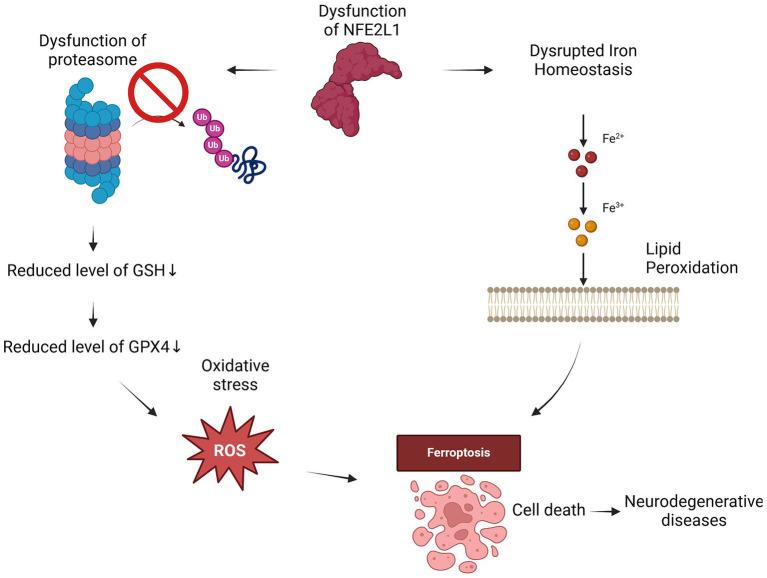
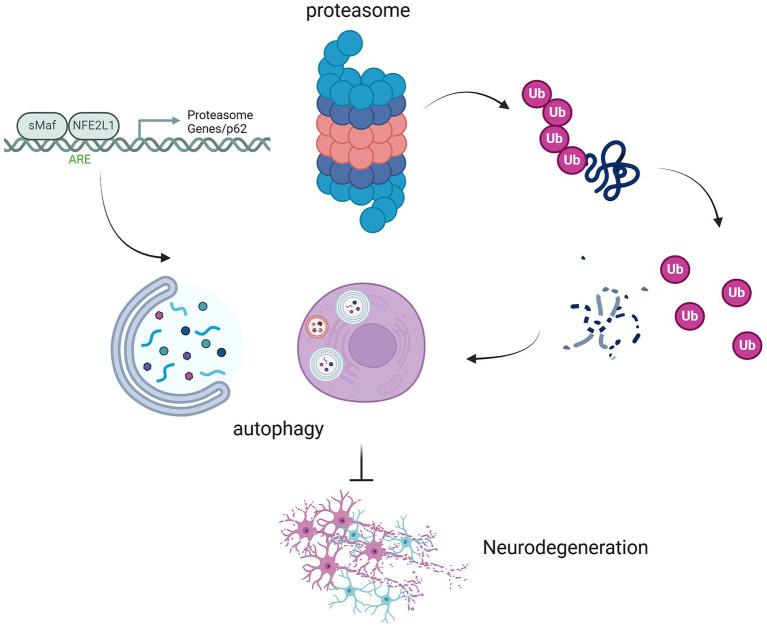
Maintaining proteostasis is critical for neuronal health, with its disruption underpinning the progression of neurodegenerative diseases such as Alzheimer's, Parkinson's, and Huntington's diseases. Nuclear Factor Erythroid 2-Related Factor 1 (NFE2L1) has emerged as a key regulator of proteostasis, integrating proteasome function, autophagy, and ferroptosis to counteract oxidative stress and protein misfolding. This review synthesizes current knowledge on the role of NFE2L1 in maintaining neuronal homeostasis, focusing on its mechanisms for mitigating proteotoxic stress and supporting cellular health, offering protection against neurodegeneration. Furthermore, we discuss the pathological implications of NFE2L1 dysfunction and explore its potential as a therapeutic target. By highlighting gaps in the current understanding and presenting future research directions, this review aims to elucidate NFE2L1's role in advancing treatment strategies for neurodegenerative diseases.
维持蛋白质稳态对神经元健康至关重要,其破坏是阿尔茨海默病、帕金森病和亨廷顿病等神经退行性疾病进展的基础。核因子红细胞2相关因子1(NFE2L1)已成为蛋白质稳态的关键调节因子,整合蛋白酶体功能、自噬和铁死亡以对抗氧化应激和蛋白质错误折叠。本综述综合了关于NFE2L1在维持神经元稳态中的作用的现有知识,重点关注其减轻蛋白质毒性应激和支持细胞健康以预防神经退行性变的机制。此外,我们讨论了NFE2L1功能障碍的病理意义,并探索其作为治疗靶点的潜力。通过强调当前理解中的差距并提出未来的研究方向,本综述旨在阐明NFE2L1在推进神经退行性疾病治疗策略中的作用。

 Zotero 插件