
营养缺陷型宿主中非天然氨基酸的位点特异性掺入:
Residue-Specific Incorporation of Noncanonical Amino Acids in Auxotrophic Hosts:
作者信息
Marin Žana, Lacombe Claudia, Rostami Simindokht, Arasteh Kani Arshia, Borgonovo Andrea, Cserjan-Puschmann Monika, Mairhofer Jürgen, Striedner Gerald, Wiltschi Birgit
机构信息
Department of Biotechnology and Food Sciences, Institute of Bioprocess Science and Engineering, BOKU University, Muthgasse 18, 1190 Vienna, Austria.
acib - Austrian Centre of Industrial Biotechnology, Muthgasse 18, 1190 Vienna, Austria.
出版信息
Chem Rev. 2025 May 28;125(10):4840-4932. doi: 10.1021/acs.chemrev.4c00280. Epub 2025 May 16.
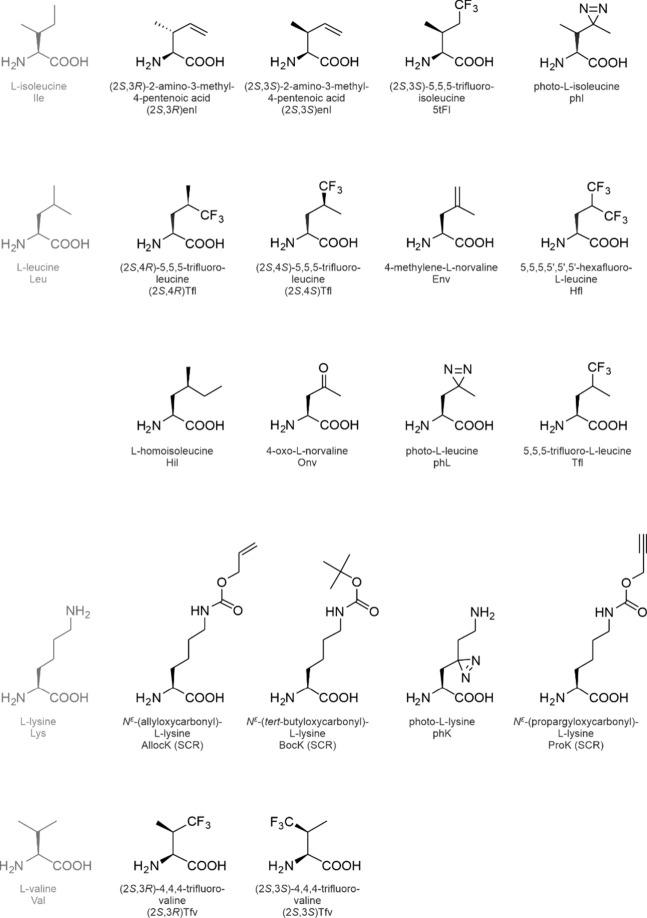
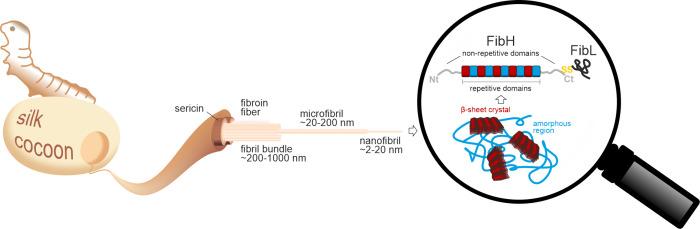
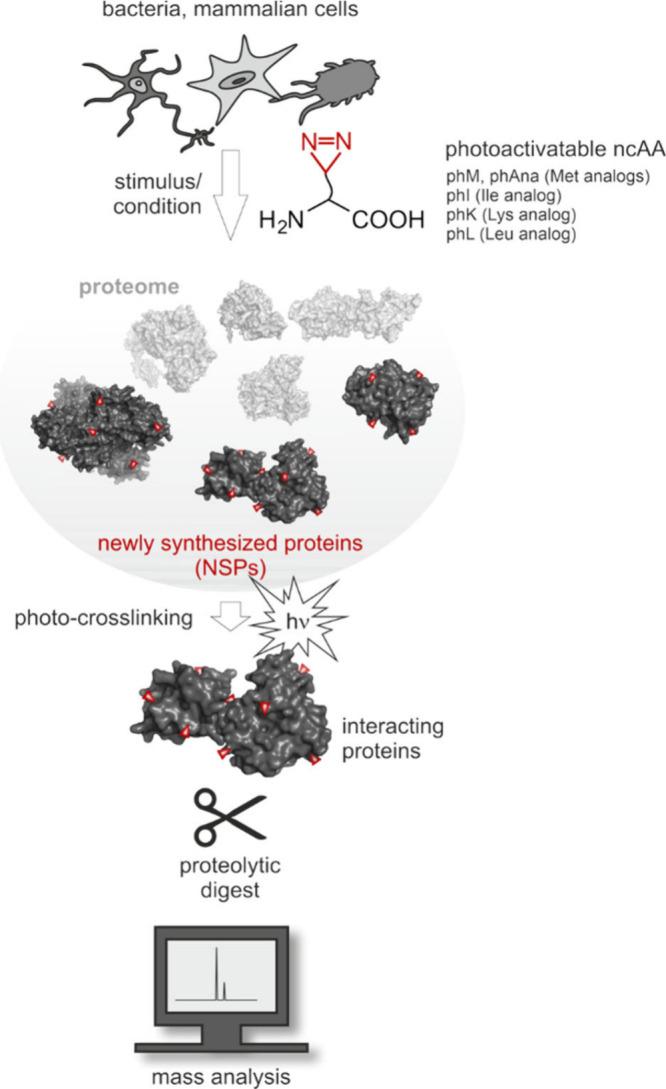
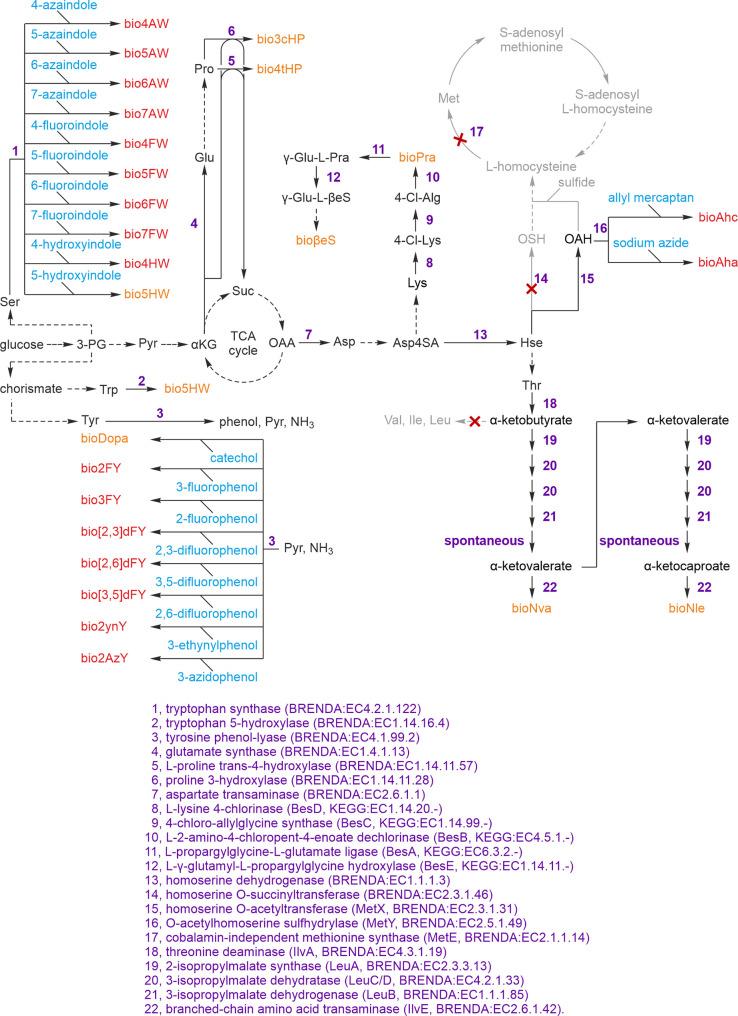
The residue-specific incorporation of noncanonical amino acids in auxotrophic hosts allows the global exchange of a canonical amino acid with its noncanonical analog. Noncanonical amino acids are not encoded by the standard genetic code, but they carry unique side chain chemistries, e.g., to perform bioorthogonal conjugation reactions or to manipulate the physicochemical properties of a protein such as folding and stability. The method was introduced nearly 70 years ago and is still in widespread use because of its simplicity and robustness. In our study, we review the trends in the field during the last two decades. We give an overview of the application of the method for artificial post-translational protein modifications and the selective functionalization and directed immobilization of proteins. We highlight the trends in the use of noncanonical amino acids for the analysis of nascent proteomes and the engineering of enzymes and biomaterials, and the progress in the biosynthesis of amino acid analogs. We also discuss the challenges for the scale-up of the technique.
在营养缺陷型宿主中对非天然氨基酸进行残基特异性掺入,能够实现天然氨基酸与其非天然类似物的全面交换。非天然氨基酸并非由标准遗传密码编码,但它们具有独特的侧链化学性质,例如可进行生物正交共轭反应或操控蛋白质的物理化学性质,如折叠和稳定性。该方法在近70年前就已引入,因其简单性和稳健性至今仍被广泛使用。在我们的研究中,我们回顾了过去二十年该领域的发展趋势。我们概述了该方法在人工翻译后蛋白质修饰、蛋白质的选择性功能化和定向固定方面的应用。我们强调了使用非天然氨基酸分析新生蛋白质组以及工程化酶和生物材料方面的趋势,以及氨基酸类似物生物合成的进展。我们还讨论了该技术扩大规模所面临的挑战。








 Zotero 插件