
保险和药品福利管理人员对儿童炎症性肠病治疗障碍的全国性观点。
National perspectives of barriers by insurance and pharmacy benefit managers in pediatric inflammatory bowel disease.
作者信息
Constant Brad D, Adler Jeremy, Gold Benjamin D, Dotson Jennifer, Lightdale Jenifer R, Scott Frank, Saeed Shehzad, Kim Sandra, Moses Jonathan, de Zoeten Edwin F, Mirea Lucia, Ritchey Andrew, Pasternak Brad
机构信息
Division of Pediatrics and Section of Pediatric Gastroenterology, Hepatology and Nutrition, Digestive Health Institute, Children's Hospital Colorado University of Colorado Anschutz School of Medicine, Medical Campus Aurora Colorado USA.
Department of Pediatrics, Division of Pediatric Gastroenterology, Susan B. Meister Child Health Evaluation and Research Center University of Michigan Ann Arbor Michigan USA.
出版信息
JPGN Rep. 2025 Feb 10;6(2):80-90. doi: 10.1002/jpr3.70004. eCollection 2025 May.
OBJECTIVES
Early biologic initiation, dose optimization, and therapy modification based on disease phenotype are key to improving outcomes in pediatric inflammatory bowel disease (IBD). Enacting optimized therapy is often impeded by the lack of United States Food and Drug Administration (FDA) approval for pediatric use of newer advanced therapies or intensified dosing regimens. These barriers often result in initial payor denial of coverage and added prior authorization burden on physicians, leading to patient delays in medication initiation and therapy optimization, and development of disease-related morbidity.
METHODS
A sample of pediatric patients experiencing payor barriers to IBD biologic treatment, containing data on treatment delays and adverse outcomes, was obtained through a nationwide survey of pediatric gastroenterology providers via a longstanding, widely used pediatric gastroenterology Listserv (housed at University of Vermont) from January 2023 to August 2023.
RESULTS
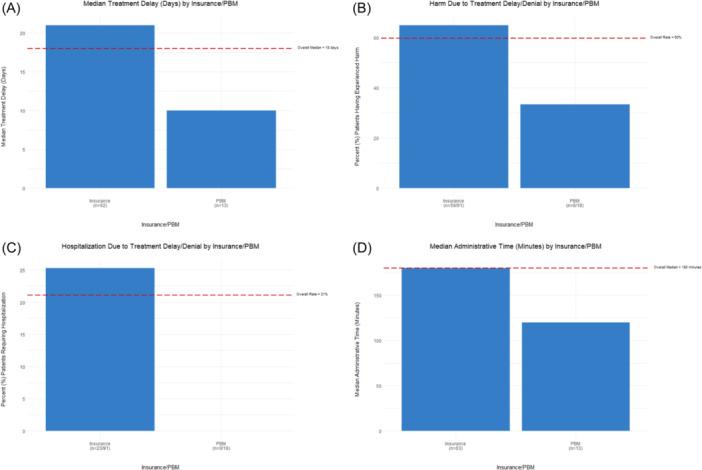
Providers across the United States reported information for 113 patients experiencing payor barriers for biologics IBD treatment. Ultimately, 77% of initial denials were approved. The median time to receiving medication was 18 days, with administrative time (prior authorization and appeal) requiring a median of 180 min. More than half (60%) of patients experienced adverse outcomes or worsened quality of life due to delays in treatment, including 21% of patients who were hospitalized.
CONCLUSIONS
These findings highlight the detrimental impact of payor barriers to treatment for children with IBD. Reforms that minimize delays in care and provider administrative burden are imperative to ensure that children receive timely evidence-based treatment that improves disease outcomes and prevents adverse events.
目的
基于疾病表型尽早启动生物制剂治疗、优化剂量并调整治疗方案,是改善儿童炎症性肠病(IBD)治疗效果的关键。由于美国食品药品监督管理局(FDA)未批准 newer advanced therapies 或强化给药方案用于儿科,实施优化治疗常常受到阻碍。这些障碍通常导致最初付款方拒绝承保,并给医生增加了事先批准的负担,从而导致患者在开始用药和优化治疗方面出现延误,并引发与疾病相关的发病率。
方法
通过对儿科胃肠病学提供者进行全国性调查,从 2023 年 1 月至 2023 年 8 月,通过一个长期广泛使用的儿科胃肠病学邮件列表(位于佛蒙特大学),获取了一组经历付款方对 IBD 生物治疗存在障碍的儿科患者样本,其中包含治疗延误和不良后果的数据。
结果
美国各地的提供者报告了 113 名经历生物制剂 IBD 治疗付款方障碍的患者的信息。最终,77% 的最初拒绝被批准。开始用药的中位时间为 18 天,行政时间(事先批准和上诉)中位需要 180 分钟。超过一半(60%)的患者因治疗延误出现不良后果或生活质量恶化,包括 21% 的患者住院。
结论
这些发现凸显了付款方障碍对 IBD 患儿治疗的不利影响。必须进行改革,尽量减少护理延误和提供者的行政负担,以确保儿童能够及时接受基于证据的治疗,从而改善疾病治疗效果并预防不良事件。

 Zotero 插件