
亚油酸与头孢唑林联合治疗生物膜相关导管感染
Synergistic treatment of linoleic acid and cefazolin on biofilm-related catheter infections.
作者信息
Ham Soyoung, Kim Han-Shin, Jo Min Jee, Cha Eunji, Ryoo Hwa-Soo, Kim Hyojin, Lee Heeho, Ko Gang-Jee, Park Hee-Deung
机构信息
Department of Geosciences, University of Tübingen, Tübingen, Germany.
Division of Biotechnology, College of Environmental and Bioresource Sciences, Jeonbuk National University, Iksan, Jeonbuk, Republic of Korea.
出版信息
Appl Environ Microbiol. 2025 Jun 18;91(6):e0077025. doi: 10.1128/aem.00770-25. Epub 2025 May 21.
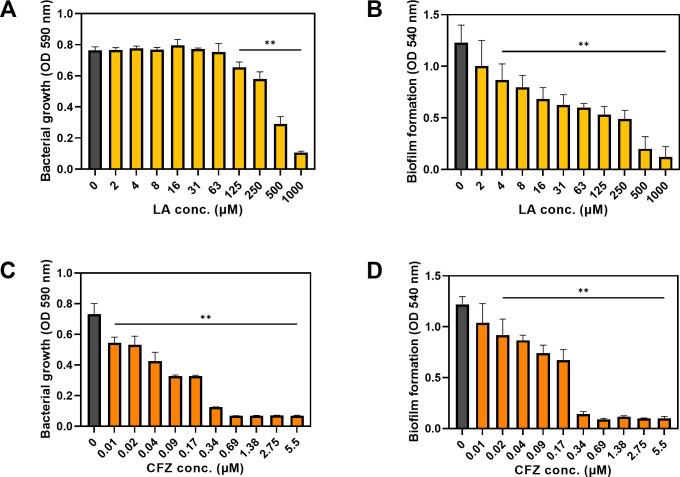
is a human pathogen that causes severe infections through biofilm formation. biofilm is particularly susceptible to catheters in patients undergoing peritoneal dialysis. Although antibiotics are used to treat catheter infections, high-concentration treatments adversely affect human host immune systems and change the physicochemical properties of the catheters. To improve therapeutic outcomes without side effects, we combined antibiotics and natural products. In this study, we propose a combination of linoleic acid (LA) and cefazolin (CFZ) to treat infections synergistically and apply it to catheter environments and systems. LA is a polyunsaturated fatty acid derived from natural products, and CFZ is a major antibiotic used to treat catheter-related infections. The optimum synergistic condition was determined using silicon pad-forming biofilm similar to catheter materials. biofilms were considerably inhibited and owing to the improved antibacterial effects. Furthermore, the combination negatively regulated the chemokine levels in the peritoneum, kidney, and liver extracted from mouse models. Moreover, it did not affect the cytotoxicity of human omentum mesothelial cells and the functions of the kidney and liver. Therefore, the combination of LA and CFZ could be a potential synergistic therapy for catheter infections.IMPORTANCECatheter contamination is commonly caused by biofilm formation, primarily in peritoneal dialysis patients. Although antibiotics are used to treat catheter infections, high concentrations of antibiotics impair the immune system of the human host and alter the physicochemical properties of catheters. Therefore, it is crucial to improve therapeutic outcomes while minimizing the side effects of antibiotics. Combined treatments with natural products can be solutions to alleviate these problems. Our study offers a new synergistic combination (linoleic acid and cefazolin) for the control of catheter infections caused by biofilms, especially in peritoneal dialysis.
是一种通过形成生物膜导致严重感染的人类病原体。生物膜在接受腹膜透析的患者中对导管尤其易感。尽管抗生素用于治疗导管感染,但高浓度治疗会对人类宿主免疫系统产生不利影响,并改变导管的物理化学性质。为了在无副作用的情况下改善治疗效果,我们将抗生素与天然产物相结合。在本研究中,我们提出亚油酸(LA)和头孢唑林(CFZ)联合使用以协同治疗感染,并将其应用于导管环境和系统。LA是一种源自天然产物的多不饱和脂肪酸,CFZ是用于治疗导管相关感染的主要抗生素。使用类似于导管材料的硅垫形成生物膜来确定最佳协同条件。由于抗菌效果的改善,生物膜受到显著抑制。此外,该组合对从小鼠模型中提取的腹膜、肾脏和肝脏中的趋化因子水平具有负调节作用。而且,它不影响人网膜间皮细胞的细胞毒性以及肾脏和肝脏的功能。因此,LA和CFZ的组合可能是治疗导管感染的一种潜在协同疗法。重要性导管污染通常由生物膜形成引起,主要发生在腹膜透析患者中。尽管抗生素用于治疗导管感染,但高浓度抗生素会损害人类宿主的免疫系统并改变导管的物理化学性质。因此,在尽量减少抗生素副作用的同时改善治疗效果至关重要。与天然产物联合治疗可以解决这些问题。我们的研究为控制由生物膜引起的导管感染,特别是在腹膜透析中,提供了一种新的协同组合(亚油酸和头孢唑林)。



 Zotero 插件