
1990 - 2021年中国及全球类风湿性关节炎负担趋势:基于全球疾病负担(GBD)数据库的纵向研究
Trends in rheumatoid arthritis burden in China and globally, 1990-2021: A longitudinal study based on the GBD database.
作者信息
Li Zhengpeng, Zeng Hao, Jin Bo, Zhang Mianyu, Zhang Xiaoyun, Chai Yuan
机构信息
Guangxi University of Chinese Medicine, Nanning, China.
Department of Orthopedics, Ruikang Hospital, Guangxi University of Chinese Medicine, Nanning, China.
出版信息
PLoS One. 2025 May 21;20(5):e0323372. doi: 10.1371/journal.pone.0323372. eCollection 2025.
BACKGROUND
Rheumatoid arthritis (RA) is a chronic autoimmune disease that imposes significant health and economic burdens worldwide, particularly in developing countries such as China.
METHOD
In this study, the Global Burden of Disease, The GBD database system stratified the incidence,prevalence,death and disability-adjusted life years (DALYs) of RA in China and the world from 1990 to 2021 by age, sex and period. Joinpoint Regression Program 5.1.0 was then used to calculate average annual percent change (AAPC) and 95% confidence interval (95% confidence interval). CI) to identify trends in disease burden. In addition, data collation using WPS allows for the comparison of RA burdens across different age groups, genders and time points in China and globally, and the data is rigorously screened and processed to ensure accuracy and comparability.
RESULTS
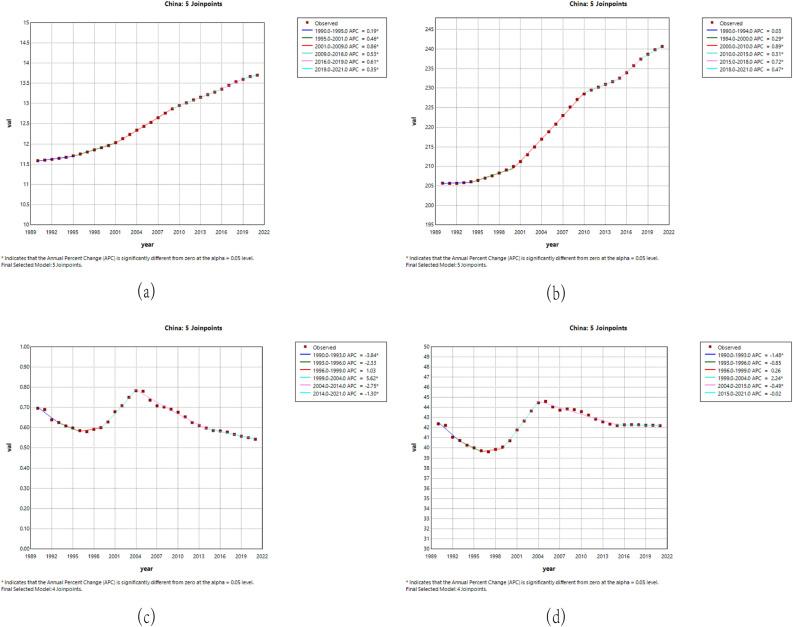
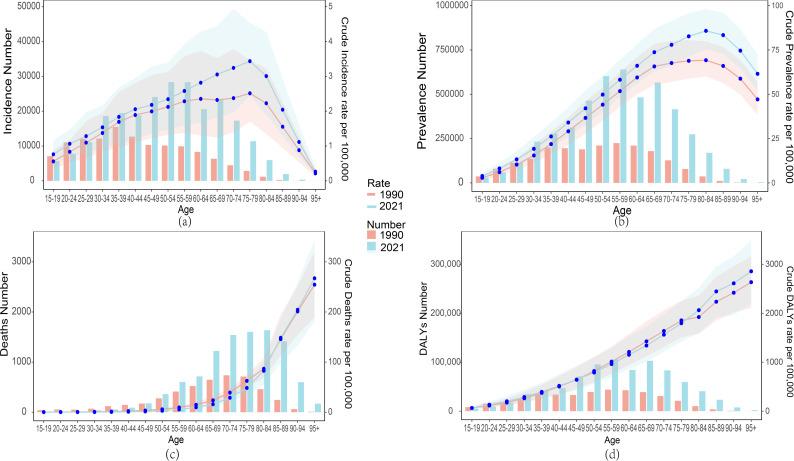
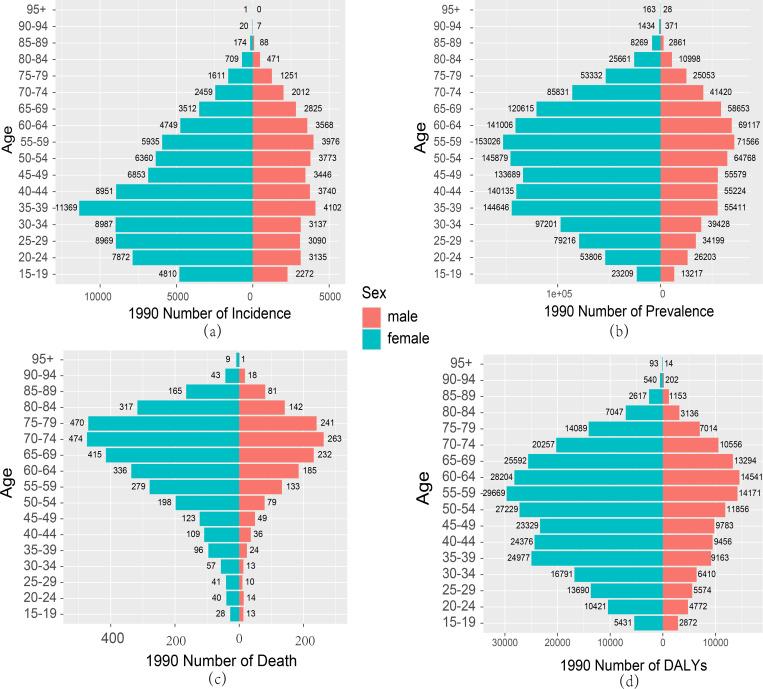
From 1990 to 2021, ASIR of RA in China increased by 0.54%, while the global ASIR rose by 0.41%.The number of RA cases in China increased cumulatively by 133%, compared to a global increase of 125.21%.Simultaneously, ASPR in China and globally increased by 17% and 14.44%, respectively.Regarding mortality, although the number of RA-related deaths increased in both China and globally, ASMR decreased by 26.23% in China and 22.86% globally.The trend in ASDR was consistent with ASMR, with declines of 0.40% in China and 1.46% globally.Furthermore, the study revealed significant gender disparities in RA both in China and globally, with women experiencing higher incidence, prevalence, mortality, and DALYs than men.The burden of RA increased significantly with age, particularly among middle-aged and older adults aged 45 and above.
CONCLUSION
Over the past 30 years, the burden of RA in China and globally has undergone significant changes.The study found that while RA related mortality and DALYs have slightly decreased in China and globally, the incidence and prevalence rates have continued to rise, particularly among women and middle-aged to elderly populations.Population aging and changes in lifestyle are key drivers of the increasing RA burden, with women showing higher susceptibility and burden due to their unique physiological characteristics and societal roles.The study highlights the need to strengthen early screening and intervention, optimize personalized treatment plans, and pay special attention to the unique needs of elderly and female populations.Additionally, promoting healthy lifestyles, improving primary healthcare services, and implementing supportive policies can effectively alleviate the health and socioeconomic burden of RA, ensuring a better quality of life for patients.
背景
类风湿关节炎(RA)是一种慢性自身免疫性疾病,在全球范围内造成了巨大的健康和经济负担,在中国等发展中国家尤为突出。
方法
在本研究中,全球疾病负担研究(GBD)数据库系统按年龄、性别和时期对1990年至2021年中国和全球RA的发病率、患病率、死亡率和伤残调整生命年(DALYs)进行了分层。然后使用Joinpoint回归程序5.1.0计算年均变化百分比(AAPC)和95%置信区间(95%CI),以确定疾病负担的趋势。此外,使用WPS进行数据整理,以便比较中国和全球不同年龄组、性别和时间点的RA负担,并对数据进行严格筛选和处理,以确保准确性和可比性。
结果
1990年至2021年,中国RA的年龄标准化发病率(ASIR)增长了0.54%,而全球ASIR增长了0.41%。中国RA病例数累计增加了133%,而全球增加了125.21%。同时,中国和全球的年龄标准化患病率(ASPR)分别增长了17%和14.44%。关于死亡率,尽管中国和全球RA相关死亡人数均有所增加,但中国的年龄标准化死亡率(ASMR)下降了26.23%,全球下降了22.86%。年龄标准化伤残调整率(ASDR)的趋势与ASMR一致,中国下降了0.40%,全球下降了1.46%。此外,研究表明中国和全球RA均存在显著的性别差异,女性的发病率、患病率、死亡率和DALYs均高于男性。RA负担随年龄显著增加,尤其是45岁及以上的中老年人群。
结论
在过去30年中,中国和全球的RA负担发生了显著变化。研究发现,虽然中国和全球与RA相关的死亡率和DALYs略有下降,但发病率和患病率持续上升,尤其是在女性和中老年人群中。人口老龄化和生活方式的改变是RA负担增加的关键驱动因素,由于女性独特的生理特征和社会角色,她们表现出更高的易感性和负担。该研究强调需要加强早期筛查和干预,优化个性化治疗方案,并特别关注老年和女性人群的特殊需求。此外,推广健康的生活方式、改善初级医疗服务以及实施支持性政策可以有效减轻RA的健康和社会经济负担,确保患者有更好的生活质量。



 Zotero 插件