
新型冠状病毒肺炎对吉兰-巴雷综合征的影响:来自伊朗一家转诊中心的见解
Impact of COVID-19 on Guillain Barre Syndrome (GBS) insights from an Iranian referral center.
作者信息
Arami Mohammadali, Manteghifasaei Rezafarhad, Karimi Mohammad, Zandi Puya, Javadi Mobina
机构信息
Department of Neurology, Milad General Hospital, Tehran, Iran.
Faculty of Medicine, Shahid Beheshti University of Medical Sciences, Tehran, Iran.
出版信息
Front Neurol. 2025 May 7;16:1565912. doi: 10.3389/fneur.2025.1565912. eCollection 2025.
BACKGROUND
The COVID-19 pandemic has raised concerns about various neurological complications, including Guillain-Barré syndrome (GBS). Understanding the characteristics and incidence of GBS during this period is crucial for clinical management and public health response.
OBJECTIVE
This study aims to analyze the characteristics of GBS cases reported at an Iranian referral center during the COVID-19 pandemic and assess the relationship between GBS, COVID-19 infection, and vaccination.
METHODS
We conducted a retrospective analysis of GBS cases referred to our center between 2018 and 2023. Clinical data, including demographic information, neurophysiological subtypes, COVID-19 and vaccination associated cases and outcomes were collected and analyzed. The frequency of GBS admission during pandemic compared with previous years. Characteristics of COVID-19 associated GBS and those vaccinated for COVID-19 was compared.
RESULTS
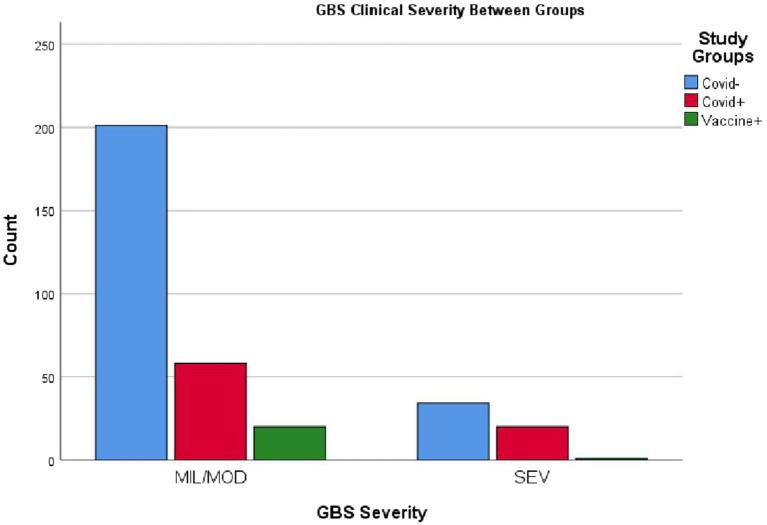
A total of 334 patients were included to study. Our analysis revealed a notable increase in GBS cases during the pandemic. The incidence of vaccine-related GBS was significantly lower than that of GBS related to COVID-19 infection. Additionally, GBS patients diagnosed with COVID-19 presented more severe symptoms compared to those who developed GBS after vaccination.
CONCLUSION
Although the incidence of GBS increased during the COVID-19 pandemic at our center, it remains a rare complication of both COVID-19 and its vaccination. These findings highlight the need for ongoing surveillance of neurological complications during infectious disease outbreaks and vaccination campaigns.
背景
新型冠状病毒肺炎(COVID-19)大流行引发了人们对包括吉兰-巴雷综合征(GBS)在内的各种神经系统并发症的关注。了解这一时期GBS的特征和发病率对于临床管理和公共卫生应对至关重要。
目的
本研究旨在分析COVID-19大流行期间伊朗一家转诊中心报告的GBS病例的特征,并评估GBS、COVID-19感染和疫苗接种之间的关系。
方法
我们对2018年至2023年间转诊至本中心的GBS病例进行了回顾性分析。收集并分析了临床数据,包括人口统计学信息、神经生理学亚型、与COVID-19和疫苗接种相关的病例及结果。比较了大流行期间与前几年GBS入院的频率。比较了与COVID-19相关的GBS和接种COVID-19疫苗的GBS的特征。
结果
共纳入334例患者进行研究。我们的分析显示,大流行期间GBS病例显著增加。与COVID-19感染相关的GBS相比,疫苗相关GBS的发病率显著更低。此外,与接种疫苗后发生GBS的患者相比,诊断为COVID-19的GBS患者症状更严重。
结论
尽管在我们中心,COVID-19大流行期间GBS的发病率有所增加,但它仍然是COVID-19及其疫苗接种的一种罕见并发症。这些发现凸显了在传染病爆发和疫苗接种运动期间持续监测神经系统并发症的必要性。


 Zotero 插件