
抗葡萄球菌脂肪酸:作用方式、细菌耐药性及治疗应用意义
Anti-staphylococcal fatty acids: mode of action, bacterial resistance and implications for therapeutic application.
作者信息
Douglas Edward J A, Palk Nathanael, Rudolph Emily R, Laabei Maisem
机构信息
Centre for Bacterial Resistance Biology, Imperial College London, London W2 1NY, UK.
School of Cellular and Molecular Medicine, University of Bristol, Bristol BS8 1TD, UK.
出版信息
Microbiology (Reading). 2025 May;171(5). doi: 10.1099/mic.0.001563.
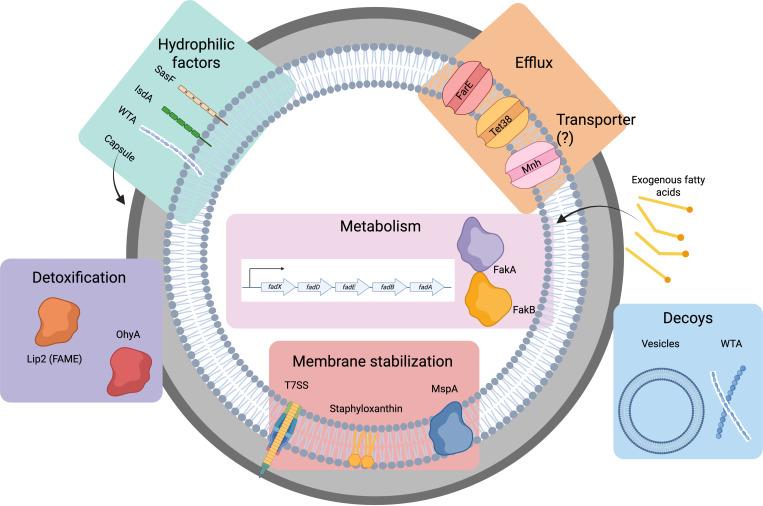
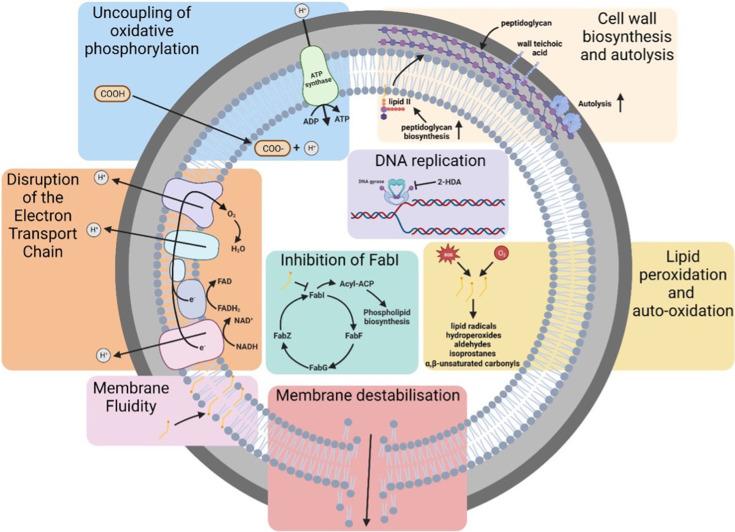
Novel strategies to counter multidrug-resistant pathogens such as methicillin-resistant are urgently required. The antimicrobial properties of fatty acids (FAs) have long been recognized and offer significant promise as viable alternatives to, or potentiators of, conventional antibiotics. In this review, we examine the interplay between FAs and , specifically detailing the underlying molecular mechanisms responsible for FA-mediated inhibition and the counteracting staphylococcal systems evolved to withstand FA onslaught. Finally, we present an update on the recent therapeutic FA applications to combat infection, either as a monotherapy or in combination with antibiotics or host-derived antimicrobial peptides. Given the frequency of interaction between FAs and during host colonization and infection, understanding FA mode of action and deciphering FA resistance strategies are central in rationally designing future anti-staphylococcal FAs and FA-combination therapies.
迫切需要新的策略来对抗耐多药病原体,如耐甲氧西林金黄色葡萄球菌。脂肪酸(FAs)的抗菌特性早已得到认可,作为传统抗生素的可行替代品或增效剂具有巨大潜力。在本综述中,我们研究了脂肪酸与金黄色葡萄球菌之间的相互作用,具体详细阐述了脂肪酸介导抑制作用的潜在分子机制以及金黄色葡萄球菌进化出的抵抗脂肪酸攻击的系统。最后,我们介绍了近期治疗性脂肪酸应用的最新情况,以对抗金黄色葡萄球菌感染,无论是作为单一疗法还是与抗生素或宿主来源的抗菌肽联合使用。鉴于在宿主定植和感染过程中脂肪酸与金黄色葡萄球菌之间相互作用的频率,了解脂肪酸的作用模式并破译金黄色葡萄球菌的脂肪酸抗性策略对于合理设计未来的抗金黄色葡萄球菌脂肪酸及脂肪酸联合疗法至关重要。
 Zotero 插件