
社区居住老年女性呼吸性肌肉减少症相关的身体和炎症方面
Physical and inflammatory aspects associated to respiratory sarcopenia in community-dwelling older women.
作者信息
da Costa Teixeira Leonardo Augusto, de Carvalho Bastone Alessandra, Soares Luana Aparecida, Dos Santos Mourão Maria Fernanda, Nobre Juliana Nogueira Pontes, Viegas Ângela Alves, Parentoni Adriana Netto, Figueiredo Pedro Henrique Scheidt, Taiar Redha, Mendonça Vanessa Amaral, Lacerda Ana Cristina Rodrigues
机构信息
Postgraduate Program in Health Sciences, Federal University of Vales do Jequitinhonha and Mucuri (UFVJM), MGT Highway 367 - Km 583, nº 5000, 39.100-000 , Diamantina, Minas Gerais, Brazil.
Exercise Physiology Laboratory (LAFIEX) of the Integrated Center for Research and Postgraduate Studies in Health (CIPq-health, Federal University of the Jequitinhonha, Mucuri Valleys. MGT Highway 367 - Km 583, nº 5000, 39.100-000 , Diamantina, Minas Gerais, Brazil.
出版信息
Sci Rep. 2025 May 26;15(1):18310. doi: 10.1038/s41598-025-03137-x.
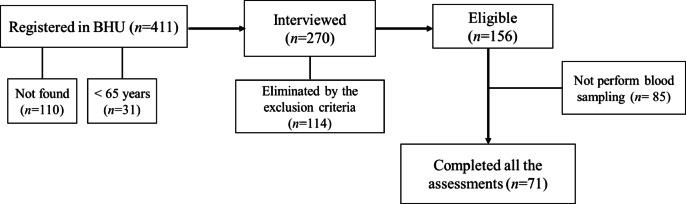
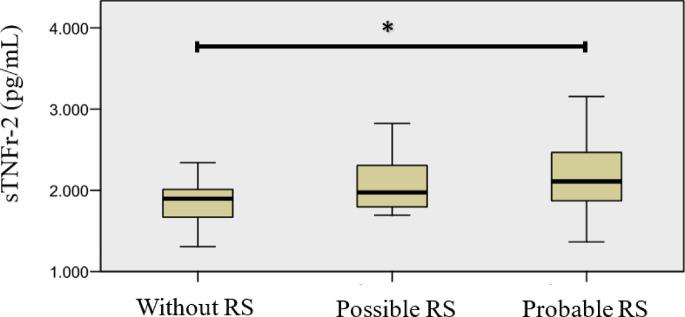
To investigate the relationship between respiratory sarcopenia with physical tests and a set of inflammatory biomarkers, seventy-one older women from the community with age 75 ± 7 years and BMI 26 ± 4 kg/m² were evaluated for appendicular lean mass using Dual X-ray Absorptiometry, respiratory muscle strength using an analog manuvacuometer, physical tests using handgrip strength, timed up and go and sit to stand in chair tests, and a panel of inflammatory biomarkers was measured, containing Adiponectin, BNDF, IFN, IL-2, IL-4, IL-5, IL-6, IL-8, IL-10, Leptin, Resistin, TNF and their soluble receptors sTNFr-1 and sTNFr-2. The analyzes suggest that older women with respiratory sarcopenia also had significantly low physical function and higher concentrations of sTNFr-2 (> 2241pg/ml), additionally respiratory muscle strength was inversely associated with sTNFr-2 concentrations (MIP: β = -0.48; R² = 0.24; p < 0.001; MEP: β = -0.35; R² = 0.12; p = 0.003). These results contribute to the discussion about the pathophysiology and to the strategies for diagnosing and monitoring respiratory sarcopenia in community-dwelling older women.
为了研究呼吸肌减少症与体能测试及一组炎症生物标志物之间的关系,我们对71名年龄在75±7岁、体重指数为26±4kg/m²的社区老年女性进行了评估。使用双能X线吸收法测量四肢瘦体重,使用模拟式肺量计测量呼吸肌力量,通过握力、计时起立行走和椅子上坐立测试进行体能测试,并检测一组炎症生物标志物,包括脂联素、脑源性神经营养因子、干扰素、白细胞介素-2、白细胞介素-4、白细胞介素-5、白细胞介素-6、白细胞介素-8、白细胞介素-10、瘦素、抵抗素、肿瘤坏死因子及其可溶性受体sTNFr-1和sTNFr-2。分析表明,患有呼吸肌减少症的老年女性身体功能也显著低下,且sTNFr-2浓度较高(>2241pg/ml),此外,呼吸肌力量与sTNFr-2浓度呈负相关(最大吸气压力:β = -0.48;R² = 0.24;p < 0.001;最大呼气压力:β = -0.35;R² = 0.12;p = 0.003)。这些结果有助于探讨呼吸肌减少症的病理生理学,以及为社区居住老年女性诊断和监测呼吸肌减少症提供策略。

 Zotero 插件