
观点:用于个性化休克复苏的整体四界面概念模型
Point of View: A Holistic Four-Interface Conceptual Model for Personalizing Shock Resuscitation.
作者信息
Rola Philippe, Kattan Eduardo, Siuba Matthew T, Haycock Korbin, Crager Sara, Spiegel Rory, Hockstein Max, Bhardwaj Vimal, Miller Ashley, Kenny Jon-Emile, Ospina-Tascón Gustavo A, Hernandez Glenn
机构信息
Intensive Care Unit, Santa Cabrini Hospital, CIUSSS EMTL, University of Montreal, Montreal, QC H1T1P7, Canada.
Departamento de Medicina Intensiva, Facultad de Medicina, Pontificia Universidad Católica de Chile, Santiago 8331150, Chile.
出版信息
J Pers Med. 2025 May 20;15(5):207. doi: 10.3390/jpm15050207.
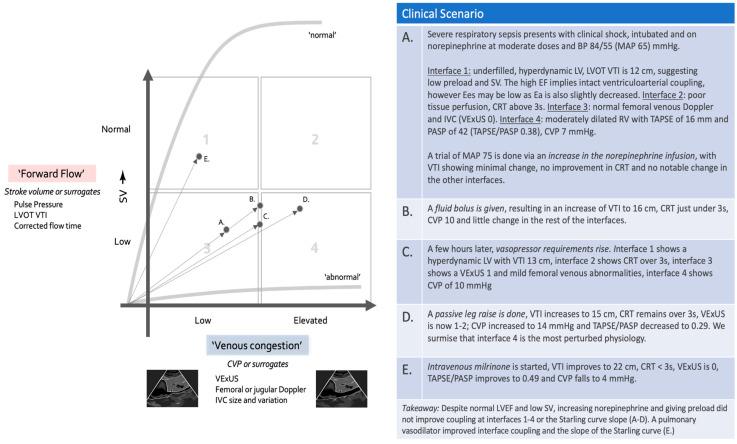
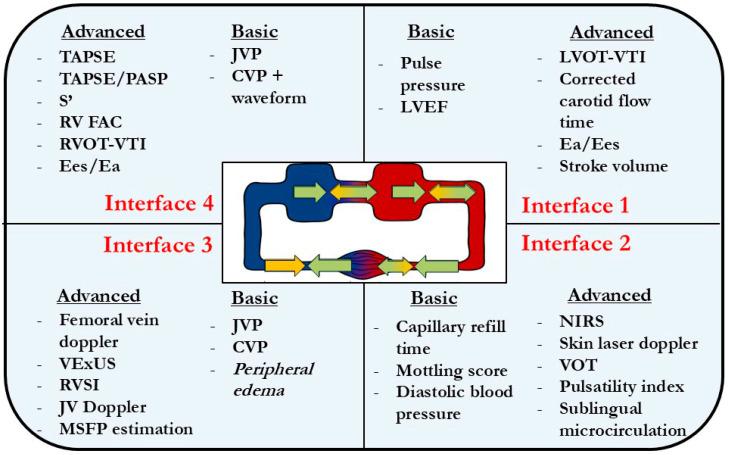
The resuscitation of a patient in shock is a highly complex endeavor that should go beyond normalizing mean arterial pressure and protocolized fluid loading. We propose a holistic, four-interface conceptual model of shock that we believe can benefit both clinicians at the bedside and researchers. The four circulatory interfaces whose uncoupling results in shock are as follows: the left ventricle to arterial, the arterial to capillary, the capillary to venular, and finally the right ventricle to pulmonary artery. We review the pathophysiology and clinical consequences behind the uncoupling of these interfaces, as well as how to assess them, and propose a strategy for approaching a patient in shock. Bedside assessment of shock may include these critical interfaces in order to avoid hemodynamic incoherence and to focus on microcirculatory restoration rather than simply mean arterial pressure. The purpose of this model is to serve as a mental model for learners as well as a framework for further resuscitation research that incorporates these concepts.
对休克患者进行复苏是一项高度复杂的工作,不应仅仅局限于使平均动脉压正常化和按常规进行液体输注。我们提出了一个整体性的、包含四个界面的休克概念模型,我们认为这对床边的临床医生和研究人员都有益处。导致休克的四个循环界面解耦如下:左心室到动脉、动脉到毛细血管、毛细血管到小静脉,最后是右心室到肺动脉。我们回顾了这些界面解耦背后的病理生理学和临床后果,以及如何对它们进行评估,并提出了一种处理休克患者的策略。对休克进行床边评估时可包括这些关键界面,以避免血流动力学不协调,并专注于微循环的恢复,而不仅仅是平均动脉压。该模型的目的是作为学习者的思维模型,以及纳入这些概念的进一步复苏研究的框架。


 Zotero 插件