
建立两种具有黏液性交界性肿瘤或去分化癌特征的新型卵巢肿瘤细胞系——对肿瘤异质性及黏液性肿瘤复杂癌变过程的启示
Establishment of Two Novel Ovarian Tumor Cell Lines with Characteristics of Mucinous Borderline Tumors or Dedifferentiated Carcinoma-Implications for Tumor Heterogeneity and the Complex Carcinogenesis of Mucinous Tumors.
作者信息
Sohel Hasibul Islam, Zahan Umme Farzana, Kiyono Tohru, Ishikawa Masako, Razia Sultana, Kanno Kosuke, Yamashita Hitomi, Sonia Shahataj Begum, Nakayama Kentaro, Kyo Satoru
机构信息
Department of Obstetrics and Gynecology, Faculty of Medicine, Shimane University, Izumo 693-8501, Japan.
Exploratory Oncology Research and Clinical Trial Center (EPOC), National Cancer Center, Kashiwa 277-8577, Japan.
出版信息
Cancers (Basel). 2025 May 20;17(10):1716. doi: 10.3390/cancers17101716.
BACKGROUND/OBJECTIVE: Mucinous borderline tumors of the ovary (MBOTs) are characterized by their unique histological features and intermediate malignant potential; however, the factors underlying their molecular carcinogenesis and tumor biology remain largely unknown. Developing cell lines from these tumors presents an ongoing challenge. The purpose of this study is to establish MBOT cell lines and characterize their biological features.
METHODS
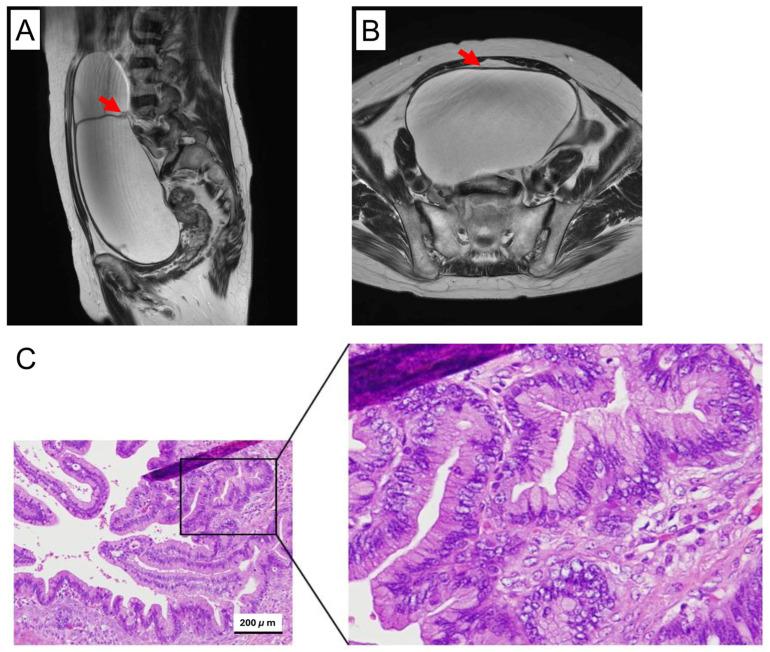
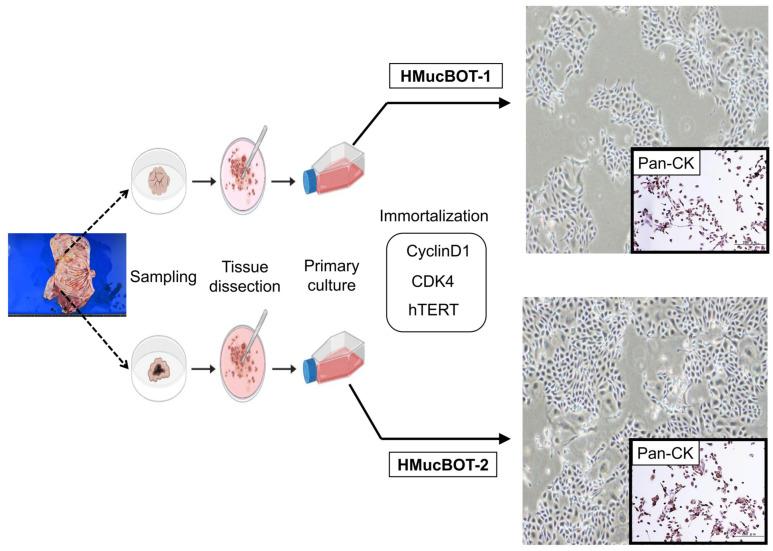
Epithelial cells were collected and purified from surgically removed MBOT samples and then stably maintained with an extended life span by overexpressing D1/ in combination with . The characterization of resulting cell lines was defined by morphology, growth kinetics, functional analysis, whole-exome sequencing, and tumorigenicity in mice.
RESULTS
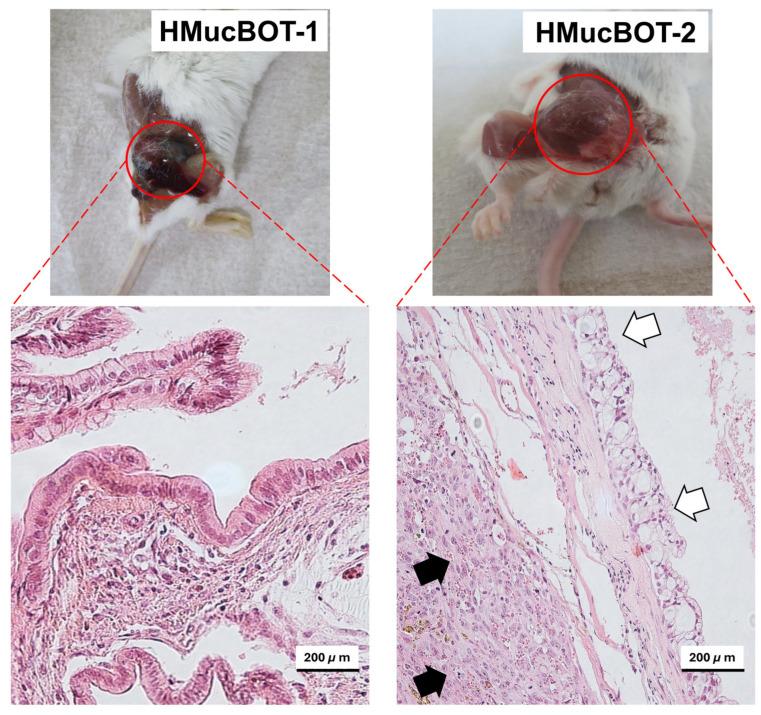
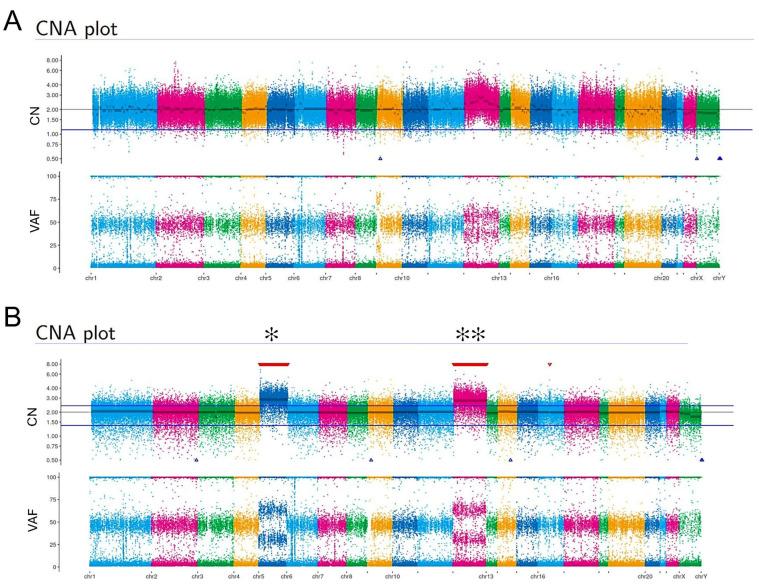
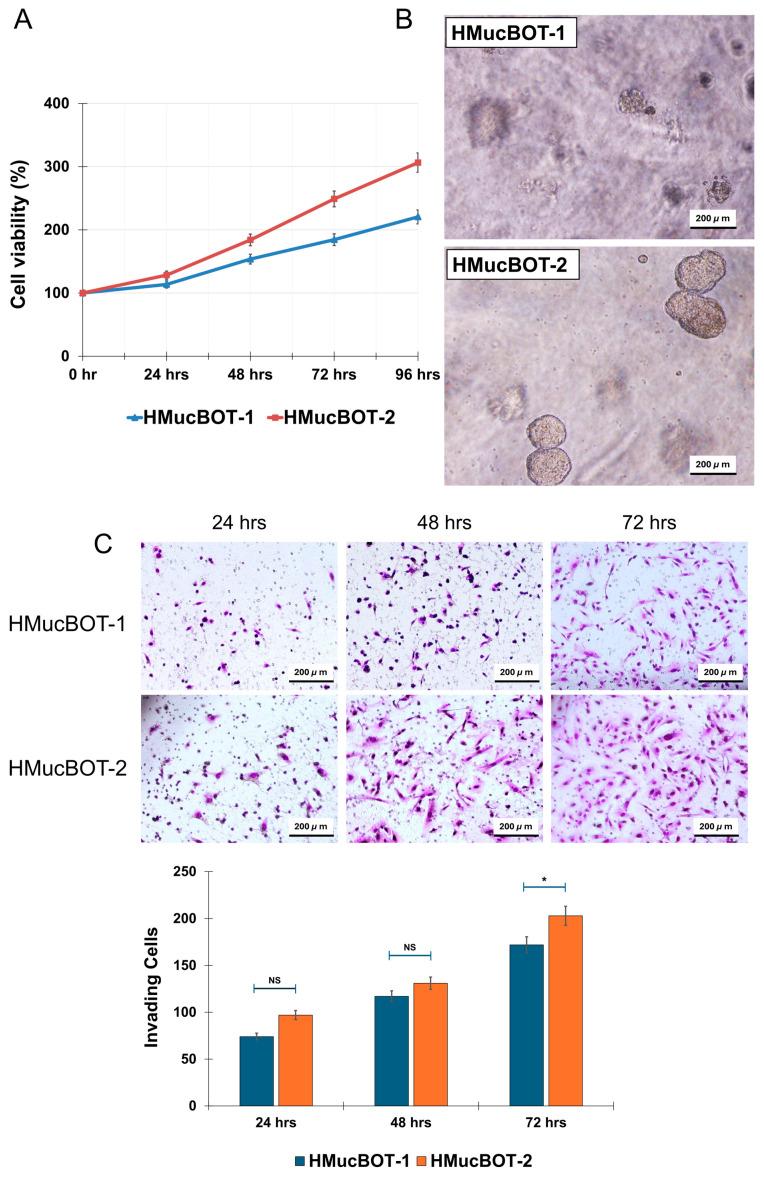
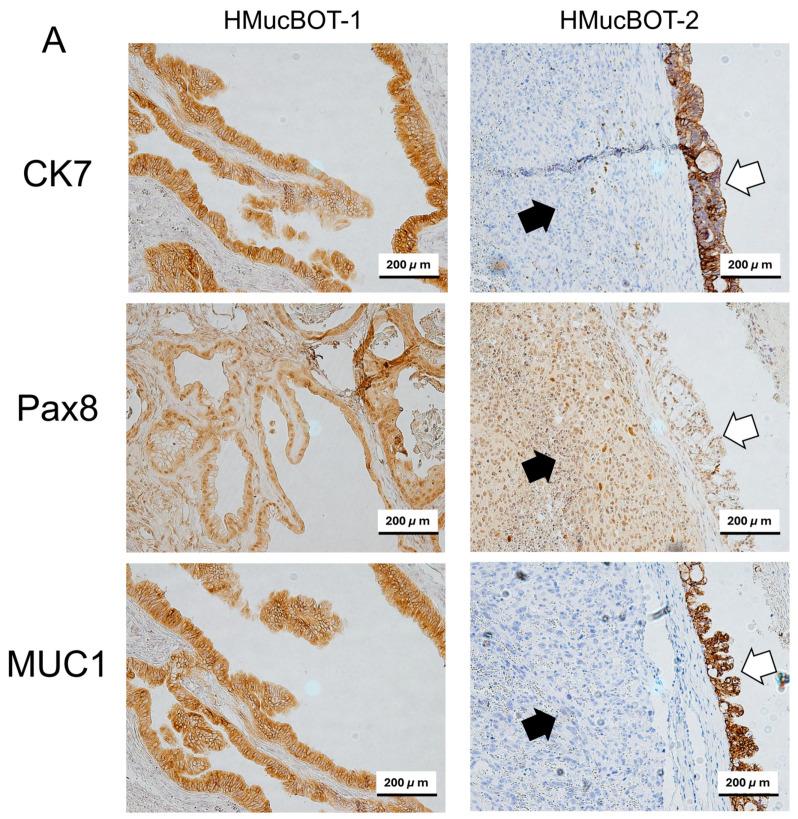
Two independent cell lines, HMucBOT-1 and HMucBOT-2, were successfully established from the tissues of a patient with an MBOT, with the latter showing more aggressive growth capacity. In the patient-derived xenograft model, HMucBOT-1 cells retained the original morphological characteristics of the MBOT, whereas HMucBOT-2 cells displayed a transition to mucinous carcinoma accompanying undifferentiated carcinoma, suggestive of dedifferentiated carcinoma. Genetic analysis of the original tumor sample and HMucBOT-2 cells revealed shared oncogenic mutations. However, amplification and certain copy number alterations were uniquely observed in the HMucBOT-2 cells.
CONCLUSIONS
The above results indicate that HMucBOT-1 can serve as a preclinical model for investigating the biological behavior of and potential targeted therapies for human MBOTs, with HMucBOT-2 serving as a valuable tool for studying the heterogeneity and genetic diversity of this tumor and explaining the potential causes of treatment failure or relapse.
背景/目的:卵巢黏液性交界性肿瘤(MBOTs)具有独特的组织学特征和中等恶性潜能;然而,其分子致癌和肿瘤生物学的潜在因素在很大程度上仍不清楚。从这些肿瘤中建立细胞系是一项持续存在的挑战。本研究的目的是建立MBOT细胞系并表征其生物学特征。
方法
从手术切除的MBOT样本中收集并纯化上皮细胞,然后通过过表达D1/与……联合来稳定维持其延长的寿命。通过形态学、生长动力学、功能分析、全外显子测序以及在小鼠中的致瘤性来定义所得细胞系的特征。
结果
从一名MBOT患者的组织中成功建立了两个独立的细胞系,HMucBOT - 1和HMucBOT - 2,后者显示出更强的侵袭性生长能力。在患者来源的异种移植模型中,HMucBOT - 1细胞保留了MBOT的原始形态特征,而HMucBOT - 2细胞显示向黏液腺癌伴未分化癌的转变,提示去分化癌。对原始肿瘤样本和HMucBOT - 2细胞的基因分析揭示了共同的致癌突变。然而,HMucBOT - 2细胞中独特地观察到……扩增和某些拷贝数改变。
结论
上述结果表明,HMucBOT - 1可作为研究人类MBOTs生物学行为和潜在靶向治疗的临床前模型,HMucBOT - 2可作为研究该肿瘤异质性和遗传多样性以及解释治疗失败或复发潜在原因的有价值工具。

 Zotero 插件