
罕见癌症的全球负担:基于2022年全球癌症统计数据的见解
Global Burden of Rare Cancers: Insights from GLOBOCAN 2022 Estimates.
作者信息
Elmadani Mohammed, Klara Simon, Mustafa Mohammed, Kiptulon Evans Kasmai, Orsolya Mate
机构信息
Doctoral School of Health Sciences, Faculty of Health Sciences, University of Pecs, 7622 Pecs, Hungary.
Department of Epidemiology, Faculty of Public Health, University of El Imam El Mahdi, Kosti 27711, Sudan.
出版信息
Cancers (Basel). 2025 May 21;17(10):1721. doi: 10.3390/cancers17101721.
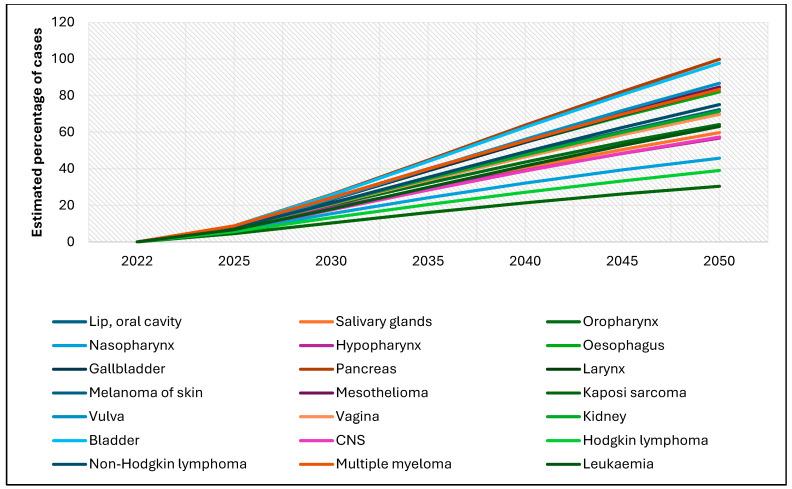
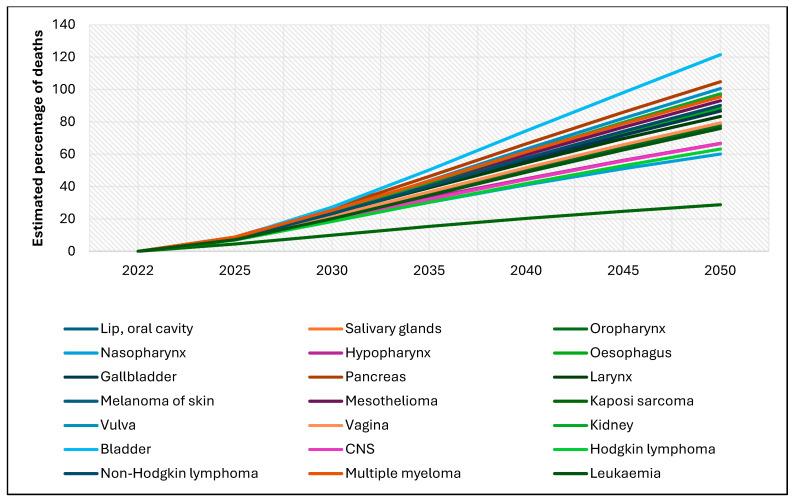
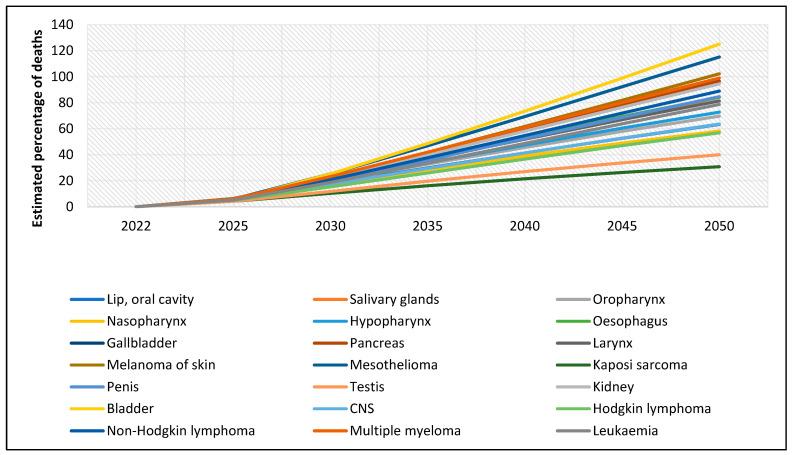
Rare cancers, defined as those with an incidence rate of fewer than 6 cases per 100,000 individuals, contribute to a substantial portion of the global cancer burden. Despite their impact, they receive less attention than more common malignancies, leading to challenges in early detection, treatment strategies, and research funding. This study aims to assess the global incidence and mortality patterns of rare cancers in 2022 to better understand their contribution to the overall cancer burden and regional disparities. We conducted a comprehensive analysis using 2022 GLOBOCAN estimates to assess the global incidence and mortality of rare cancers. The study included 24 major rare cancers, such as bladder cancer, leukemia, non-Hodgkin lymphoma, esophageal cancer, and pancreatic cancer. Age-standardized rates (ASRs) were calculated to compare cancer burden across continents, and absolute case and death counts were reported. In 2022, rare cancers accounted for 26.7% of all new cancer cases (5,347,784 cases) and 30% of all cancer-related deaths (2,959,369 deaths) worldwide. Bladder cancer was the most common rare cancer, with an incidence rate of 5.58 per 100,000, followed by non-Hodgkin lymphoma (5.57) and leukemia (5.26). Mortality rates were highest for pancreatic, esophageal, and brain cancers, reflecting their aggressive nature and limited treatment options. Significant regional disparities were observed, with Europe and North America reporting the highest incidence rates for bladder cancer and leukemia, while Asia bore the largest absolute burden of rare cancers. Rare cancers represent a considerable share of the global cancer burden, with notable geographic variations in incidence and mortality. These findings underscore the need for improved early detection, expanded treatment access, and targeted research efforts to address disparities and improve outcomes for patients with rare cancers worldwide.
罕见癌症被定义为发病率低于每10万人6例的癌症,在全球癌症负担中占相当大的比例。尽管它们有影响,但与更常见的恶性肿瘤相比,它们受到的关注较少,这导致在早期检测、治疗策略和研究资金方面面临挑战。本研究旨在评估2022年全球罕见癌症的发病率和死亡率模式,以更好地了解它们对总体癌症负担的贡献以及地区差异。我们使用2022年全球癌症负担(GLOBOCAN)估计数进行了全面分析,以评估罕见癌症的全球发病率和死亡率。该研究包括24种主要的罕见癌症,如膀胱癌、白血病、非霍奇金淋巴瘤、食管癌和胰腺癌。计算了年龄标准化率(ASRs)以比较各大洲的癌症负担,并报告了绝对病例数和死亡数。2022年,罕见癌症占全球所有新癌症病例(5347784例)的26.7%,占所有癌症相关死亡(2959369例)的30%。膀胱癌是最常见的罕见癌症,发病率为每10万人5.58例,其次是非霍奇金淋巴瘤(5.57例)和白血病(5.26例)。胰腺癌、食管癌和脑癌的死亡率最高,反映了它们的侵袭性和有限的治疗选择。观察到显著的地区差异,欧洲和北美报告的膀胱癌和白血病发病率最高,而亚洲承担着罕见癌症的最大绝对负担。罕见癌症在全球癌症负担中占相当大的比例,在发病率和死亡率方面存在显著的地理差异。这些发现强调了改善早期检测、扩大治疗可及性以及有针对性的研究努力的必要性,以解决差异并改善全球罕见癌症患者的治疗结果。



 Zotero 插件