
微生物群衍生代谢物在炎症相关癌症预防和治疗中的作用
The Effect of Microbiome-Derived Metabolites in Inflammation-Related Cancer Prevention and Treatment.
作者信息
Mafe Alice N, Büsselberg Dietrich
机构信息
Department of Biological Sciences, Faculty of Sciences, Taraba State University, Main Campus, Jalingo 660101, Taraba State, Nigeria.
Weill Cornell Medicine-Qatar, Education City, Qatar Foundation, Doha Metropolitan Area, Al Rayyan P.O. Box 22104, Qatar.
出版信息
Biomolecules. 2025 May 8;15(5):688. doi: 10.3390/biom15050688.
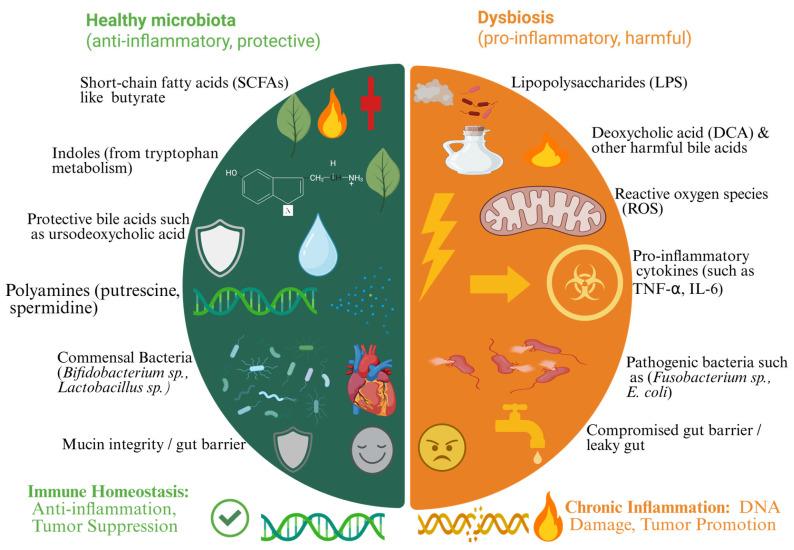
Chronic inflammation plays a crucial role in cancer development, yet the mechanisms linking the microbiome to inflammation-related carcinogenesis remain unclear. Emerging evidence suggests that microbiome-derived metabolites influence inflammatory pathways, presenting both challenges and opportunities for therapy. However, a deeper understanding of how these metabolites regulate inflammation and contribute to cancer prevention is still needed. This review explores recent advances in microbiome-derived metabolites and their roles in inflammation-related carcinogenesis. It highlights key molecular mechanisms, emerging therapies, and unresolved challenges. Synthesizing current research, including clinical trials and experimental models, bridges the gap between microbiome science and cancer therapy. Microbial metabolites such as short-chain fatty acids (SCFAs), polyamines, indoles, and bile acids play vital roles in regulating inflammation and suppressing cancer. Many metabolites exhibit potent anti-inflammatory and immunomodulatory effects, demonstrating therapeutic potential. Case studies show promising results, but challenges such as metabolite stability, bioavailability, and individual variability remain. Understanding microbiome-metabolite interactions offers novel strategies for cancer prevention and treatment. This review identifies knowledge gaps and proposes future research directions to harness microbiome-derived metabolites for innovative cancer therapies. Addressing these issues may pave the way for microbiome-targeted cancer interventions.
慢性炎症在癌症发展中起着关键作用,但微生物群与炎症相关致癌作用之间的联系机制仍不清楚。新出现的证据表明,微生物群衍生的代谢产物会影响炎症途径,这为治疗带来了挑战和机遇。然而,仍需要更深入地了解这些代谢产物如何调节炎症并有助于癌症预防。本综述探讨了微生物群衍生代谢产物的最新进展及其在炎症相关致癌作用中的作用。它强调了关键的分子机制、新兴疗法和未解决的挑战。综合当前的研究,包括临床试验和实验模型,弥合了微生物群科学与癌症治疗之间的差距。短链脂肪酸(SCFAs)、多胺、吲哚和胆汁酸等微生物代谢产物在调节炎症和抑制癌症方面发挥着重要作用。许多代谢产物具有强大的抗炎和免疫调节作用,显示出治疗潜力。案例研究显示了有希望的结果,但代谢产物稳定性、生物利用度和个体差异等挑战仍然存在。了解微生物群-代谢产物相互作用为癌症预防和治疗提供了新策略。本综述确定了知识空白,并提出了未来的研究方向,以利用微生物群衍生的代谢产物进行创新的癌症治疗。解决这些问题可能为以微生物群为靶点的癌症干预铺平道路。

 Zotero 插件