
肿瘤坏死因子-α在神经性疼痛中的作用:免疫治疗视角
The Role of TNF-α in Neuropathic Pain: An Immunotherapeutic Perspective.
作者信息
García-Domínguez Mario
机构信息
Program of Immunology and Immunotherapy, CIMA-Universidad de Navarra, 31008 Pamplona, Spain.
Department of Immunology and Immunotherapy, Clínica Universidad de Navarra, 31008 Pamplona, Spain.
出版信息
Life (Basel). 2025 May 14;15(5):785. doi: 10.3390/life15050785.
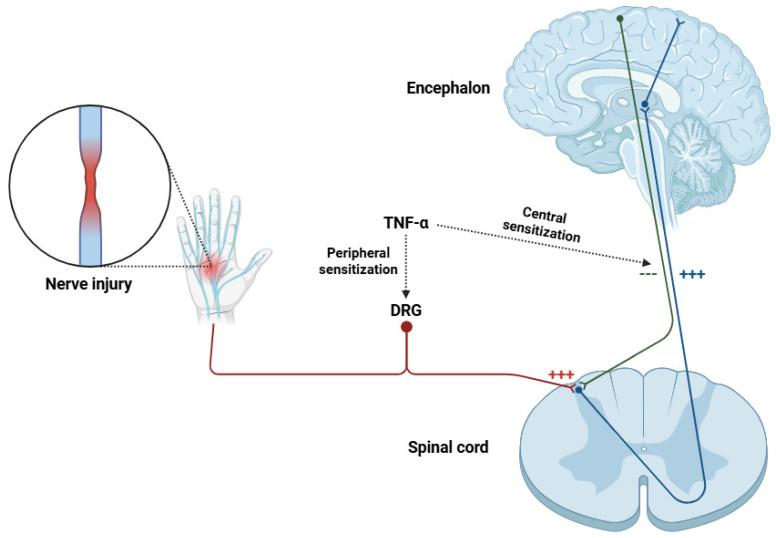
TNF-α is a pro-inflammatory cytokine that plays a pivotal role in the regulation of immune responses. It is predominantly produced by activated macrophages, although other cell types, such as T lymphocytes and NK cells, also contribute to its secretion. TNF-α participates in various physiological processes, including cell proliferation and differentiation. Moreover, TNF-α has been implicated in the pathogenesis of numerous inflammatory and autoimmune disorders. Recent studies have highlighted the important role of TNF-α in neuropathic pain, a complex and frequently disabling condition caused by nerve injury or dysfunction. Increased TNF-α levels in the nervous system have been associated with the onset of neuropathic pain, contributing to neuronal sensitization and alterations in pain signaling pathways. This study supports the idea that TNF-α connects the immune system with the nervous system, thereby supporting our understanding of the neuroimmune interface of pain and bringing a potential treatment against neuropathic pain: targeting TNF-α. Anti-TNF-α antibody administration reduces pain behaviors and neuroinflammation in preclinical animal models. Simultaneously, clinical trials are evaluating the safety and efficacy of anti-TNF-α treatments, with preliminary results indicating promising outcomes in patients experiencing neuropathic pain. Here, targeting TNF-α goes beyond its conventional spectrum of inflammatory pathologies and initiates a new mechanism-based approach to defining neuropathic pain, thereby improving the quality of life of the individuals affected and bringing together an area of colossal unmet clinical need.
肿瘤坏死因子-α(TNF-α)是一种促炎细胞因子,在免疫反应调节中起关键作用。它主要由活化的巨噬细胞产生,不过其他细胞类型,如T淋巴细胞和自然杀伤细胞(NK细胞)也参与其分泌。TNF-α参与多种生理过程,包括细胞增殖和分化。此外,TNF-α与多种炎症和自身免疫性疾病的发病机制有关。最近的研究突出了TNF-α在神经性疼痛中的重要作用,神经性疼痛是一种由神经损伤或功能障碍引起的复杂且常导致功能丧失的病症。神经系统中TNF-α水平升高与神经性疼痛的发作有关,促进神经元致敏和疼痛信号通路的改变。这项研究支持了TNF-α将免疫系统与神经系统联系起来的观点,从而有助于我们理解疼痛的神经免疫界面,并带来一种针对神经性疼痛的潜在治疗方法:靶向TNF-α。在临床前动物模型中,给予抗TNF-α抗体可减轻疼痛行为和神经炎症。同时,临床试验正在评估抗TNF-α治疗的安全性和有效性,初步结果表明对患有神经性疼痛的患者有良好前景。在此,靶向TNF-α超越了其传统的炎症病理范围,开创了一种基于新机制的方法来界定神经性疼痛,从而改善受影响个体的生活质量,并汇聚了一个巨大的未满足临床需求领域。

 Zotero 插件