
中国介入动脉化疗与索拉非尼治疗晚期肝细胞癌的对比:一项开放标签、随机、3期研究的卫生经济学评价
Interventional arterial chemotherapy versus sorafenib for advanced hepatocellular carcinoma in China: a health economic evaluation of open-label, randomised, phase 3 study.
作者信息
Chen Qi-Feng, Jiang Xiongying, Hu Yue, Chen Song, Lyu Ning, Zhao Ming
机构信息
Department of Minimally Invasive Interventional Therapy, Liver Cancer Study and Service Group, State Key Laboratory of Oncology in South China, Guangdong Provincial Clinical Research Center for Cancer, Sun Yat-sen University Cancer Center, Guangzhou, Guangdong, China.
Department of Interventional Radiology, Sun Yat-sen Memorial Hospital, Sun Yat-sen University, Guangzhou, Guangdong, China.
出版信息
BMJ Open. 2025 May 27;15(5):e095508. doi: 10.1136/bmjopen-2024-095508.
OBJECTIVES
This post hoc study aimed to evaluate the cost-effectiveness of hepatic artery infusion chemotherapy (HAIC) with fluorouracil, leucovorin and oxaliplatin (HAIC-FO) compared with sorafenib in patients with advanced hepatocellular carcinoma (HCC). The analysis was conducted from the perspective of Chinese payers.
DESIGN
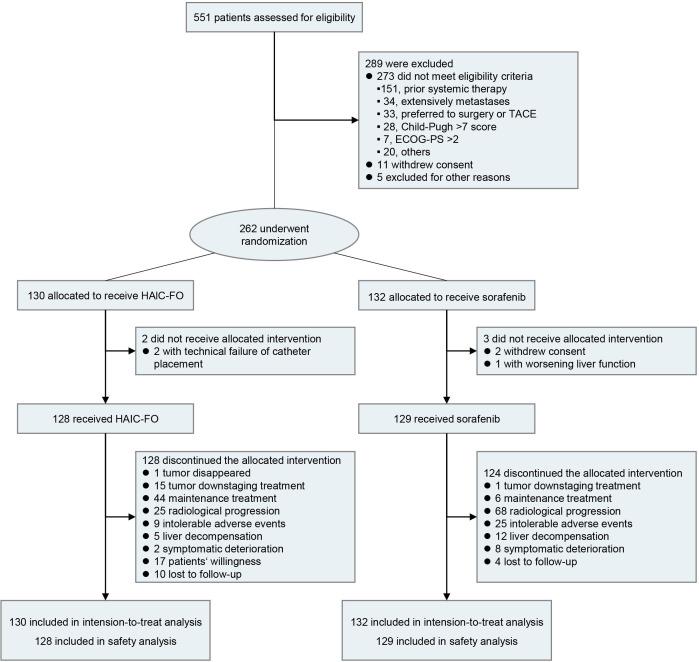
A cost-effectiveness analysis was performed using a Markov model derived from data obtained in the FOHAIC-1 trial (phase 3 randomised controlled trial; conducted 2017-2020).
SETTING
The study was conducted in tertiary care centres in China.
PARTICIPANTS
The study included advanced HCC patients enrolled in the FOHAIC-1 trial. Inclusion criteria followed the trial protocols, with patients stratified by disease severity (including the presence of Vp4 portal vein tumour thrombus (PVTT) and high tumour burden).
INTERVENTIONS
HAIC-FO (fluorouracil, leucovorin and oxaliplatin) was compared with sorafenib for cost and health outcomes.
PRIMARY OUTCOME MEASURE
The primary outcome was the incremental cost-effectiveness ratio (ICER), calculated as the additional cost per quality-adjusted life year (QALY) gained.
RESULTS
Sorafenib yielded 0.66 QALYs at a cost of $15 011.73, whereas HAIC-FO yielded 1.00 QALY at a cost of $18 470.98. The ICER of HAIC-FO compared with sorafenib was $10 235.56 per QALY, which was below the willingness-to-pay (WTP) threshold of $30 492.00 per QALY. Sensitivity analyses confirmed that HAIC-FO remained cost-effective across variable assumptions, with probabilistic sensitivity analysis showing a 99.9% probability of cost-effectiveness at the WTP threshold. Subgroup analyses demonstrated more favourable ICERs for patients with Vp4 PVTT ($7003.33 per QALY) and those with high tumour burden ($7382.86 per QALY).
CONCLUSIONS
HAIC-FO is a more cost-effective treatment for advanced HCC than sorafenib from the Chinese payer's perspective, particularly in patients with Vp4 PVTT and/or high tumour burden. Further research is needed to explore long-term economic implications and real-world effectiveness data.
TRIAL REGISTRATION NUMBER
NCT03164382.
目的
本事后分析研究旨在评估氟尿嘧啶、亚叶酸钙和奥沙利铂肝动脉灌注化疗(HAIC-FO)与索拉非尼相比,在晚期肝细胞癌(HCC)患者中的成本效益。该分析是从中国医保支付方的角度进行的。
设计
使用从FOHAIC-1试验(3期随机对照试验;2017年至2020年开展)获得的数据推导的马尔可夫模型进行成本效益分析。
设置
该研究在中国的三级医疗中心进行。
参与者
该研究纳入了参加FOHAIC-1试验的晚期HCC患者。纳入标准遵循试验方案,患者按疾病严重程度分层(包括是否存在Vp4门静脉肿瘤血栓(PVTT)和高肿瘤负荷)。
干预措施
比较了HAIC-FO(氟尿嘧啶、亚叶酸钙和奥沙利铂)与索拉非尼的成本和健康结局。
主要结局指标
主要结局是增量成本效益比(ICER),计算方法为每获得一个质量调整生命年(QALY)的额外成本。
结果
索拉非尼产生0.66个QALY,成本为15011.73美元,而HAIC-FO产生1.00个QALY,成本为18470.98美元。与索拉非尼相比,HAIC-FO的ICER为每QALY 10235.56美元,低于每QALY 30492.00美元的支付意愿(WTP)阈值。敏感性分析证实,在各种可变假设下,HAIC-FO仍然具有成本效益,概率敏感性分析显示在WTP阈值下具有成本效益的概率为99.9%。亚组分析表明,对于有Vp4 PVTT的患者(每QALY 7003.33美元)和有高肿瘤负荷的患者(每QALY 7382.86美元),ICER更有利。
结论
从中国医保支付方的角度来看,HAIC-FO治疗晚期HCC比索拉非尼更具成本效益,特别是在有Vp4 PVTT和/或高肿瘤负荷的患者中。需要进一步研究以探索长期经济影响和真实世界有效性数据。
试验注册号
NCT03164382。



 Zotero 插件