
一项关于微生物操控对糖海带()影响的实验测试支持了核心影响宿主功能假说。
An experimental test of the influence of microbial manipulation on sugar kelp () supports the core influences host function hypothesis.
作者信息
Park Jungsoo, Kohn Evan, Schenk Siobhan, Davis Katherine M, Clark Jennifer S, Parfrey Laura Wegener
机构信息
Department of Botany, Biodiversity Research Centre, University of British Columbia, Vancouver, British Columbia, Canada.
Cascadia Seaweed Corporation, Sidney, British Columbia, Canada.
出版信息
Appl Environ Microbiol. 2025 Jun 18;91(6):e0030125. doi: 10.1128/aem.00301-25. Epub 2025 May 29.
UNLABELLED
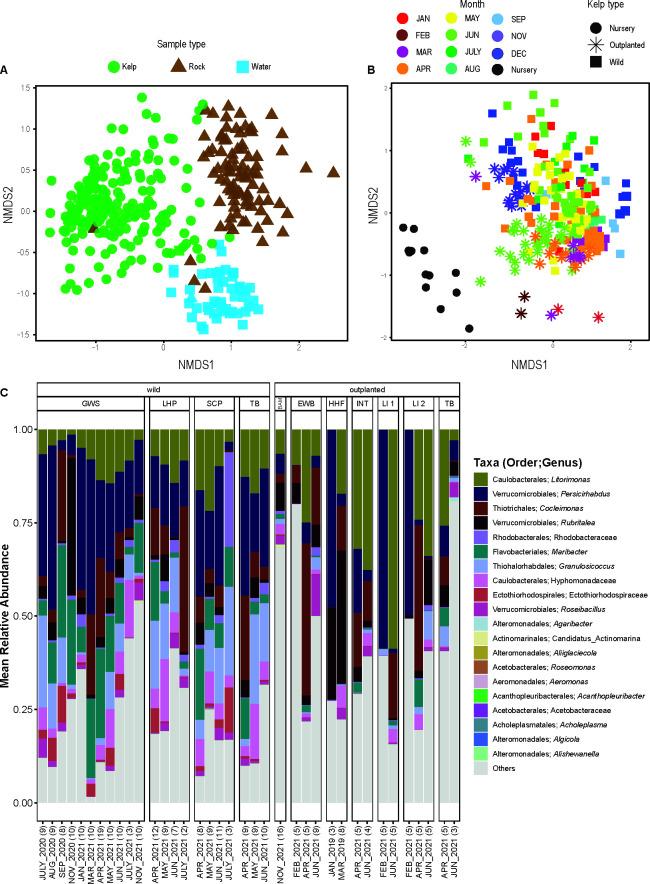
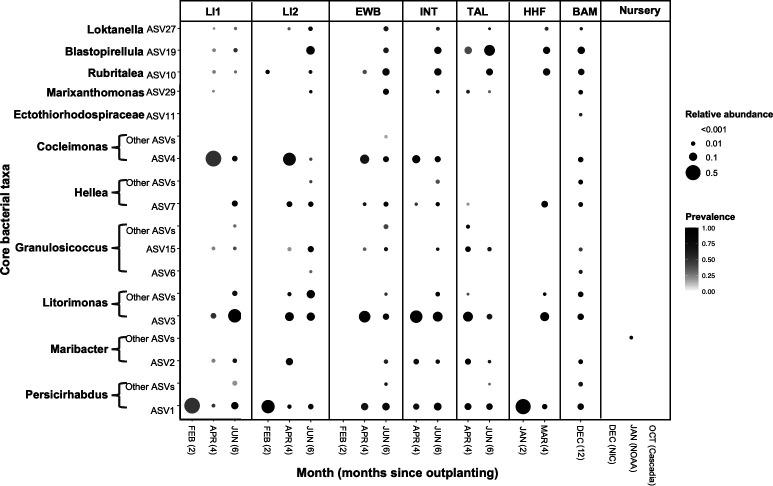
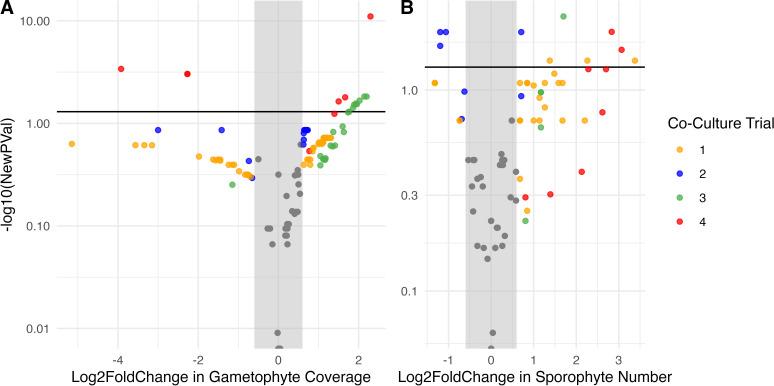
Kelp are valued for a wide range of commercial products and their role in kelp forest ecosystems, making kelp cultivation a rapidly expanding economic sector. Microbes associated with kelp and other macroalgae play a critical role in processes such as nutrient exchange, chemical signaling, and defense against pathogens. Thus, manipulating the microbiome to enhance macroalgal growth and resilience is a promising yet underexplored approach for sustainable kelp cultivation. The core microbiome hypothesis suggests that the bacteria that are consistently found on a host (the core microbes) are likely to have a disproportionate impact on host biology, making them an attractive target for microbiome manipulation. In this study, we surveyed wild and their surrounding environment to identify core bacterial taxa, compared them to cultivated kelp, and experimentally tested how cultured bacterial isolates affect kelp development. We found that core bacteria are nearly absent in cultivated juvenile sporophytes in nurseries, but eventually colonize them after outplanting to ocean farm sites. Bacterial inoculants had both positive and negative effects on kelp development. Notably, the strength of association of a bacterial genus with kelp in the wild positively correlated with its impact on gametophyte settlement and sporophyte development in kelp co-culture experiments, aligning with predictions from the core microbiome influences host function hypothesis. These findings affirm the feasibility of using microbial manipulations to improve current kelp aquaculture practices and provide a framework for developing these techniques.
IMPORTANCE
Microorganisms consistently associated with hosts are widely thought to be more likely to impact host biology and health. However, this intuitive concept has not been experimentally evaluated. This study formalizes this concept as the Core Microbiome Influences Host Function hypothesis and experimentally tests this hypothesis in sugar kelp (Saccharina). The distribution of bacteria on wild kelp and core microbes was first identified by compiling a broad dataset of the kelp microbiome sampled across space and time. Bacterial cultures were isolated from the surface of sugar kelp and individually grown in laboratory co-culture with sugar kelp spores to assess the ability of bacterial isolates to influence kelp growth and development. In support of the core influences host function hypothesis, isolates belonging to bacterial genera that are more strongly associated with wild sugar kelp are more likely to influence development in laboratory experiments.
未标注
海带因其广泛的商业产品价值及其在海带森林生态系统中的作用而备受重视,这使得海带养殖成为一个迅速扩张的经济领域。与海带和其他大型藻类相关的微生物在营养物质交换、化学信号传递以及抵御病原体等过程中发挥着关键作用。因此,通过操控微生物群落来促进大型藻类的生长和恢复力,是可持续海带养殖中一种前景广阔但尚未得到充分探索的方法。核心微生物群落假说表明,在宿主上始终存在的细菌(核心微生物)可能对宿主生物学产生不成比例的影响,这使得它们成为微生物群落操控的一个有吸引力的目标。在本研究中,我们对野生海带及其周围环境进行了调查,以确定核心细菌分类群,将它们与养殖海带进行比较,并通过实验测试培养的细菌分离株如何影响海带的发育。我们发现,在育苗场养殖的幼年孢子体中几乎没有核心细菌,但在移栽到海洋养殖场后最终会定殖。细菌接种剂对海带发育既有积极影响也有消极影响。值得注意的是,在野生环境中与海带关联紧密的细菌属,在海带共培养实验中对配子体附着和孢子体发育的影响强度呈正相关,这与核心微生物群落影响宿主功能假说的预测相符。这些发现证实了利用微生物操控来改进当前海带养殖实践的可行性,并为开发这些技术提供了一个框架。
重要性
人们普遍认为,与宿主持续相关的微生物更有可能影响宿主生物学和健康。然而,这一直观概念尚未经过实验评估。本研究将这一概念正式确立为核心微生物群落影响宿主功能假说,并在糖海带(Saccharina)中对该假说进行了实验验证。通过汇编一个跨越时空采样的海带微生物群落的广泛数据集,首次确定了野生海带和核心微生物上细菌的分布情况。从糖海带表面分离出细菌培养物,并在实验室中与糖海带孢子进行单独共培养,以评估细菌分离株影响海带生长和发育的能力。为支持核心影响宿主功能假说,在实验室实验中,与野生糖海带关联更紧密的细菌属的分离株更有可能影响其发育。




 Zotero 插件